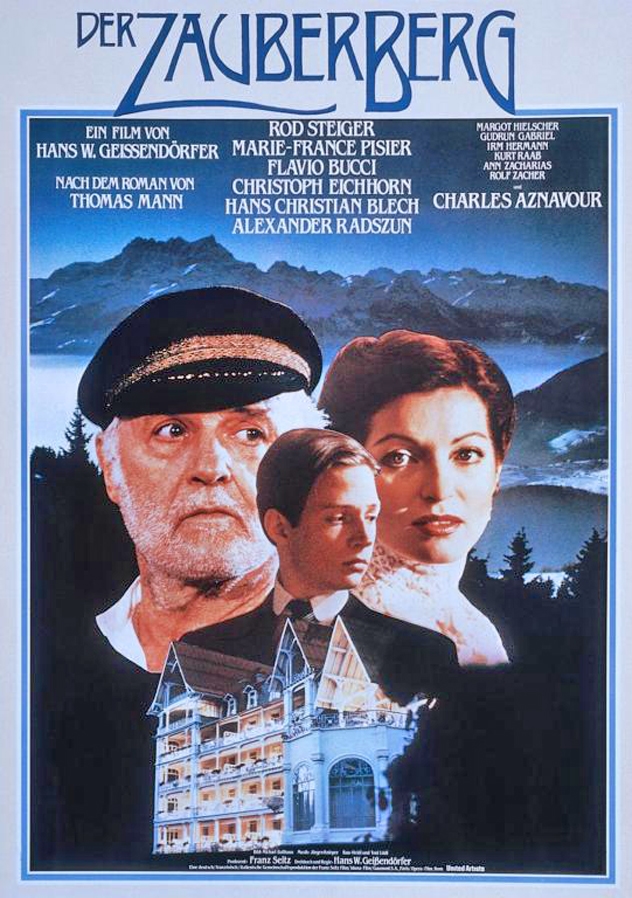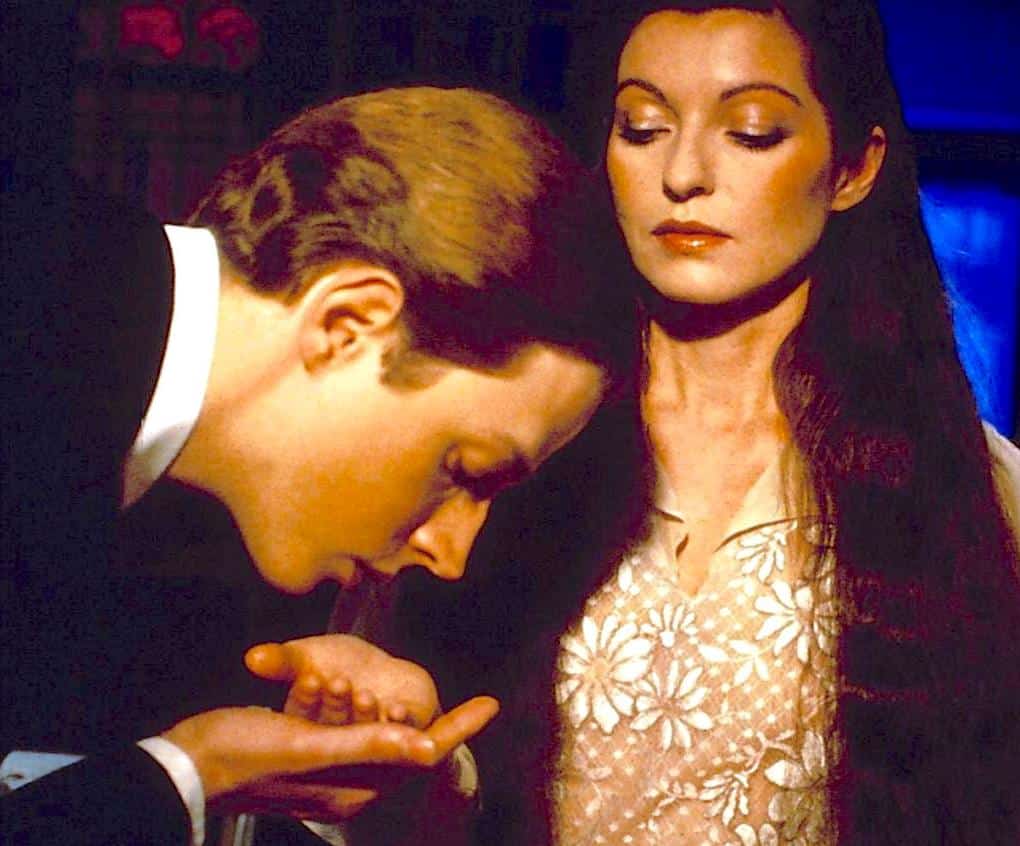
There are two versions of the 1982 adaptation of Thomas Mann’s weighty novel The Magic Mountain (Der Zauberberg). One is the theatrical cut, which came in at about 153 minutes. The other is the TV cut, which weighs in at an epic 312 minutes over three instalments. That’s the one I watched yesterday, all five hours and a chunk of it, having taken heed of reviews complaining about the theatrical cut’s lack of coherence. The theatrical cut is a lousy edit is the gist of the complaints.
As to the full-fat version, it was easier to digest than I’d expected. I suspect the complaints about the theatrical cut are right. In the long version I watched, the characters have space enough to develop and they flow into each other in a series of slightly larger-than-life performances by a really excellent cast.
Mann based his story on letters his wife had sent to him about daily life in the sanatarium where she was a guest/patient. She was amused by the people and their little rituals. Mann stays with that thought. You wouldn’t call The Magic Mountain a comedy, but it has its moments. In fact it’s closer to a horror story, of a high-art sort, the tale of a priggish young dude, Hans Castorp (Christoph Eichhorn), who goes to visit his cousin, Joachim (Alexander Radszun), at a Swiss tuberculosis sanatarium, intending to stay for only three weeks and have a bit of a holiday before heading off to university. Seven years later, as director Hans Geissendörfer brings down the curtain on Mann’s story, Hans is still up there taking the cure, in a Swiss version of the Hotel California – you can check out any time you like, but you can never leave.
In between Hans has managed to become sick himself, almost as if he’s wished it on himself, and has fallen under the spell of the clinic’s chief doctor, the strict but affable Behrens (brilliantly played by Hans Christian Blech) and the disdainful and beautiful Clawdia Chauchat (Marie-France Pisier), a cockteaser of the first order.
People come and go, patients get sick and die, but the sickness and dying is largely left in the wings – a hearse here, a coffin there – leaving the footloose clientele of this swish resort to talk, flirt, sleep with each other, fall out and so on.
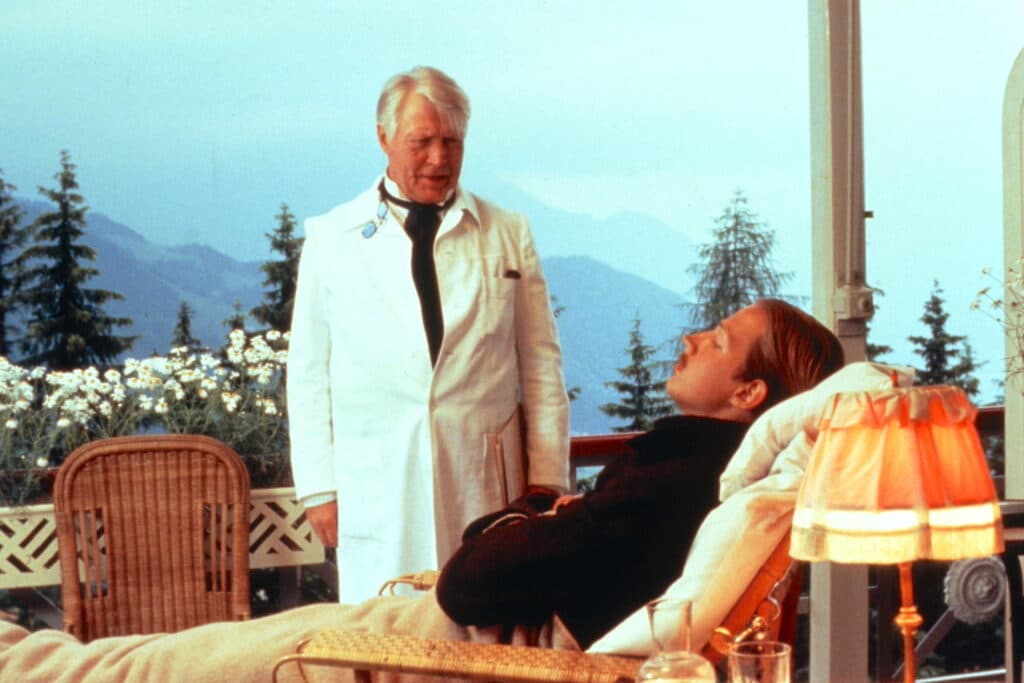
It’s a soap opera, in essence, though the action pauses here and there for Mann’s disquisitions on various subjects. These come largely through the person of the voluble Italian Settembrini (Flavio Bucci), or his eventual nemesis Naphta (Charles Aznavour, yes, that Charles Aznavour). These are either what you come to the novel/film for or they’re the bits you’d like to fast-forward through. What is time? Especially pertinent since Hans seems to have lost all concept of it. Is illness ennobling? Also pertinent. Is war necessary for society’s health?
Mann wrote the book in the 1920s and trimmed his sails as he did so, eventually tweaking it so it would be more obvious he was aware of the rising Nazi threat and was dead set against it. He’s also decades if not a century ahead of the notion of “wellness”, and suggests here that it isn’t adjacent to health at all but sickness. It’s really the book and the film’s great claim to current relevance – Thomas Mann, let’s face it, is hardly hot any more. Does anyone still read Buddenbrooks? Or even Death in Venice?
For all the film’s extravagant length it is brilliantly paced. New characters appear to keep the pot boiling. Like Hans’s uncle James Tienappel (Helmut Griem), who arrives sceptical about Hans’s illness but soon finds himself charging down exactly the same avenue. Or old salt Peperkorn, a rambunctious sea captain who turns up in the final instalment on the arm of Madame Chauchat (much to Hans’s irritation), and is played with the grip of a deranged pitbull terrier by Rod Steiger (dubbed, like everyone else).
Though the image is no longer top-notch, it must originally have had looks to match the gorgeous locations. Three directors of photography were involved. Walter Lassally did the exteriors – he shot Zorba the Greek and Before Midnight. Robby Müller, a favourite of Jarmusch, Von Trier and Michael Winterbottom, did the interiors until he got fired. Which leaves Michael Ballhaus as the officially credited cinematographer – he of Goodfellas and Gangs of New York. None of them exactly a slouch. I’m writing this 150 years to the day after Mann was born (on 6 June 1875). Has the window of opportunity for restoring this sumptuous epic been missed?
The Magic Mountain (as part of a collection including Buddenbrooks and Doktor Faustus) – Watch it/buy it at Amazon
I am an Amazon affiliate
© Steve Morrissey 2025