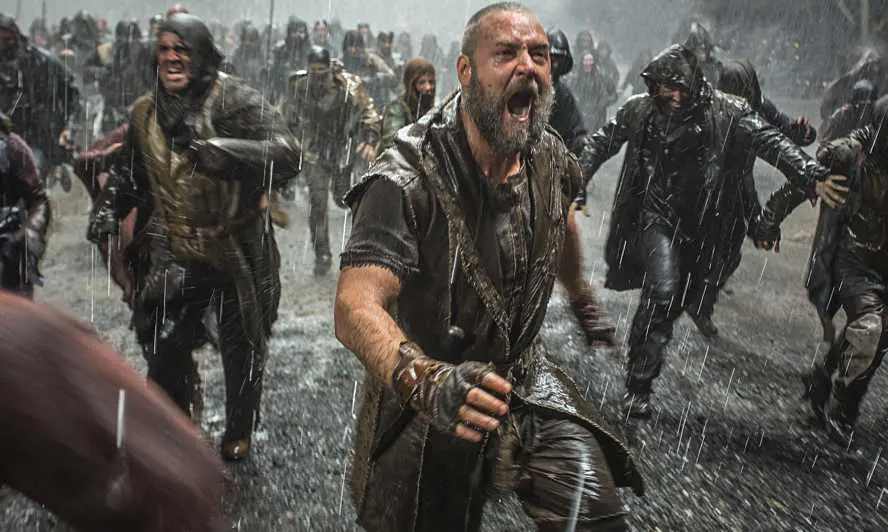
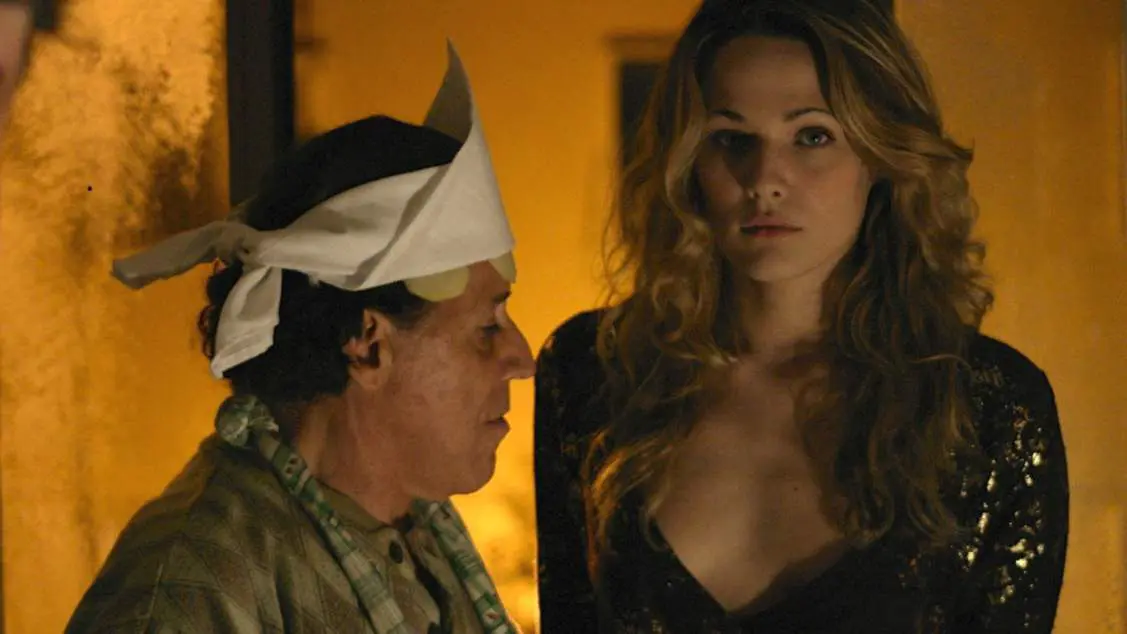
Well, whatever else it is, Megalopolis isn’t boring. Mad, megalomaniacal, chaotic, absurd and confused, certainly, but also inspired and weird in a good way, it’s a deliberately difficult piece of “late style”, financed entirely by Francis Ford Coppola out of money made from his wine business. Not beholden to anyone, the director can do what the hell he wants, and he has.
The closest thing to it in intention is Godard’s late works – odd movies like Film Socialisme or Goodbye to Language, doggedly playful and wilfully experimental attempts to say everything there is to say about everything. At another level it’s an 85-year-old man’s confusion about the way the world has gone put up onto the screen. Hence the chaos. The closest things in Coppola’s own oeuvre are recent experimental works like Tetro and Twixt. Approach from that direction and Megalopolis makes more sense. From the Godfather/Apocalypse Now angle not so much.
Because it’s Coppola he can pull in the names. Dustin Hoffman in a bit part. Shia LaBeouf in a dress. Jon Voight faintly doing a mad Donald Trump turn (ironic, considering Voight is now one of Trump’s Hollywood Tsars), Laurence Fishburne in an Erich-von-Stroheim-in-Sunset-Boulevard role as a chauffeur (and narrator – a real plus). As we swing in towards where the action plays out, members of the Coppola dynasty (Talia Shire, Jason Schwartzmann, Bailey Coppola), though most of the actual screen work is done by Adam Driver, playing Cesar Catilina, a character loosely based on Robert Moses, the architect of modern New York. And Nathalie Emmanuel, as Julia, daughter of Cesar’s arch enemy, New York City Mayor Cicero (Giancarlo Esposito).
Mapping classical Rome on to modern New York is just one of the many conceits. Presenting a costume drama (of sorts) shading into Romeo and Juliet is another, especially once Julia starts working for Cesar as a PR and fixer and a romance across a great divide starts to develop. On top of this wobbly foundation Coppola ranges fantasy, sci-fi, film noir, social commentary, a musical number, a disaster motive, gangsters, a critique of religion… and on it goes.
The look is not top-notch, because so much of it has been shot on greenscreen and Coppola clearly doesn’t have bottomless pockets. Think Tim Burton-era Batman and you’re most of the way there.
Coppola does a lot of handwringing about modern America – populism and the Kardashians are in there somewhere, and in Aubrey Plaza’s Wow Platinum there’s a journalist so far removed from the ideals of impartiality that she’s literally in bed with the man she’s writing about.
Lars Von Trier’s Europa trilogy popped into my mind while watching it – bulletins from a world going to hell in a handcart, with Driver and Emmanuel doing their best (but failing) to deliver some human-interest content in their weirdly uninteresting romance.
Did I also mention that Cesar has the ability to stop time? Or that he has invented an indestructible building material called Megalon?
In interviews Laurence Fishburne recalls Coppola talking to him about making this movie while they were making Apocalypse Now, so it’s been in the works for a while. In the intervening decades it’s clearly become something of an obsession for Coppola, who is reluctant to let it be streamed, because that’s not how you approach a proper work of art like this. It’s clearly a folly, as wrong as it is right, Coppola doomscrolling through the movie tropes to present a fractured culture with no attention span back to itself.
“When does an empire die?” Fishburne’s voiceover asks at one point. “There comes a time when its people no longer believe in it,” he answers. This is a film about an empire’s death, a fugue full of carnivalesque grotesques. Ironically, considering Coppola’s intentions, it’s best digested in bite-sized chunks. Cue a mega eye-roll from Mr C.
Megalopolis – Watch it/buy it at Amazon
I am an Amazon affiliate
© Steve Morrissey 2025