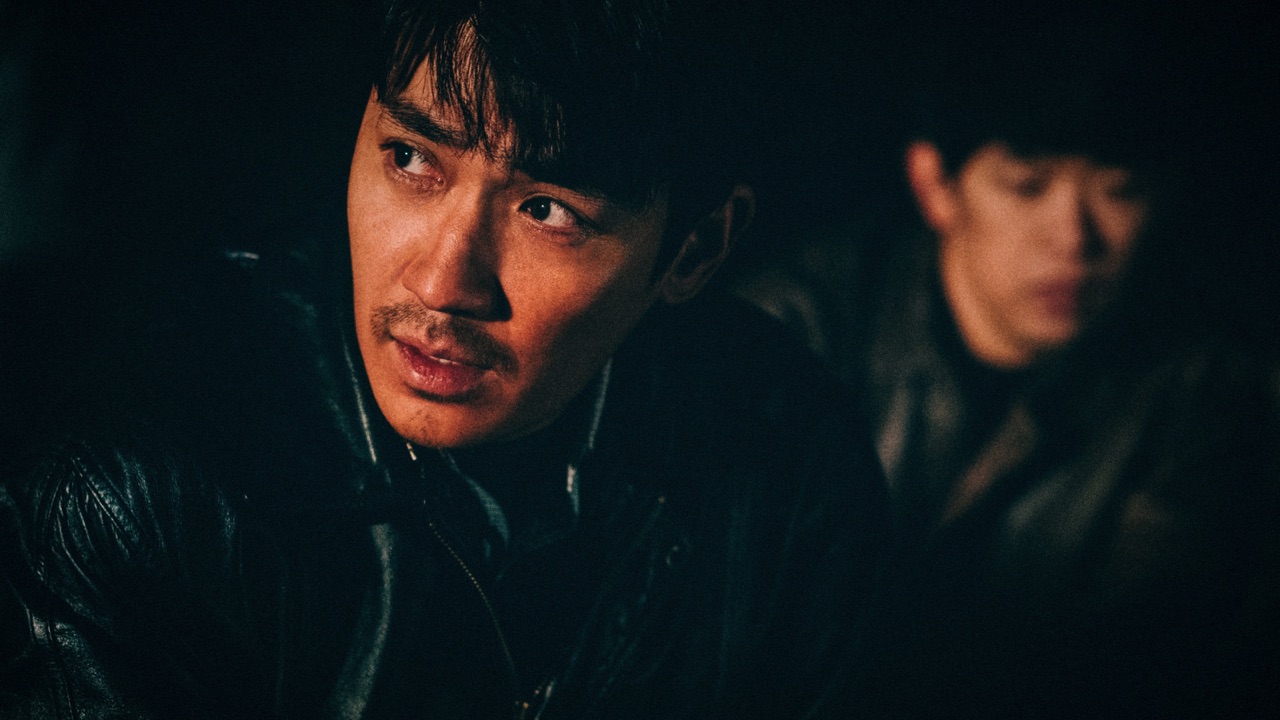
Imagine a crime thriller where the guy who looks guilty from the outset is the killer… or is he? Or where the police achieve their aims not through diligent hard work but by sheer fluke. Where every cliché of the genre gets an outing and most of them left entirely unmauled… but some of them are given a left-handed spin. But which ones? That’s Only the River Flows, a strangely ironic neo-noir from Wei Shujun, whose films often offer meta-comment on film-making and the workings of genre.
This time around Wei gets into all that straight away, installing his cop, Captain Ma Zhe (Zhu Yilong) in the shell of an old cinema (klaxon), where he’s meant to be investigating the case of the old woman murdered in the film’s opening moments. Chief suspect is the guy lodging with Granny Four, as the locals called her. He’s a weirdo known as the “madman” (Kang Chunlei). A prime suspect right there.
Helping Ma with the case is Xie (Linkai Tong), his slightly buffoonish but eager underling. Riding him from time to time is the precinct chief (Hou Tianlai), a man much given to windy pronouncements on team morale, who likes to play table tennis, and who will, when the moment comes, surely be asking Ma for his badge and demand that he take some leave.
Because the case is soon solved, obviously. The “madman”. And if the “madman” can’t be stood up as a proposition, then there are other suspects about, some of whom are offering themselves up as perps without any prodding, like the hairdresser Xu Liang (Jianyu Wang). He’s a witness and nothing more, Ma knows, but he seems very eager to be taken seriously as a potential killer.
Meanwhile, at home, the obligatory tortured personal relationship, the curve ball coming from the fact that Ma and his wife are happy and expecting a baby, which they very much want, though all is not going well in that department.
Then there are random drop-ins by fate, chance, luck, call it what you will, like Ma sitting and minding his own business not sure what to do next when a witness he needs to talk to just happens to walk by the window.
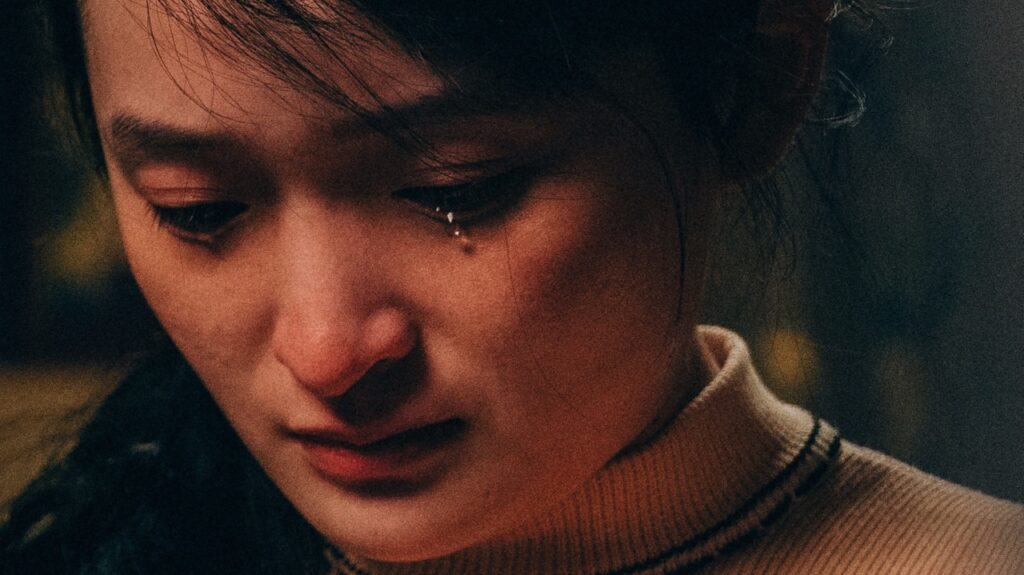
While we’re trying to digest all this playfulness and wondering if we should actually try to follow the case at all, Wei lays on a visual feast. China in the 1990s, looking downbeat but gorgeous. Rain falls. Buildings are half derelict. Interiors are functional. DP Zhiyuan Chengma dredges everything in darkness – murky interiors, low-key exteriors, lots of blue filtration, with everything shot on 16mm film and then (I’m guessing here) digitally messed about with massively, so as to lose the graininess of film but retain its waftiness. This is a China on the cusp of becoming the powerhouse of today, in a film poised between realism and genre stylisation.
It’s all beautifully done, an exercise in minimalism, to a large extent, which goes most obviously for the nicely understated performances by Zhu and Hou, as the cop and his sidekick. And the score (borrowed, bizarrely, from David Cronenberg’s Crash), which is barely there most of the time, but makes its presence felt at key moments, when it jangles in a way that takes us back through the 1990s all the way to 1940s noir.
There is something of Bong Joon Ho’s Memories of Murder about this film, in the cack-handed way the police go about their work, but also in terms of irony, which is a matter of tone in Memories of Murder, but is more centred on the workings (or not) of fate in Only the River Flows.
By the end Ma has got his man and is receiving a commendation in a full-uniform ceremony. Does he deserve it? Not really? Is the case solved? Not really. Did he win through using rational deduction and courage, as the citation states? In the two years since Only the River Flows came out, Wei has finished another three films. He is an excellent film-maker. And he’s in a hurry.
Only the River Flows – Watch it/buy it at Amazon
I am an Amazon affiliate
© Steve Morrissey 2025

