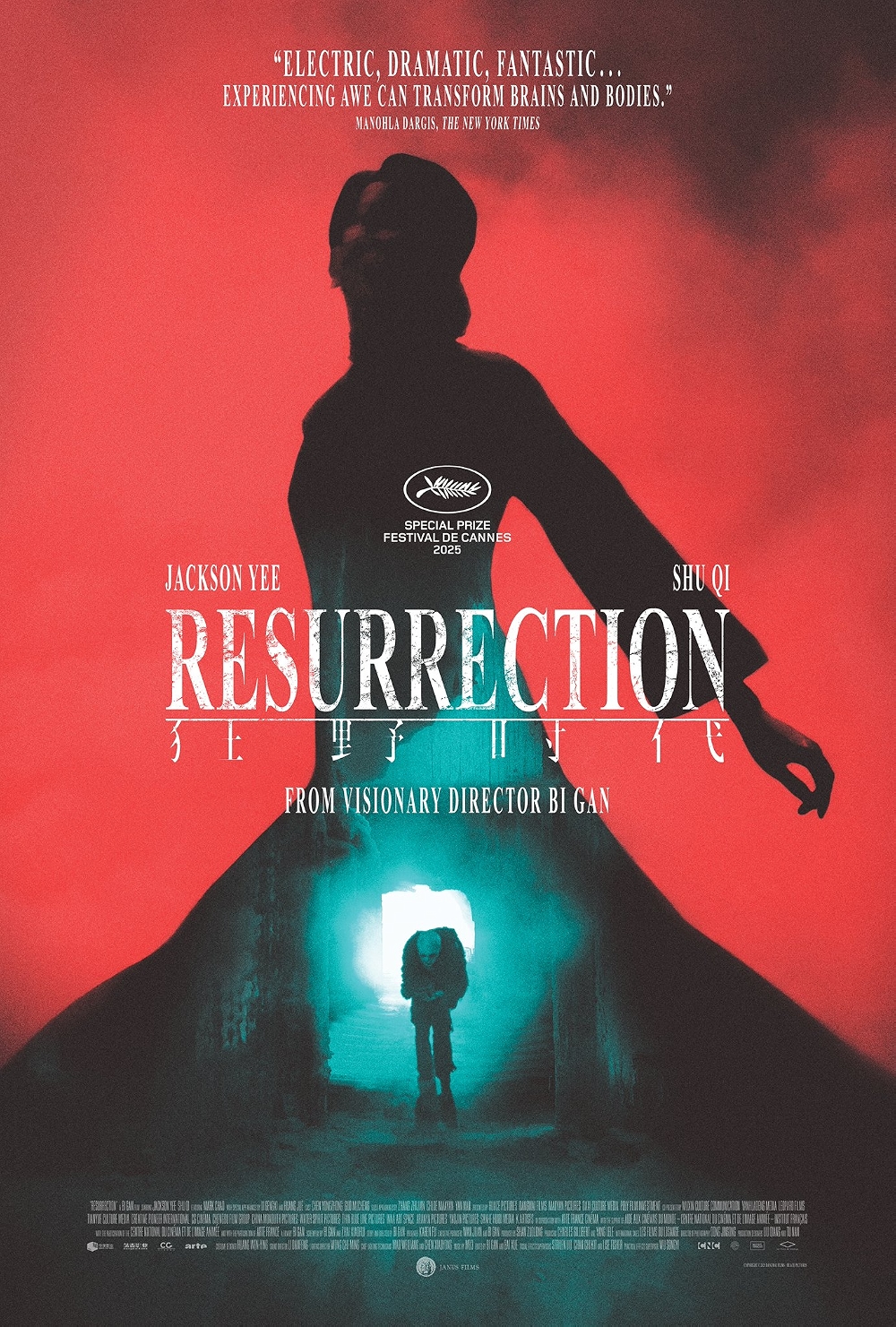
Absolutely one for the buffs, Resurrection is Bi Gan’s love letter and farewell to cinema. It’s dead is the overall message, but didn’t we have a lot of good times while it was here? A five-part compendium, each chunk different in terms of tone, look and genre, it’s a remarkable technical achievement, if nothing else. I’m saying “if nothing else” because I’m not convinced the non-buffs are going to walk away with much.
Bi starts off with an intertitle card. It introduces the first section and also acts as an overall summation of the movie’s theme. In a world where dreaming has been eliminated, it says, there are still those “deliriants” who continue doing it, meaning people who watch movies in the dark, presumably. “People not dreaming is like candles that do not burn,” it warns.
And then we’re off onto the rollercoaster, with part one a surreal silent movie mixing up motifs and themes from early cinema with stuff that came much later. As the story unfolds, about a woman re-introducing a lumpen creature to lost sensations, Bi gives us hints of the silent era’s Nosferatu and The Golem, heaping on suggestions of Georges Méliès, Orson Welles and Andrei Tarkovsky as he rolls out a formidably impressive display of the sort of technique the masters of silent cinema might have used – stop motion, double exposures, smoke, close-ups, colour tints and colour shifts, sudden changes of perspective, reversed film. Its like a giddy retro sci-fi.
Part two shifts into the 1930s, all hats and cigarettes, and a man being tortured in a basement. In story three we’re in an abandoned Buddhist temple for a horror story. The fourth segment is a modern morality tale about grifters on the make – think Paper Moon. And for the fifth, a woozy and sexy love story set on Millennium Eve, where a tantalising woman in a short denim skirt bewitches a wanted man who is unaware that she is a vampire. She’s played by Tai Zhaomei, and, honestly, eternal damnation would be worth it.
The style varies each time, with the image changing in aspect ratio, the colour palette too. The first one is the most impressive technically, the fourth one is the most developed in terms of plot and the last one, all done in one glorious take, is the most gorgeous – Bi is after French cinéma du look imagery and he gets it.
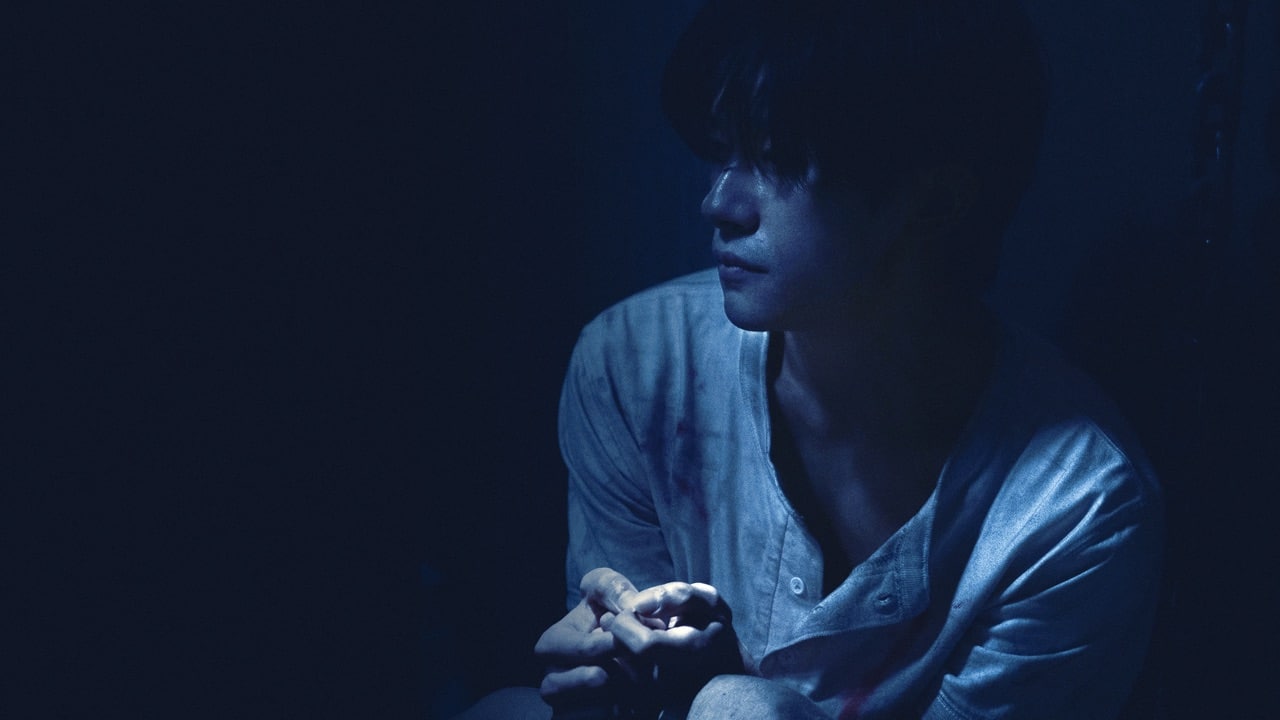
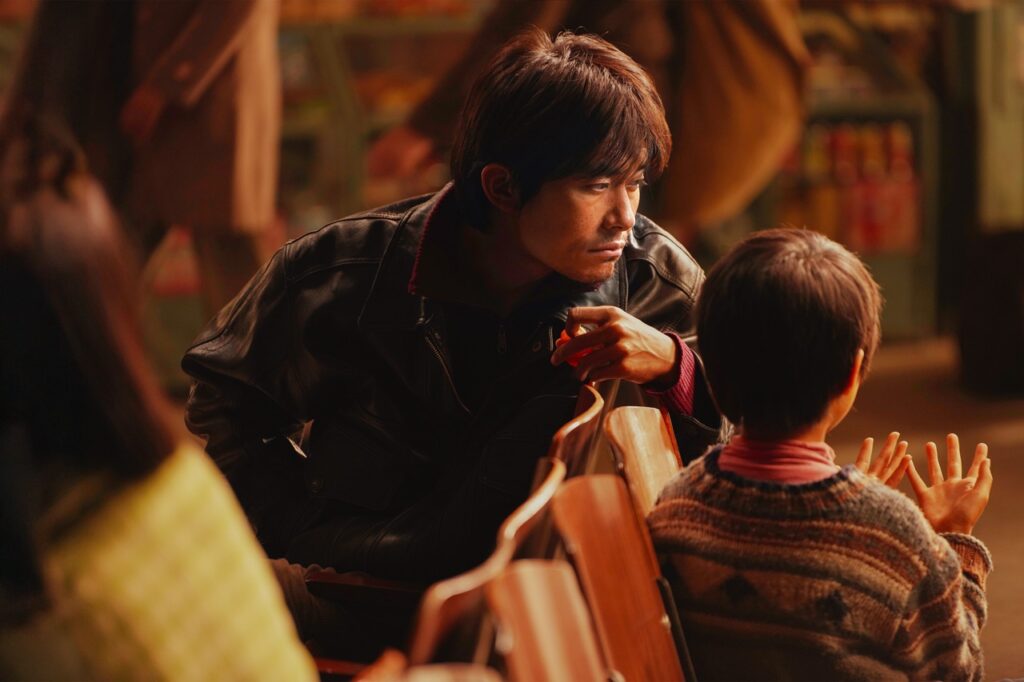
Common to all is Jackson Yee in the lead role in each section. You’d not guess. He suddenly seems 20 years younger as the blond Apollo in the final story, for instance. Yee was about 25 when this was made so clearly there’s been either special effects or make-up trickery in play earlier on.
To me this seemed at first like a bit of an exercise in wish fulfilment and breathtaking, though empty, technique. But I yielded at a certain point during the third story and by the end I’d surrendered to it. Bi is playing poetic games with his audience, spinning stories about beauty (life) and mortality (death) into a tapestry. Personally, I don’t buy the “cinema is dreaming” angle, romantically alluring through it is. I watch a film not to lose myself in my own dreams and imagination but in someone else’s.
But the wider and more pertinent point about the death of it all seems relevant. Paul Schrader’s semi-elegy to cinema, The Canyons, seems somehow apt (everyone hates it; I think it’s genius). And as Bi comes to the end of his film Shu Qi’s voiceover talks to us about “the ancient and long forgotten language of cinema,” as if it were medieval manuscripts that had been the subject. As the end credits get ready to roll, there’s a shot of a ghostly cinema audience assembling and sitting, rapt, as the screen in front of them lights up.
Resurrection – Watch it/buy it at Amazon
I am an Amazon affiliate
© Steve Morrissey 2026