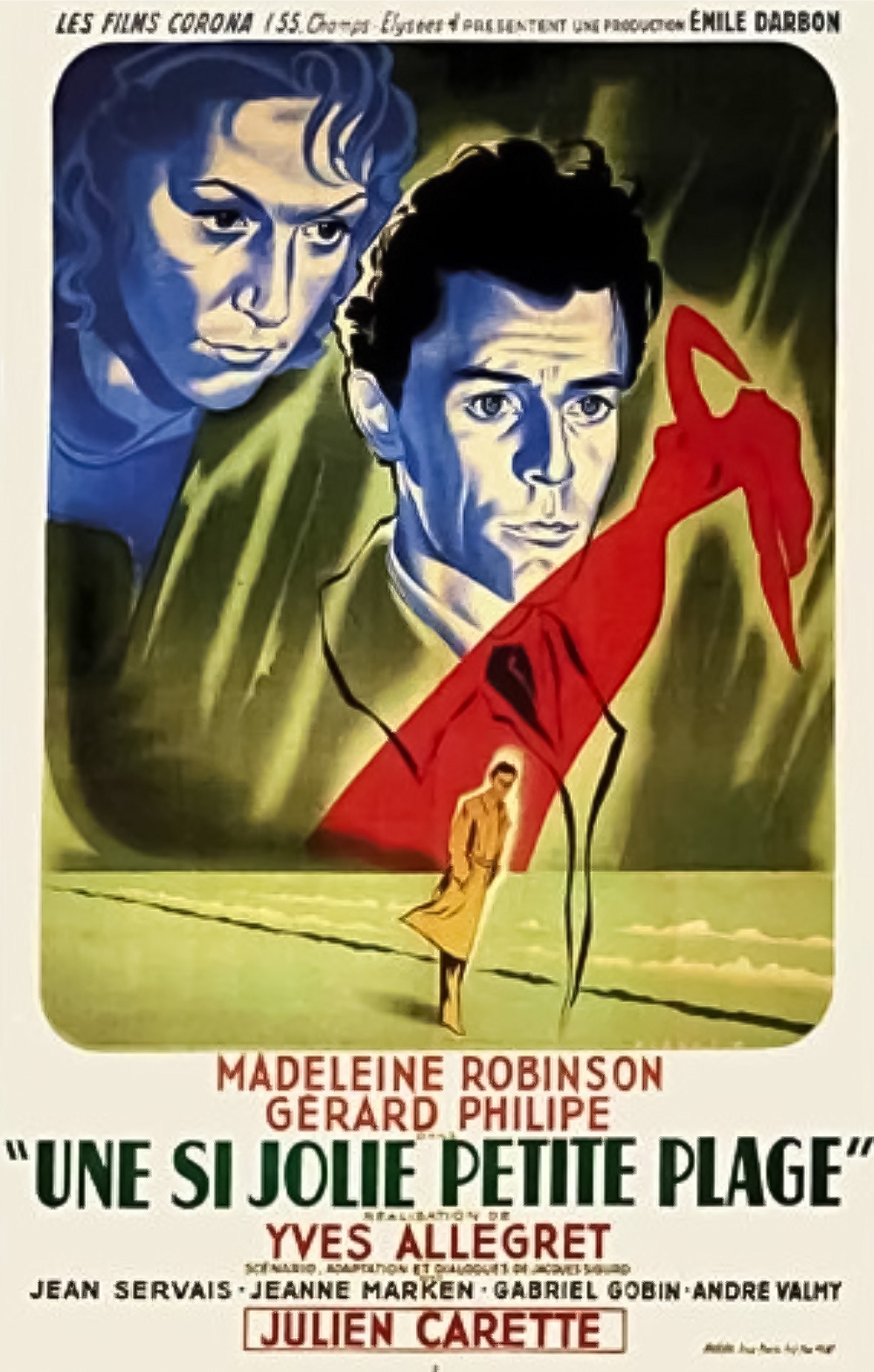
Seedy atmosphere is Riptide‘s USP. So seedy is it, in fact, that when Une Si Jolie Petite Plage (its original title) debuted in 1949 it was felt necessary to add a little disclaimer up front for French audiences in an attempt to head off complaints. The makers of the film meant no offence to war orphans, it says (in so many words), they are the victims here and do not deserve their bad reputation.
Tiny data dump. War orphans lived in state-run orphanages and were often loaned out to local businesses, where they’d work for little or no money. Often horribly exploited, they did the dirty work, in every sense of the word.
Back to the movie. A lone young man arrives by bus at a rain-lashed town on the north coast of France and checks in at the local hotel. A stranger, the regulars in the hotel bar reckon. The town has a lovely little beach, they tell him – Such a Pretty Little Beach is an alternative title (a translation of the French original) – if only he’d come in summer. What does this loner want? Why is he here out of season? Is he really a stranger? There is a flash of recognition in the eyes of the hotel’s aged, demented owner, though no one takes much notice of him any more, certainly not the nasty gossip Madame Mahieu (Jane Marken) who now runs the place.
With his big head of wavy Jean Gabin-esque hair, Pierre (Gérard Phillipe) is a sad and existentially withdrawn figure. He barely communicates with his fellow guests. But, as he goes about his daily routine of tramping down the beach – taking the air for his health, he says – he is drawn to two other characters. Marthe (Madeleine Robinson), the hotel’s dogsbody, worked to the knuckles and lonely. And a lowly character billed only as “Le pupille” (“the ward”), a war orphan who does odd jobs at the hotel, a “bad seed” likely to wind up in prison (says Madame Mahieu) who slaves away from before dawn into the night at whatever unsavoury task is thrown his way.
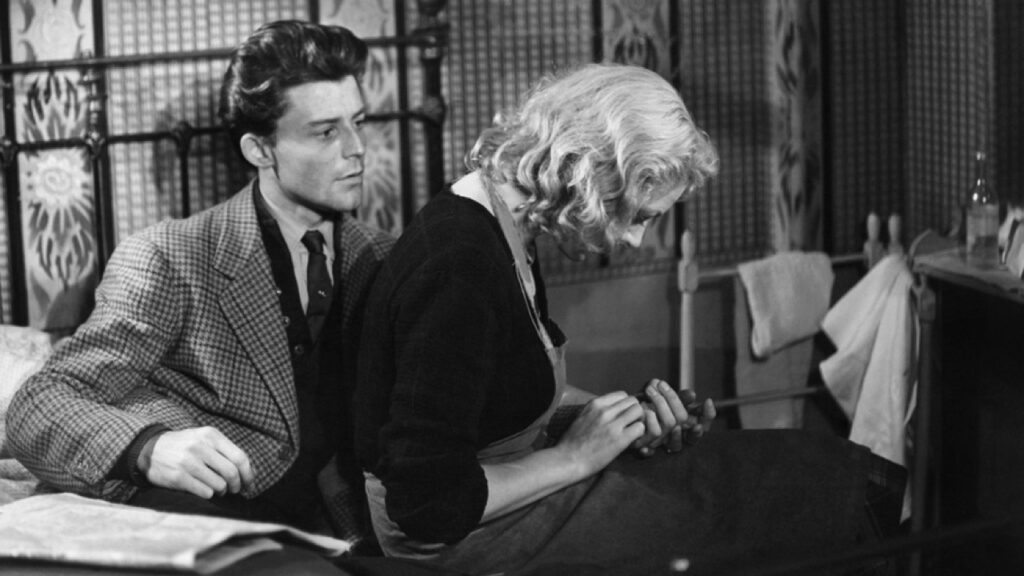
Riptide is a curious title for a film about abuse and its traumatising after-effects, but that’s what is on offer. Pierre, we quickly surmise, is back at the scene of some crime and it becomes more obvious what that crime was when a well-to-do couple, the Curliers, arrive from Paris. “Le pupille” (a touching Christian Ferry) clearly is expected to perform extra-curricular activities that go beyond normal hotel duties.
We’ve worked out long before the end what’s going on, who Pierre is, why he takes such an interest in the welfare of “le pupille” and why the old man recognises him. And from little snatches of dialogue overheard in the bar where Madame Mahieu holds court for her regulars, other little plot details – the death of a famous singer who used to frequent the hotel in happier times – help us complete the fairly easy jigsaw.
It is the way that director Yves Allégret does it that is so compelling. Elegant yet ceaselessly bleak, the sombre lighting (by Henri Alekan, Jean Cocteau’s DP) and relentless sheeting rain (the local fire brigade came in handy) match the dark subject matter. Pierre’s gabardine surely can’t have been that waterproof. How can any man keep a cigarette alight in those downpours? The water is seeping through the walls of the hotel, where the regulars at the bar appear to cabal together conspiratorially.
Pierre may not be able to outrun his past – a potential romance with Marthe is dangled – but he might be able to alter the present. “Le pupille” – no name, no pack drill – eventually becomes the most important person in this uneasily moody and strange movie whose incendiary plot is more 21st century than late-1940s. Allégret, clearly, was a man way ahead of his time.
Riptide – Watch it/buy it at Amazon
I am an Amazon affiliate
© Steve Morrissey 2025