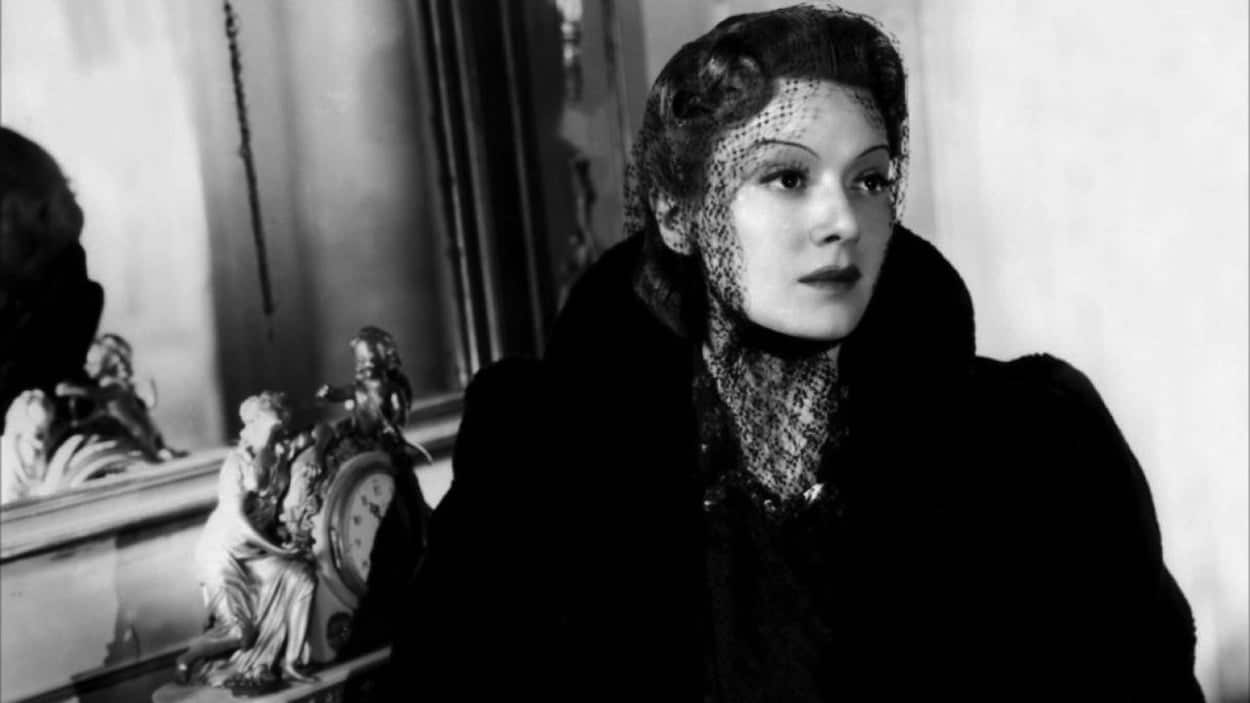
When the name Max Ophüls comes up, Sans Lendemain isn’t the first film most people think of. That would probably be Lola Montès, or La Ronde, or Letters from an Unknown Woman. But this 1939 outlier is distinctively Ophüls, a superb if small film, knotty in theme, beautiful in look and with a great performance by its female star, Edwige Feuillère.
Ophüls was born Maximillian Oppenheimer and was a German Jew who fled the Nazis in 1933, made a few films in France, before fleeing the Nazis again in 1941, to America, where he never got quite the platform he deserved. Fellow directors like Preston Sturges championed him – partly because his lavish style clearly insisted on directorial primacy – but Ophüls’s Hollywood output simply doesn’t have the same decadent bite as his European stuff because the studio system constrained him too tightly.
Sans Lendemain is, however, the real deal. Made in France in 1939, it starts with four topless dancers in a club in Paris and then goes on to tell the story of the club’s star turn, Evelyn, a dancer who, like all the girls in the club, earns her money vertically while the lights are on, then horizontally when they’re off.
One day Evelyn bumps into Dr Georges Brandon, an old flame from Canada who knew her from before she started taking off her clothes for money. Flashback to happier times: Evelyn and Georges in Canada, falling in love, before Evelyn inexplicably does a midnight flit. Meanwhile, in the present, those few days that Georges is in Paris, trying to woo Evelyn for a second time, while she tries to stop him from learning what she’s become.
We’re convinced of Evelyn’s virtue, because we have seen that she dotes on her son and uses the money she can’t earn any other way to pay for his education. But Georges may not be so easily won around as the audience. So, to keep the illusion alive that she’s pretty much the same woman he knew ten years earlier, Evelyn rents a swish apartment at huge expense and pretends that she lives there, borrowing the money from a high-end pimp and telling him that the visiting Canadian doctor will be a soft touch. Is Evelyn lying to the pimp, or to Georges, or to herself?
Why did Evelyn run out on Georges all those years before and why go to all the trouble of this elaborate deception? Feuillère’s performance suggests finer motives but nothing is really clear until Ophüls definitively lets us have an explanation, in a scene between Evelyn and Georges’s old friend Armand.
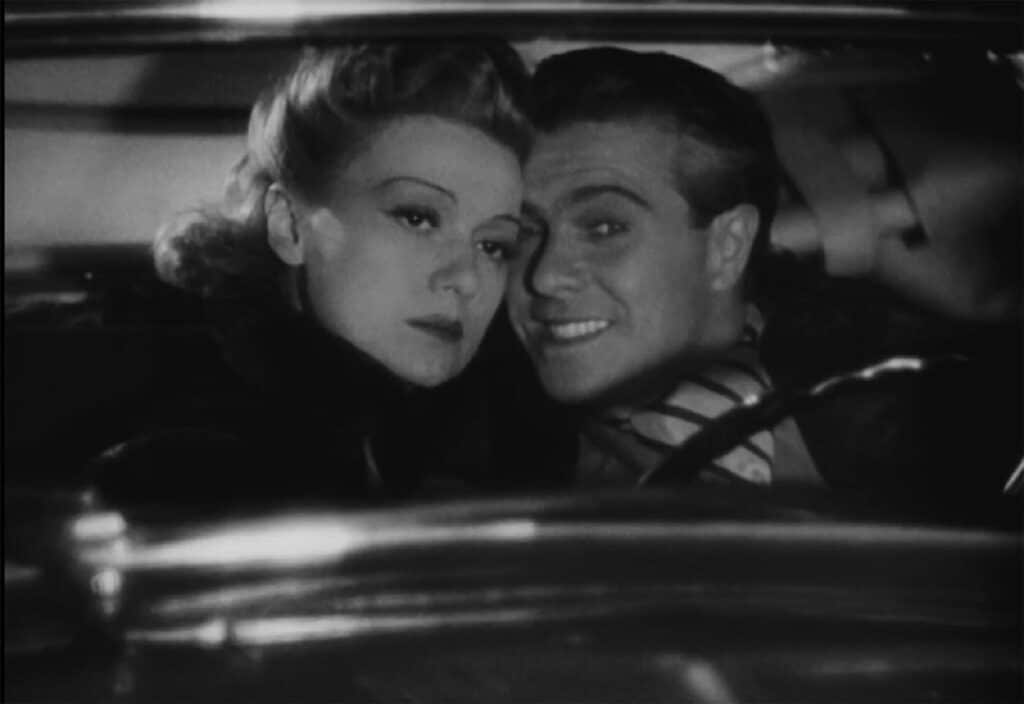
Though there’s a slightly murky motivation and an ending that might be too inconclusive for some, the mood of this film cannot be faulted. Everything is suffused with doom. That starts with Feuillère as the brittle Evelyn, and as Evelyn sets off on her grand deception, winding herself into an ever tighter spot, Ophüls amplifies her performance by pulling the shadows in around her.
For lovers of his later, expansive works, this is Ophüls in miniature. It’s still lavish but his trademark crane and tracking shots are rationed and his gorgeous old-school lighting dialled down a touch. Nevertheless Ophüls conjures mood like almost no one else. In the opening scenes in the club, for instance, we get a real sense of this dark and claustrophobic place, where men come to buy women and couples dance as if glued together. Backstage, nipples and feathers jostle for prominence and the club owner, a sweaty gorilla of a man, directs the girls to tables where paying customers wait to paw them.
Against this is the world of Georges and his friend Armand – rich, bright, easy, superficial. And stuck between the two Evelyn, her arched eyebrows like a 1930s version of Edvard Munch’s The Scream.
So much is great but not everything is. Jorge Rigaud’s Georges is a touch flat – who’d fall for this ninny? – and so is Daniel Lecourtois as Georges’s friend Armand, neither of them really making a great case for the well-to-do life being the good life. Michel François, the kid playing Evelyn’s son, Pierre, is good though, convincing as a little boy who loves his mother but is out of his depth when it comes to deception. As Henri, the club MC who is probably secretly in love with Evelyn, Paul Azaïs paints an incisive portrait of another doomed person in only a handful of scenes.
Sans Lendemain is often translated as There’s No Tomorrow, or Without Tomorrow. Both renderings catch the tone of it – downbeat and then some. It’s a short film, at only 82 minutes, but it packs quite a punch.
Sans Lendemain aka There’s No Tomorrow – Watch it/buy it at Amazon
I am an Amazon affiliate
© Steve Morrissey 2024

