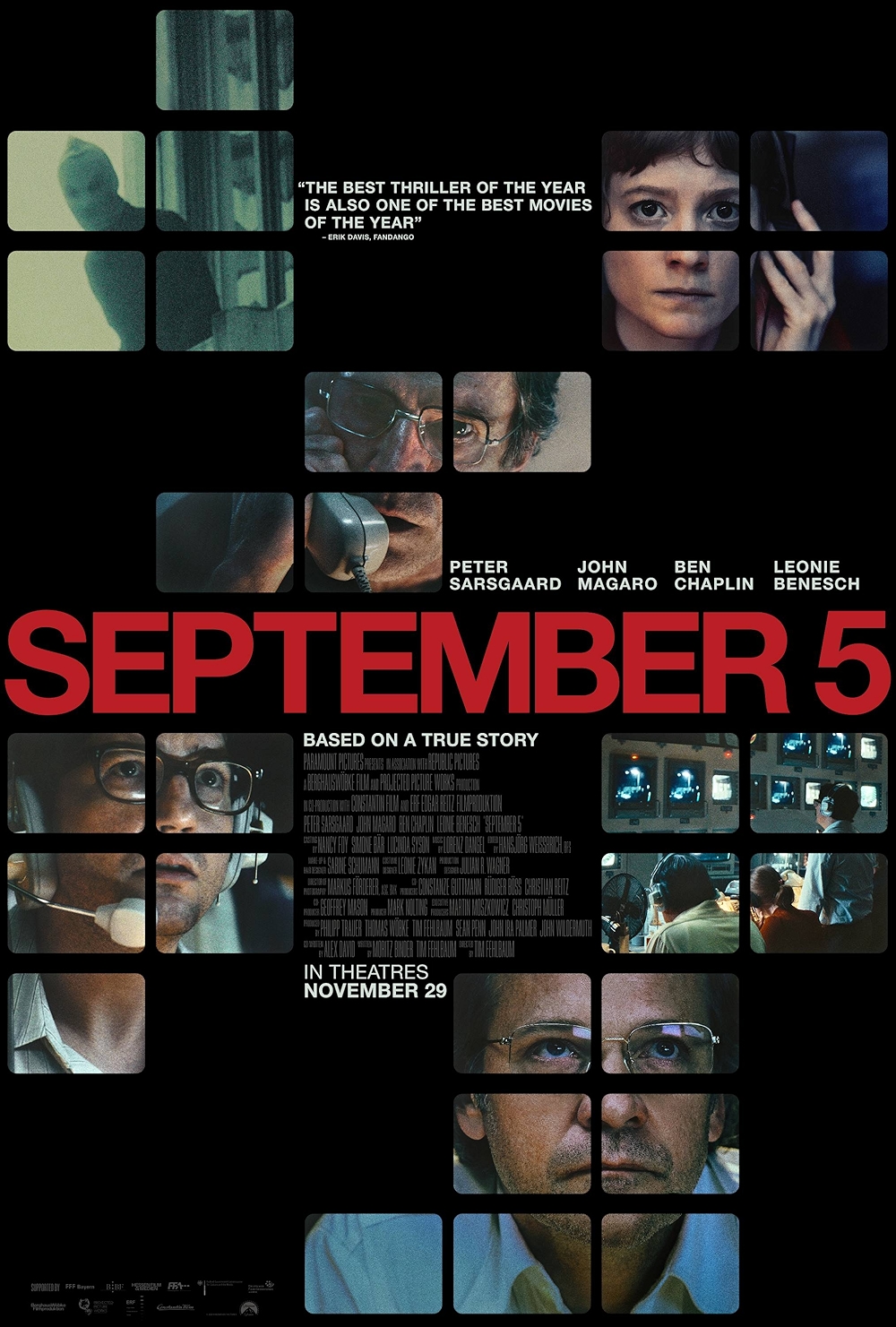
Cool rather than hot, and about events not as they happened but as they were reported, September 5 is the story behind the story, of how a sports team from ABC TV found themselves at the cutting edge of a major news event at the 1972 Olympics, when a group of Israeli athletes were taken hostage by a terrorist group, Black September, as 900 million viewers around the globe looked on.
Mark Spitz winning seven swimming Gold medals, Olga Korbut performing her Dead Loop on the asymmetric bars, Munich is remembered for many things, but probably most of all for the moment when the German Olympic authorities’ attempt to perform a hard reset on the country’s reputation – the slogan was “Die heiteren Spiele” (“the cheerful Games”) – was suddenly eclipsed by grim events.
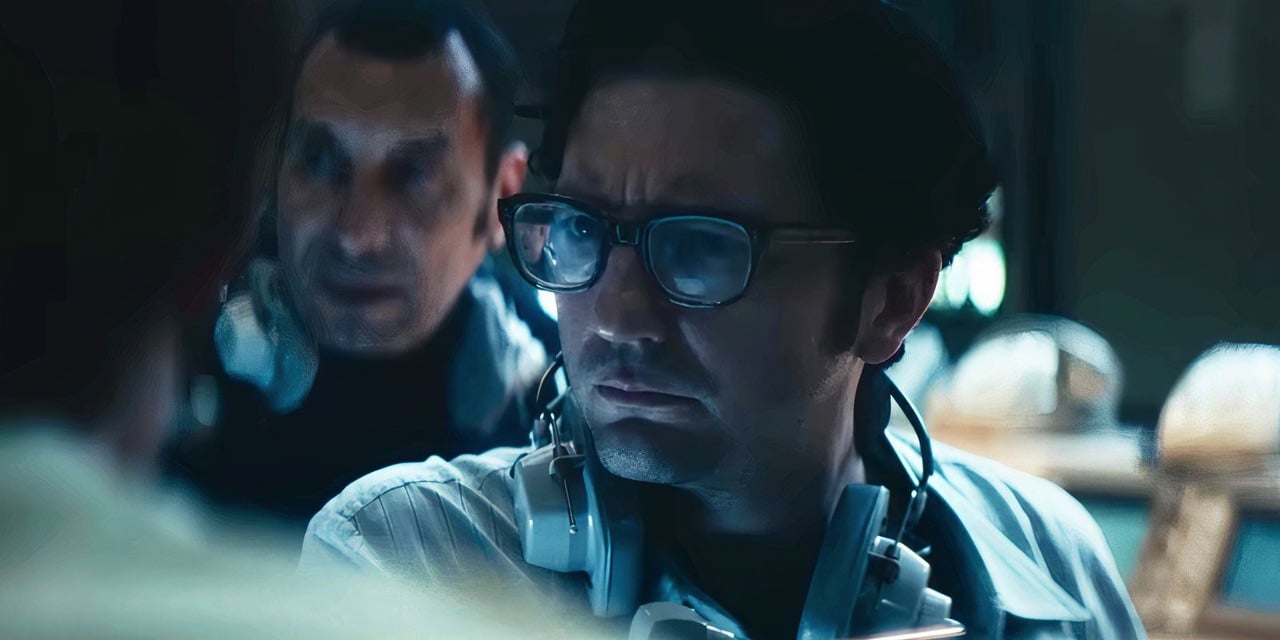
In 1970s quasi-All the President’s Men style, director Tim Fehlbaum sticks our noses in the room with the people scrambling to put together the live broadcast as the situation changes minute to minute. Plus one doughty woman, a German secretary (Leonie Benesch) whose ability to speak English suddenly propels her up the rankings. One second she’s being asked to get coffee for the guys, the next she’s the most important player on the team, listening in to the police radio, translating on the hoof, now pivotal rather than incidental. Around the always impressive Benesch a superb cast as the sweaty, gabbling sports team re-orienting themselves as hard news experts – John Magaro (another chameleon turn and the movie’s lynchpin as the head of the control room), Peter Sarsgaard (ABC sports boss and an old-school journalist with a nose for a story), Ben Chaplin (the boss’s uneasy number two and the guy who’d rather be right than first). All excellent and all clearly understanding that this is a dramatic exercise in heroic journalism: why the “legacy media” has a legacy.
No one seems to be smoking, when surely the confined and dark rooms where the story plays out would have been a fug, but that apart, this is an atmospheric portrayal of things as they might have been. Completely the opposite of Fehlbaum’s underrated debut feature, Hell, which is worth seeking out for lovers of the post-apocalyptic. Fascinatingly, the DP is Markus Föderer, who also did Hell. The two films could not be temperamentally more different.
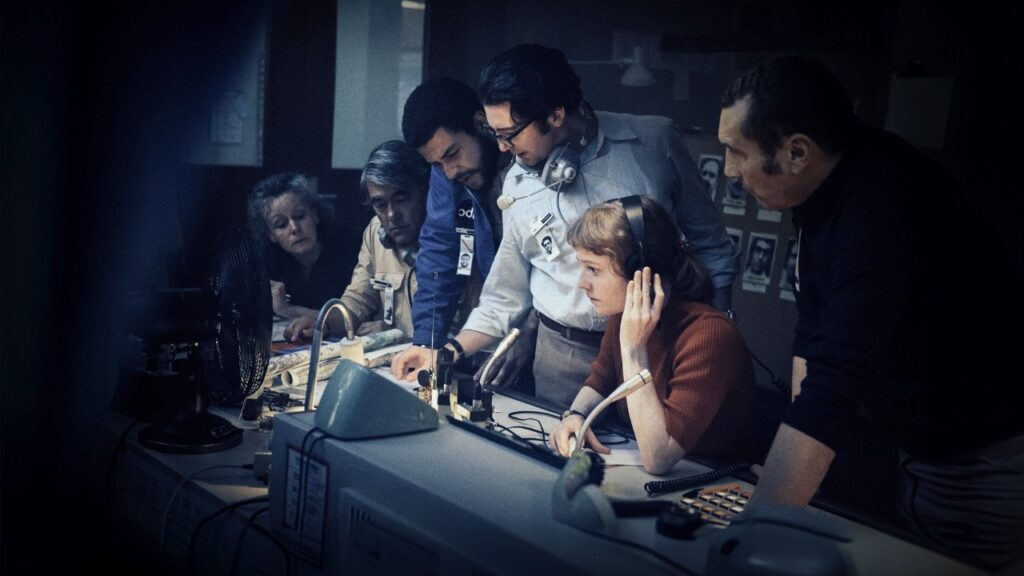
For “you are there” atmosphere, Fehlbaum incorporates plenty of actual footage, and it’s brilliantly used, which is doubly remarkable when you think back to blurry TV imagery over shaky satellite links in those days. The score by Lorenz Dangel simmers away quietly in the background, way down in the mix for fear of ruining the illusion.
In another year, another era perhaps, this might have been Oscar bait – the performances are Oscar-worthy for sure. But there is a problem with the movie that no amount of shirtsleeved histrionics can get around. The hostages are the story, and their fate is grim. Should we, in the scheme of things, really be that bothered about some sports guys having a moment of glory? A scoop versus people’s lives?
It is, in a way, what journalism is all about – get the story and to hell with the consequences – but it isn’t that edifying to watch. If being asked to cheer while the story is followed “wherever it’s leading us” (even mass murder) feels a bit callous that’s because it is.
But if you can swallow that elephant in the room, then September 5 does fill in aspects of a story that’s already been told, from different angles, in 1999’s One Day in September and 2005’s Munich. And in doing so it does something else – suggests that the media landscape changed on that day when, brought into the world by people who didn’t quite know what they were doing, the era of rolling news was conceived.
September 5 – Watch it/buy it at Amazon
I am an Amazon affiliate
© Steve Morrissey 2025