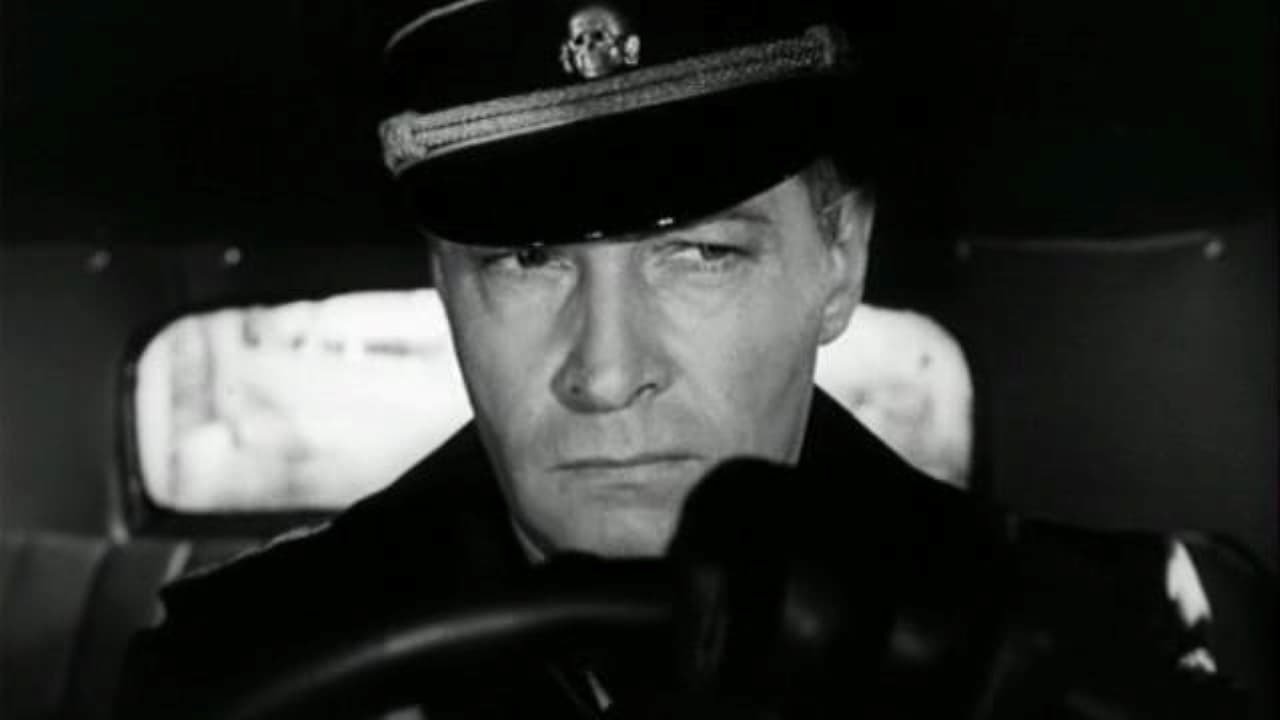
Watercooler TV from a land without watercoolers, Seventeen Moments of Spring lays claim to being the most successful Soviet TV show ever made. It was commissioned at the command of KGB boss Yuri Andropov. USSR leader Leonid Brezhnev loved it. But the public did too – streets emptied when it was first aired, stripped over 12 nights in 1973. It seems that no matter what Soviet citizens thought of the regime, everyone agreed that the war against the Nazis had been a just one. Sticking it to the Americans was no bad thing either. It also happened to be compelling TV. And it still is if you turn off the bit of your brain addicted to instant gratification.
The Russian James Bond is the usual shorthand for its central character, Max Otto von Stirlitz, a Soviet spy embedded in Germany’s counter-intelligence. Von Stirlitz has been in place for so long that he’s risen through the ranks. Now, near the top of the organisation, he’s secretly working to undermine US efforts to pursue a separate peace with the Germans (and thus shut the USSR out from the post-War settlement).
This is the beginnings of the Cold War while the hot war is still raging, in other words. And in this telling the US is clearly responsible for the drop in temperature. Everything takes place in 1945, in the dog days of the Nazi regime, when everyone on all sides is beginning to realise that the war is over, or soon will be. While Stirlitz runs his agents, US intelligence boss Allen Dulles engineers secret negotiations in neutral Switzerland and Moscow keeps an eye on Stirlitz’s work. The Nazis, meanwhile, are all manoeuvring for position, and even the most loyal diehard is preparing to flee the sinking ship.
Stirlitz is actually more George Smiley than 007, and is a character whose quiet demeanour and systematic methods are so low-key that his name has become a byword in post-Soviet territories for deadpan behaviour. To this day Russians make Stirlitz jokes, often intoned in imitation of the show’s lugubrious voiceover by narrator Yefim Kopelyan. Wikipedia has a few in an entry on Russian humour, which is where I got this one. “Stirlitz opens a door, and the lights go on. Stirlitz closes the door, and the lights go out. Stirlitz opens the door again; the light goes back on. Stirlitz closes the door; the light goes out again. Stirlitz deduces: ‘It’s a refrigerator’ ”.
It is funnier if you’ve seen the show. Here’s an actual example of Stirlitz’s obsessive spycraft from the show. In episode two we see him receiving a note in code from one of his agents. He reads it, then burns it, then takes the burnt bits and puts them in an envelope, then scrunches the envelope up, and then burns that before throwing the ashes in the fireplace. Now that’s methodical.
It’s not particularly dramatic though. In fact, over the 12 episodes things can get painfully static. Episode eight ends, for instance, on Stirlitz asleep in his car. When episode nine starts, he’s still asleep in his car.
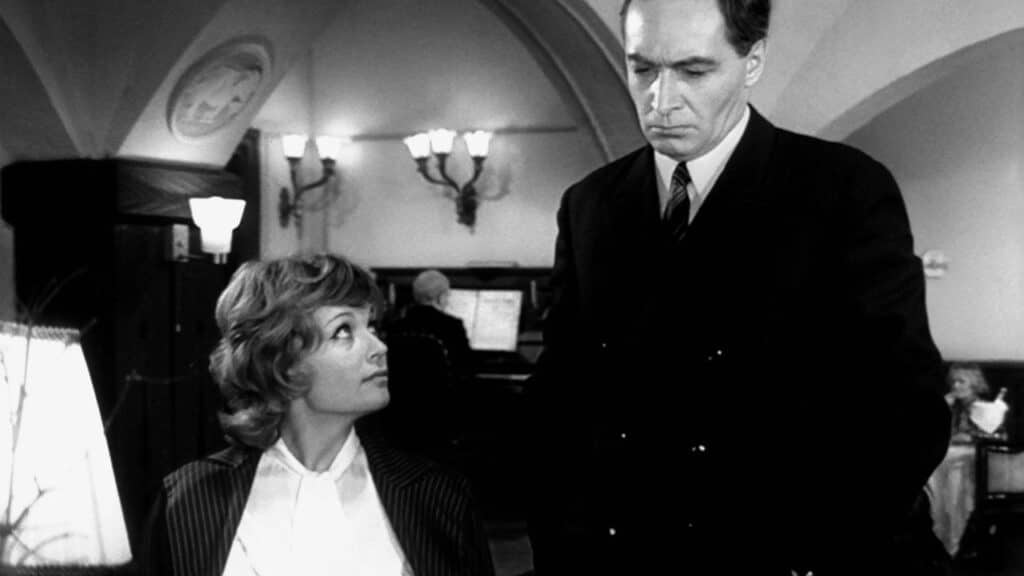
One of the reasons the show works so well is because Vyacheslav Tikhonov resists the urge to add colour to the mid-grey Stirlitz, forcing audiences to lean in for any flicker of an eyebrow or movement of the mouth. Was that an emotion? Is Stirlitz four steps ahead or is he flailing beneath the calm exterior? And against Tikhonov’s playing of Stirlitz there is Leonid Bronevoy as Müller, a high-ranking Gestapo officer convinced there is a mole operating somewhere. Over the 12 episodes Müller’s suspicions will grow until, it seems to him, Stirlitz must be his man.
It is the cat-and-mousing of these two that give the show its dramatic oomph, and Bronevoy’s acting is as superb as Tikhonov’s. The scene where Müller finally pulls Stirlitz in for questioning and the two men bat different versions of possible truths back and forth is what the whole thing is really leading up to, and it’s worth the wait. The writing, by Yulian Semyonov, is superbly crafty and multivalenced, and the direction, by Tatyana Lioznova, is absolutely right, as it has been throughout: punchy, unshowy, economical.
As an added small bonus, the show also acts as a history lesson on the Second World War. There are thumbnail sketches on all the key Nazi figures, from Hitler on down, done as cutaway briefings, complete with glimpses of supposedly classified files.
That’s another small but telling thing – the casting of the actors playing the dramatically minor figures of Hitler, Göring, Bormann, Himmler and so on is so good that when archive footage of the real people is dropped in there is no grating of gears.
Lots of characters, long involved storylines, historical back stories, a mournful tone, the determination that nothing should be rushed. It is all very, very Russian, right down to the soulful outro song. Now where can I find the prequel movie from 1975, Diamonds for the Dictatorship of the Proletariat?
Seventeen Moments of Spring – Watch it/buy it at Amazon
I am an Amazon affiliate
© Steve Morrissey 2025

