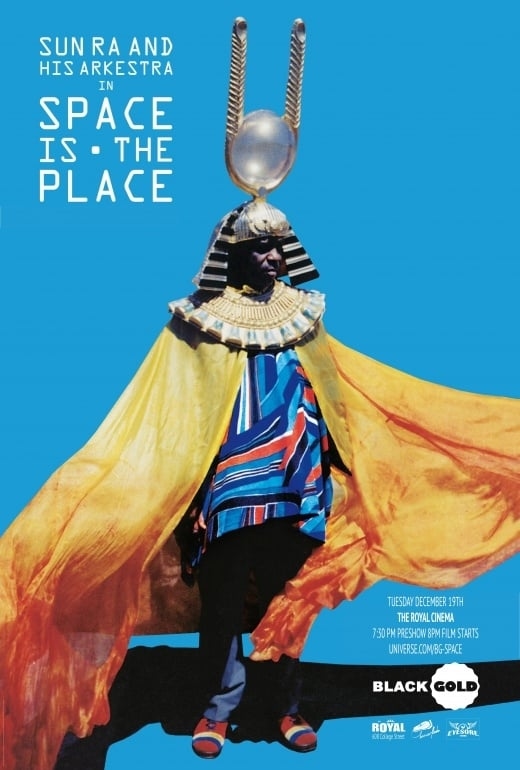
Without Space Is the Place no Black Panther? Afrofuturism on screen pretty much starts with this cosmic freak-out from Sun Ra. Made in 1972, released in 1974, Space Is the Place sets out an alternative agenda for black Americans, suggesting an imaginative future of sci-fi possibility unconstrained by the daily grind of the street hustle.
The film builds theoretically out from Ra’s series of Berkeley lectures titled The Black Man in the Cosmos. With sci-fi and white guys inevitable bedfellows at the time, Ra’s lectures about the place of black people in modernity had seemed like missives from an alternate reality (actually, the future, it turned out). His film sets out with the same agenda, mixing factual footage from a pool hall, a club, a community centre and on the streets with interludes where Ra engages in a philosophical standoff with a pimp (Raymond Johnson) out in the desert. There’s also a slender, thrillerish storyline involving Ra first visiting Chicago in the 1930s and then coming to Earth in the 1970s to transport the “black race” (he means black Americans) to another planet where they can develop away from white people. This goes awry when Ra is kidnapped by envious white Nasa scientists who want to know about his spaceship’s propulsion system – it runs on music – and how he converts his “harmonics into energy”?
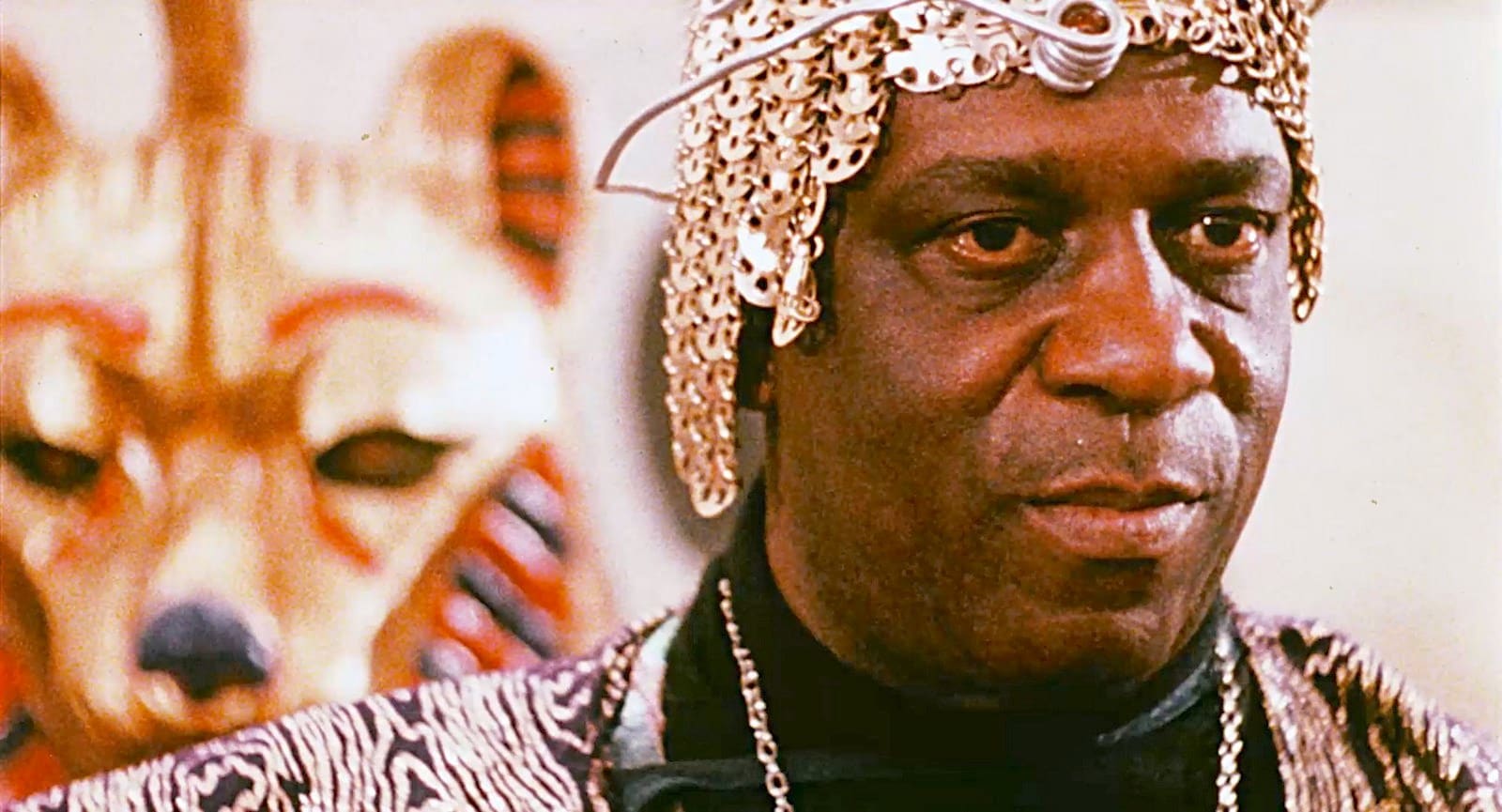
Dressed throughout like a tinfoil pharaoh, as was his wont, Ra is a goofily benign figure, which is handy because the message of the film is that black people have done themselves no favours by embracing and fetishing the ghetto. Reject the pimp stereotype, free your mind, reach for the stars, he offers them as an alternative prospectus. The real-life people in this film, particularly at the community centre he visits to deliver his message, do not seem entirely convinced. It’s to the credit of Ra and director John Coney that this stuff all stays in.
The film is culturally important rather than a compelling watch, as was the case with Sun Ra’s music, which often drove even dedicated audiences to distraction by diluting its moments of genius with lots of noodling in the key of blah. It’s made as an experiment to prove that improvisation can do things that the crafted storyline cannot. In fact the “story” – such as it is – was bolted on after the bulk of the shooting had been finished. The retrofitting is obvious.

George Clinton’s Parliament/Funkadelic mothership was swimming in similar waters at this time, as were Earth, Wind & Fire, but Ra’s slightly thrift-store aesthetic is all his own. The film is gaudy and cheap, shot in bright colours with the contrast high, with a look that’s deliberately reminiscent of hokey 1950s sci-fi, including clunky special effects that are either hopeless or charming depending on you mood.
People are instruments in “the vast orchestra of the cosmos,” Ra says at one point. “Space is not only high, it is also low,” is another of his frequent gnomic pronouncements, which come thick and fast once Ra has set up his Outer Space Employment Agency and started recruiting black people for a new life on another planet. Its slogan: “Space is the place”.
How do you break free from ghettoisation? By removing yourself to another planet where there are no white people. It’s a bit flimsy as an answer, though the parallels to the Black Power movement’s notion of self-determination are there, even though Ra by this point had become disillusioned with the its methods.
A messy, borderline-psychedelic fusion of music, dance, colour, street life, science fiction and ancient history, Space Is the Place is much like Sun Ra himself, a complete one-off.
Space Is the Place – Watch it/buy it at Amazon
I am an Amazon affiliate
© Steve Morrissey 2024