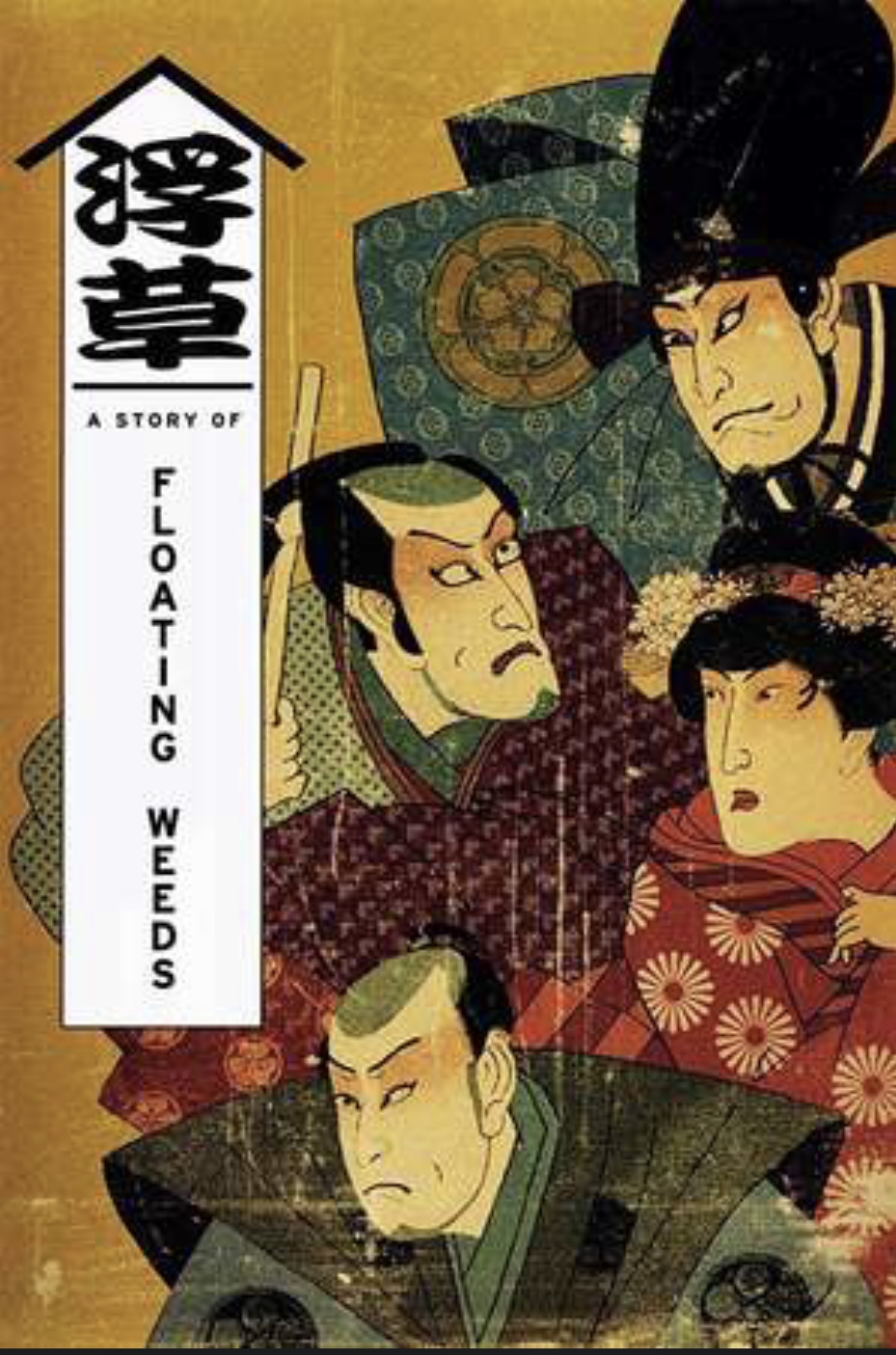
Beautiful, exquisite, poetic – choose your adjective, but there’s no denying the extraordinary visual effect of A Story of Floating Weeds, Yasujirō Ozu’s silent glory from 1934. A box-office smash in his native Japan, it was also a critical hit worldwide, and is a good place to start if you’re interested in tracking the development of Ozu’s classic style. Low, slow and nothing fancy, if you’re after a soundbite.
It’s the story of a troupe of kabuki players who blow into a small town where, years before, the troupe’s leader, Kihachi (Takeshi Sakamoto) fathered a child with a young woman, Otsune (Chōko Iida). Now, older and perhaps tiring of the life of the disreputable itinerant player, Kihachi is wondering if it’s time to settle down with his former mistress. To do that he needs to overcome two obstacles. His son, Shinkichi (Kōji Mitsui), does not know that Kihachi is his father. And Kihachi’s current mistress, Otaka (Emiko Yagumo), is determined not to be put aside without a fight.
Japan was slow to embrace the talkies but 1934 is late even by Japanese standards. Ozu is such a visual storyteller that it doesn’t matter. In an early scene, Kihachi and Shinkachi go fishing together, and from behind Ozu shows the older and younger man on the idyllically sunny river bank casting their lines in exactly the same way. It says “paternity” in a way that’s direct, touching and just a touch cute.
We’re about 90 per cent of the way to Ozu’s high style – static “tatami” shots from just above the ground, “pillow shots” of still lives (flowers, trees, buildings) to demarcate scenes, a lack of wipes or dissolves in editing, a standard 50mm lens and nothing else, tracking or dolly shots kept to an absolute minimum, or absent altogether.
Ozu’s spare palette extended to storylines, characters and themes. Over a decades-long career, he visited the same people and ideas repeatedly – made the same film over and over, if you’re sharpening an axe – but does it most explicitly with A Story of Floating Weeds, which he remade as Floating Weeds in 1959. The later film is in colour, no longer silent, half an hour longer and much more celebrated – there’s a good Criterion double-Blu-ray offering (linked to below) if you want to do a compare and contrast.

Ozu takes great pains over his visuals but doesn’t get bogged down in them. His film has a rhythm which, once established, drags us inexorably forward, with little character gestures (a young kabuki player absent-mindedly scratching his balls on stage) and motifs (Shinkichi’s bicycle as a symbol of his youth and freedom) adding air and weight.
Through it all the character of Kihachi remains murky. Is he really so mindful of his low status as a travelling actor that he doesn’t want his son to know who his father is? Or is he using that as an excuse to keep on living his “me first” life?
To one side, ever expectant and quietly tragic, Otsune waiting for Kihachi to choose her and the settled life over younger Otaka and the open road. In one of the film’s great scenes, Otaka tracks down Kihachi at Otsune’s house for a showdown. It is the stuff of great soap opera and gives both actresses a chance to give their finest “woman scorned” performance. Opportunity seized.
There is a lot of good work here, though. Tomio Aoki as the ballscratching young actor used as cheeky comic relief. Yoshiko Tsubouchi as the pretty young actress forced into seducing Shinkichi as part of a plan to spike his father’s guns.
Things end as they might in real life. Some things resolved, some things the same as they were, some things a bit of a mess. It feels as if Ozu isn’t forcing any of the concluding positions on his story, his characters or us. That’s just the way it happened, he seems to be saying – like weeds floating in the stream of life.
A Story of Floating Weeds – Watch it/buy it at Amazon
I am an Amazon affiliate
© Steve Morrissey 2025