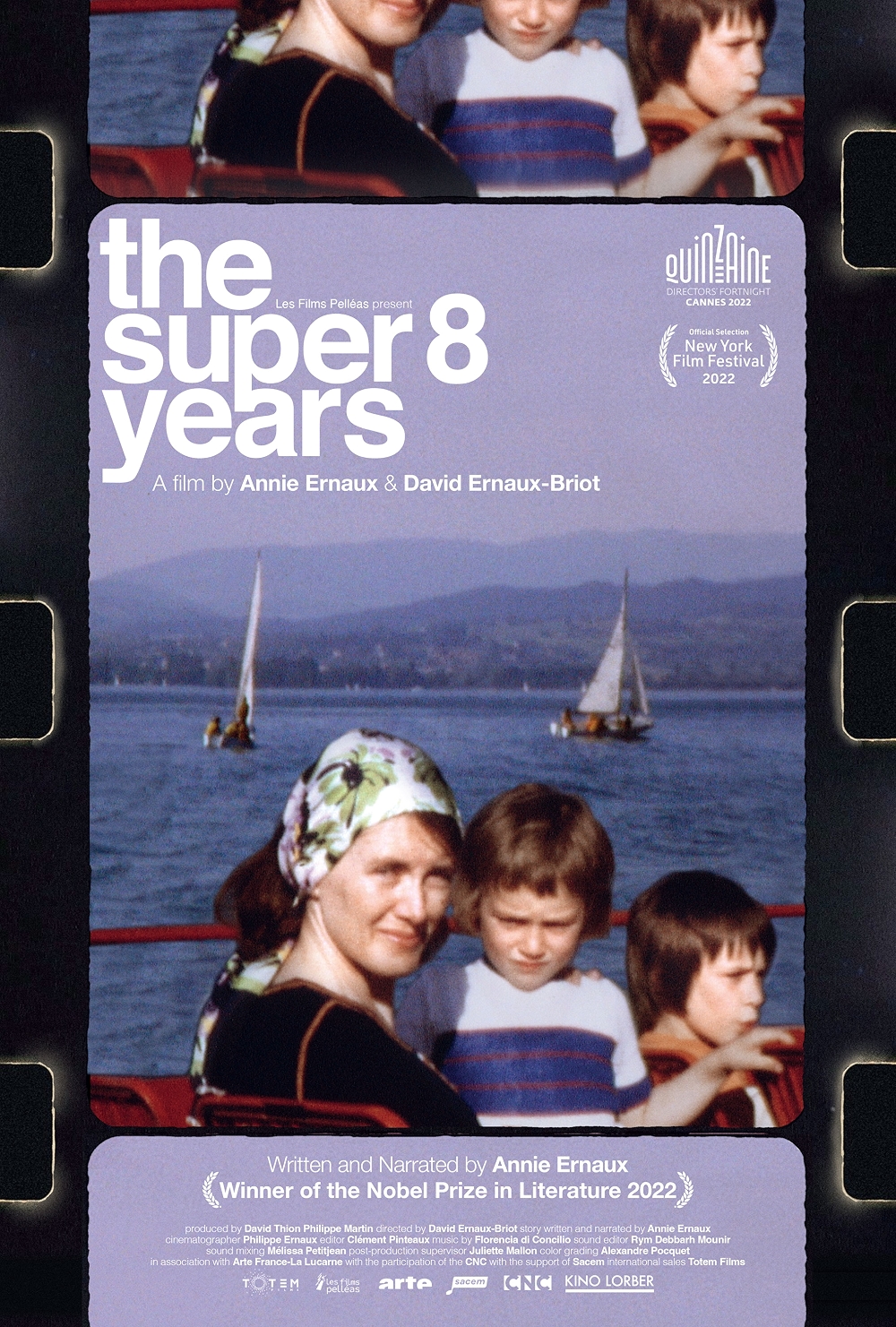
Annie Ernaux won the Nobel Prize for literature for a body of autobiographical body of work charting her own life. The Super 8 Years is pretty much more of the same, except in filmic form. At its most basic and off-putting level it’s a “what I did on my holidays” narration over clips from a family’s home movies. At another a snapshot of a lost era and the history of a development of a writer.
In 1972 Annie and husband Philippe Ernaux (always addressed by his full name) bought a Super 8 camera. It was, she says in voiceover, “the ultimate desired object… much more than a dishwasher or TV”, and set about making the sort of short films that couples in their 30s might make. Of their summer holidays. Of their kids growing up. Of visits to exotic places. Christmas.
Observing a standard gender split (her words), Philippe did the filming and so rarely appears in shot. Instead it’s Annie, and the kids, visiting Allende’s Chile in 1972, where hopes for a brighter socialist future will soon be damned. In Morocco, where a fun beach holiday is tainted by Annie’s concerns about the politics of King Hassan II. To Albania, where the strict communist rules dictate that the women must wear skirts, not trousers, and the long-haired men must have a haircut before they can be allowed in for a (heavily policed) visit.
Annie’s mother flits around in the background for a while, the kids get bigger, the hot summer of 1976 comes and goes in footage from the UK, (“the most exotic of nearby countries”), Annie’s work on various books is mentioned, in particular A Frozen Woman, about a woman who feels sidelined in her own life.
Eventually the marriage to Philippe Ernaux comes to an end, after a trip to Moscow in 1981, and Philippe leaves the family home taking the movie camera with him. Annie is left with the screen and the reels of old film.

Which is where things stayed until recently, when Annie, now in her 80s, dug out the home movies, initially at the behest of the children of her son David. They wanted to see what daddy was like when he was little, and also catch a glimpse of their grandfather (barely seen). After a cursory glance, David wondered if there wasn’t something more to be done with the old films and got his mother to write a voiceover narration tying the edited highlights together. If you have a celebrated author in the family, it makes sense to use her, right?
The result is, in David’s words, an “unconventional cinematic object”, rather than a standard documentary. In its excavation of a personal history it’s close to Sarah Polley’s Stories We Tell, though without the whodunit at the centre. Annie Ernaux says that it’s close in tone to her book Les Années aka The Years, which as a stage play has recently been tearing up London’s West End and winning buckets of prizes. A tale of a woman down the years, then, or of a woman trying to come into her own, to assert herself in the world. A history of modern feminism too, in a highly personalised way.
It’s also rather poignant, those fuzzy old images, sunny smiles in decades long gone, nervousness before the camera – how theatrically the camera makes people perform – and quite a few of the people on screen now long dead.
Ernaux fans will lap it up. It is, in cinematic form, an extension of what Ernaux has been doing for decades as a writer, using herself as her own source material, though the distance of time and the focus on family stops it feeling like an exercise in self-gratification.
What of non-Ernaux fans though? There is something here for them too. A time capsule from a bygone era, of optimism and rising living standards, of the West reaching its zenith against a background of the Cold War and in the shadow of potential nuclear annihilation. Happy times!
The Super 8 Years – Watch it/buy it at Amazon
I am an Amazon affiliate
© Steve Morrissey 2025