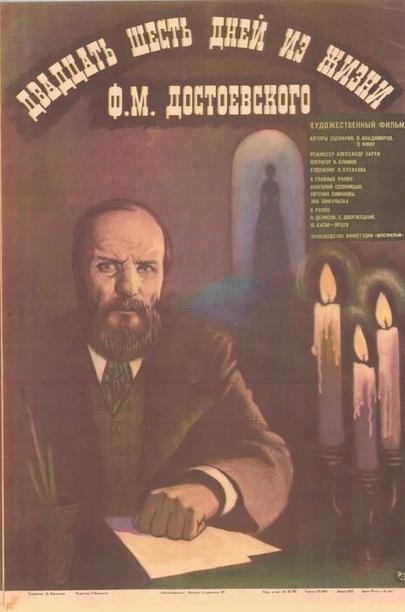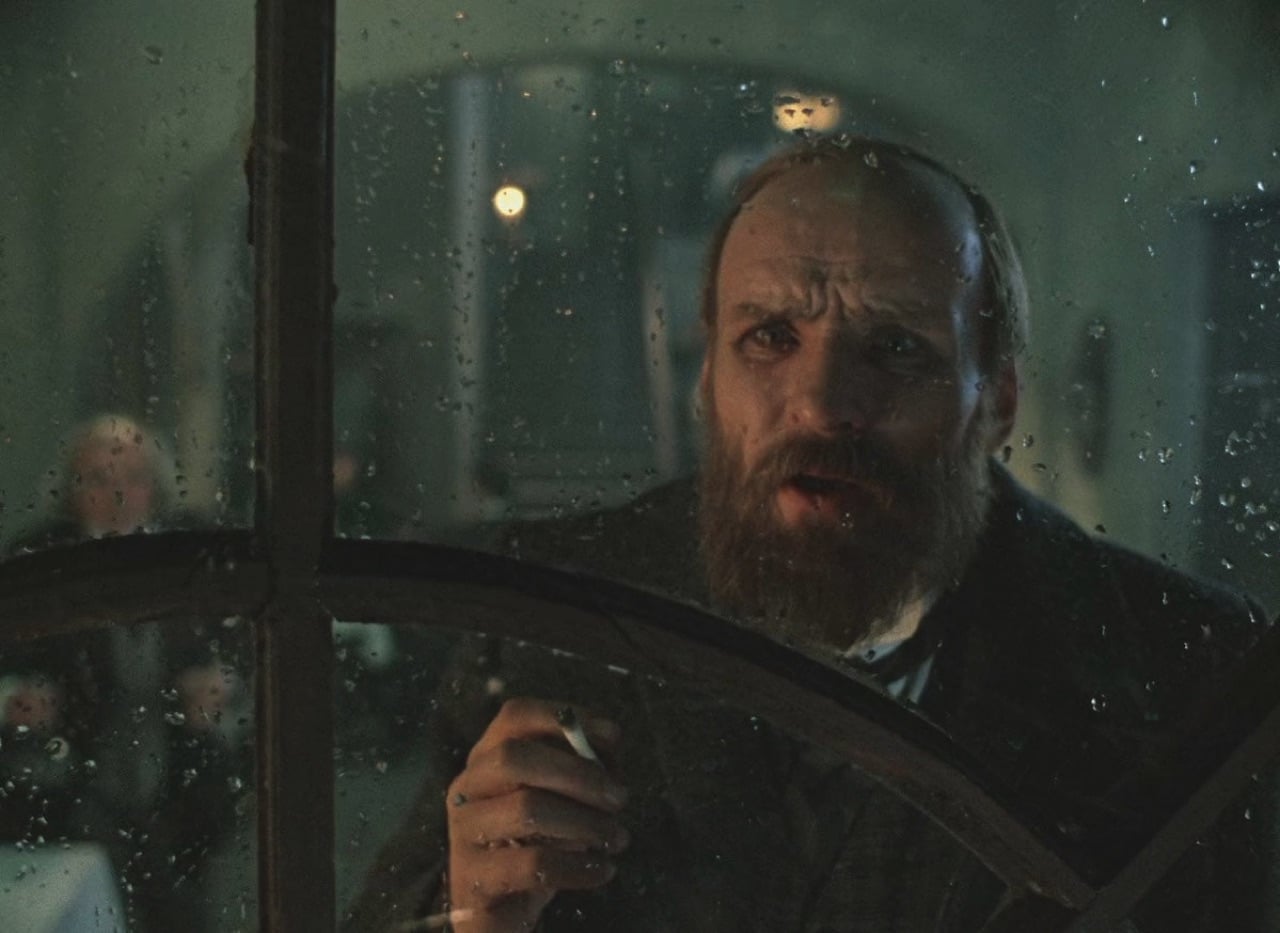
A bit too neat and tidy, maybe, but Twenty Six Days in the Life of Dostoevsky is serious and sincere and has two canny performances at its centre: Anatoliy Solonitsyn as the Russian writer and Evgeniya Simonova as the woman who saved him.
The neatness and tidiness is exemplified by the opening scene, where two friends discuss Fyodor Mikhaylovich Dostoevsky’s terrible financial position. He’s broke, it seems, and if he doesn’t deliver his latest novel to the publisher by the end of the month, he’ll lose the right to all the royalties on all his books for the next nine years. Maybe what Dostoevsky needs, one of the friends suggests to the other, is a stenographer to help him get a move on.
That plot set-up reeks of artifice but it gets a lot of establishing work out of the way and moves us on swiftly to the main course. This opens with Dostoevsky meeting stenographer Anna in an awkward interview where he gets her name wrong and finds all sorts of fault with her and she tries to hold her ground and not be overawed by this famous writer.
It has all the trappings of the meet-cute, this initial encounter, and that’s what the film will tease us with. Are they going to grow closer? Is he going to rely increasingly on the efficient and surprisingly well read Anna? She’s pretty, too, and when an assessor comes to value Dostoevsky’s belongings ready to sell them off, she chases the official away. Dostoevsky likes that in a woman.
It’s not the most flattering portrait of a great writer. We meet Dostoevsky in the throes of a break-up from Apollonia (Eva Szykulska), a vamp of the old school, who has bewitched him with her feminine ways. Dostoevsky, it seems, is a bit of a doormat when it comes to women.
There’s more explicatory neatness in the character of Misha, Anna’s – Boyfriend? Childhood pal? – who serves as a sounding board so Anna can deliver bulletins about the ongoing relationship with her new employer. We hear that her boss is the saddest man in the world, that he has gambling debts, that he’s lonely but much of it is self-inflicted and that he loves to wallow in misery.
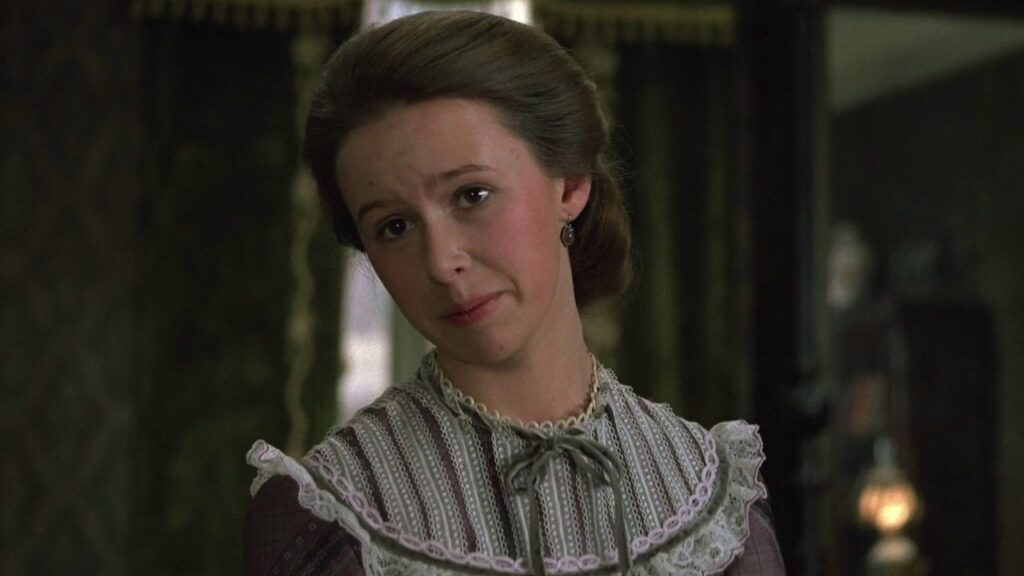
It’s a fairly low budget affair but director Aleksandr Zarkhi does good things with his scant resources. Most of it takes place in one room in Dostoevsky’s house, where the two collaborators battle to beat the deadline, with a housekeeper (Tatyana Babanina) hovering solicitously, and with occasional intrusions from Pavel, Dostoevsky’s stepson. Pavel is about Anna’s age. Will there be sexual tension there?
In beautifully lit interiors, almost as if candlelight were the only source of illumination, there are digressive disquisitions on the presence of evil in the world, the Russian soul and how the Slav differs from the European, as well as the more obvious tracking of the developing relationship. This (lack of) action breaks off here and there for scenes dramatised from the story Dostoevsky is writing, The Gambler, about a lonely, miserable man at a spa being tortured by a heartless woman – read-across obvious. Reading it aloud, Anna is struck by the supine character’s lack of self worth. Where is this man’s pride, she wonders.
The style is slightly declamatory, as if it had all been done on the stage first, though Solonitsyn’s performance as the self-absorbed, neurotic writer eventually starts to work a kind of magic. Solonitsyn would be dead the following year, aged 47, from lung cancer caused, some said, by chemicals picked up on locations Tarkovsky used for Stalker (in which Solonitsyn starred). Simonova’s performance is every bit as good, as the woman drawn to a celebrity writer on account of his fame, and finds his chewy character a challenge she’s increasingly happy to accept.
Twenty Six Days in the Life of Dostoevsky – Watch it/buy it at Amazon
I am an Amazon affiliate
© Steve Morrissey 2026