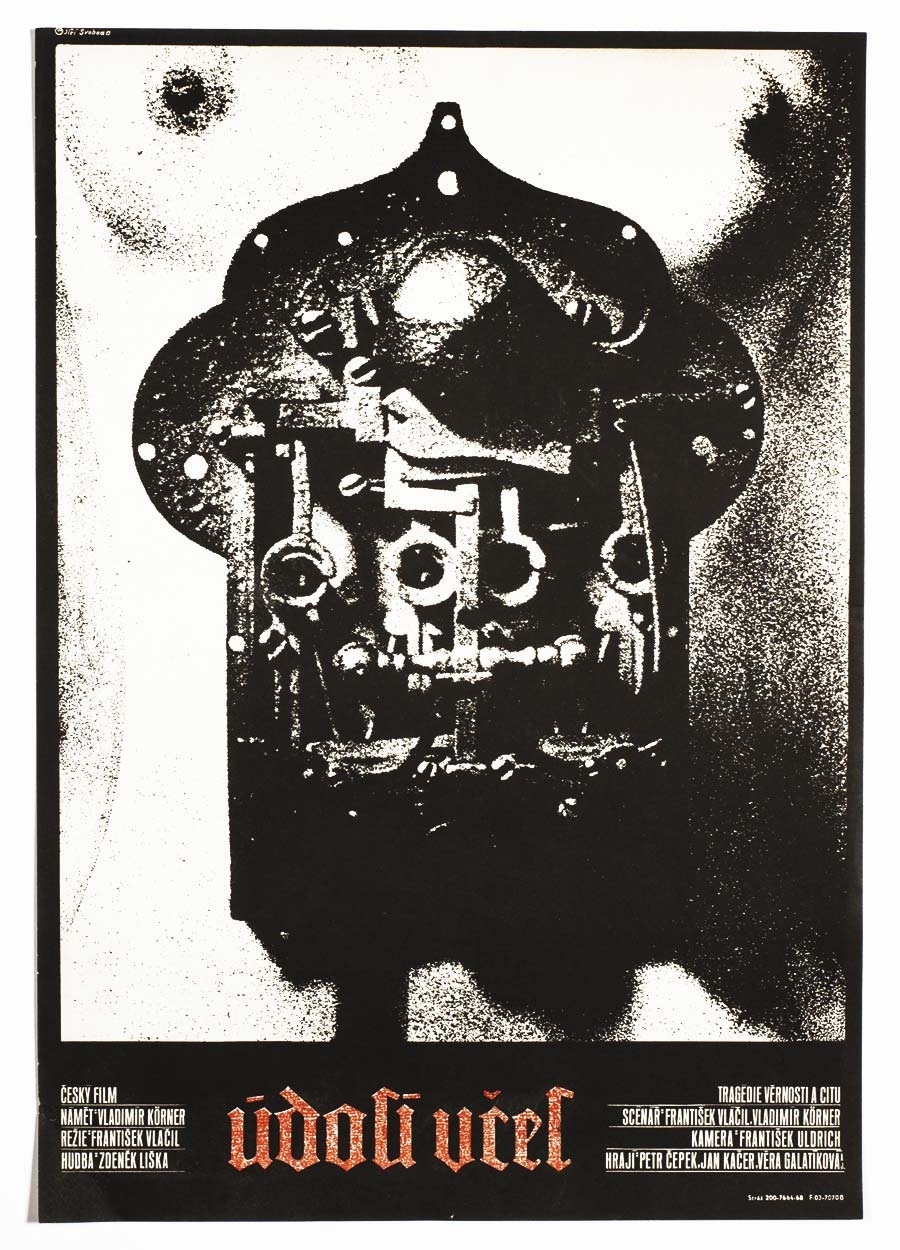
František Vláčil’s The Valley of the Bees (Údolí včel) got a fairly cool reception when it came out in 1968, even though his previous film, Marketa Lazarová, had been a success. Maybe they followed too hard on each other – Bees came only four months after Lazarová. Maybe the same 13th-century setting failed to hit the spot second time around – that itch had already been scratched. Maybe it was just too subtle, and its allegory whooshed over audience’s heads.
Zeal is what it’s about, religious zeal in this telling, though the political allegory is clear, in its story about a young man who tries to escape a severe religious order and return to his old normal life in the valley where he once kept bees.
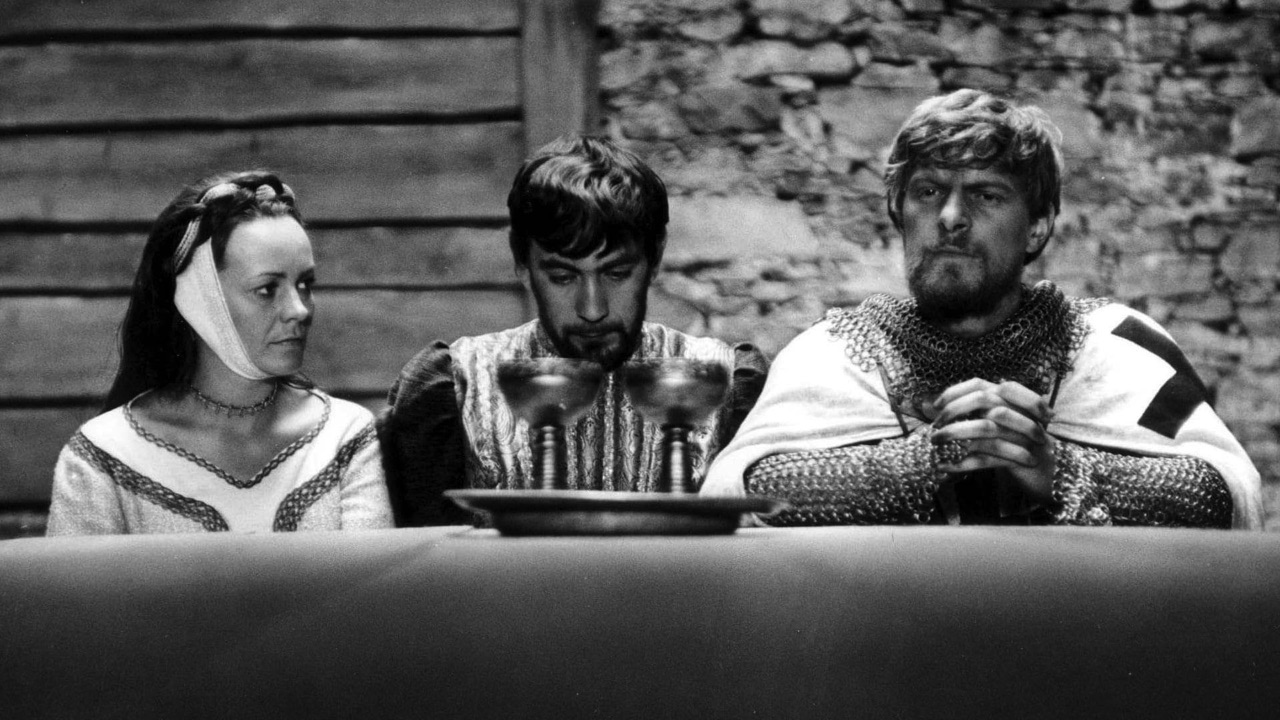
Ondrej (Petr Čepek) is essentially a prisoner in a monastery, having had his life dedicated to the Teutonic Knights by his father. But after witnessing some truly unpleasant and vindictive punishments meted out to fellow monks – attempting to leave is high on the list of crimes – Ondrej decides he’s had enough. He makes a break for it and heads back to his home town, pursued all the way by Armin (Jan Kačer), a zealot determined to rescue him for god or kill him. Which amounts to the same thing, as far as Armin is concerned.
As movies set in the 13th century go, The Valley of the Bees is more Alexander Nevsky than Braveheart. It strives to situate us back in those times, which is impossible, of course, but it has a go anyway, offering us various “proofs” of provenance. The starkly beautiful monochrome images, for example. The soundtrack full of plainsong and chanting, by monks and children, with music played on recorders and other simple instruments. There are glimpses of daily life – corn being flailed, charcoal being produced in clamps, dogs chasing deer. It’s genuinely fascinating.
Vláčil works hard at maintaining the documentary mood, using, for example, two-shots rather than cutting back and forth between characters talking to each other. Drawing attention to the edit suite is clearly out.
This is the film’s big sell, as it was with Marketa Lazarová, and sits this film alongside other attempts at conjuring the vibe of the Middle Ages – Aleksei German’s Hard to Be a God is probably the supreme recent example of this. The aim is to depict a world other than our own, where religion lies at the very core of life. The monks Ondrej flees are not meek Christians who turn the other cheek. They are a crusading order who have fought in the Holy Land to win it back for Christianity. Armin is charged with the same fervour.
Ondrej, our Everyman, is clearly not. But there are others in the story who struggle with the demands of the regime. Ondrej’s “mother”, for example, his father’s second wife young enough to be Ondrej’s sister. Little does Ondrej know that at night she is scourging herself in an attempt to quell the feelings of lust she has for her stepson.
There is a duality at work here – the monastery and the valley, Armin and Ondrej, piety and lust. Things get Chaucerian as Ondrej and “mother” Lenora (Vera Galatíková) circle each other, while on the periphery Armin is a reminder of the more absolutist form of religious observation.
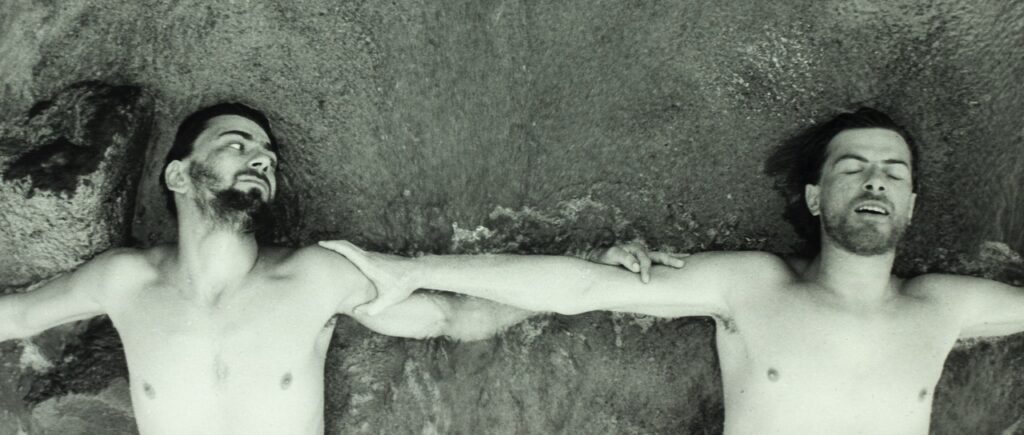
An early shot of Armin and Ondrej in happier times lying naked in the surf might prompt another reading altogether – that Armin is the thwarted lover and that Ondrej’s internal struggles are not religious in nature at all.
Or you could quite simply see it all as a massive wallop against the Communist regime in Czechoslovakia at the time. 1968 was the year of the Prague Spring, when for a moment I looked like the Communists were about to be routed. Or, to sit on several fences simultaneously, it’s all of the above and that’s just how Vláčil wanted it.
The Valley of the Bees – Watch it/buy it at Amazon
I am an Amazon affiliate
© Steve Morrissey 2025