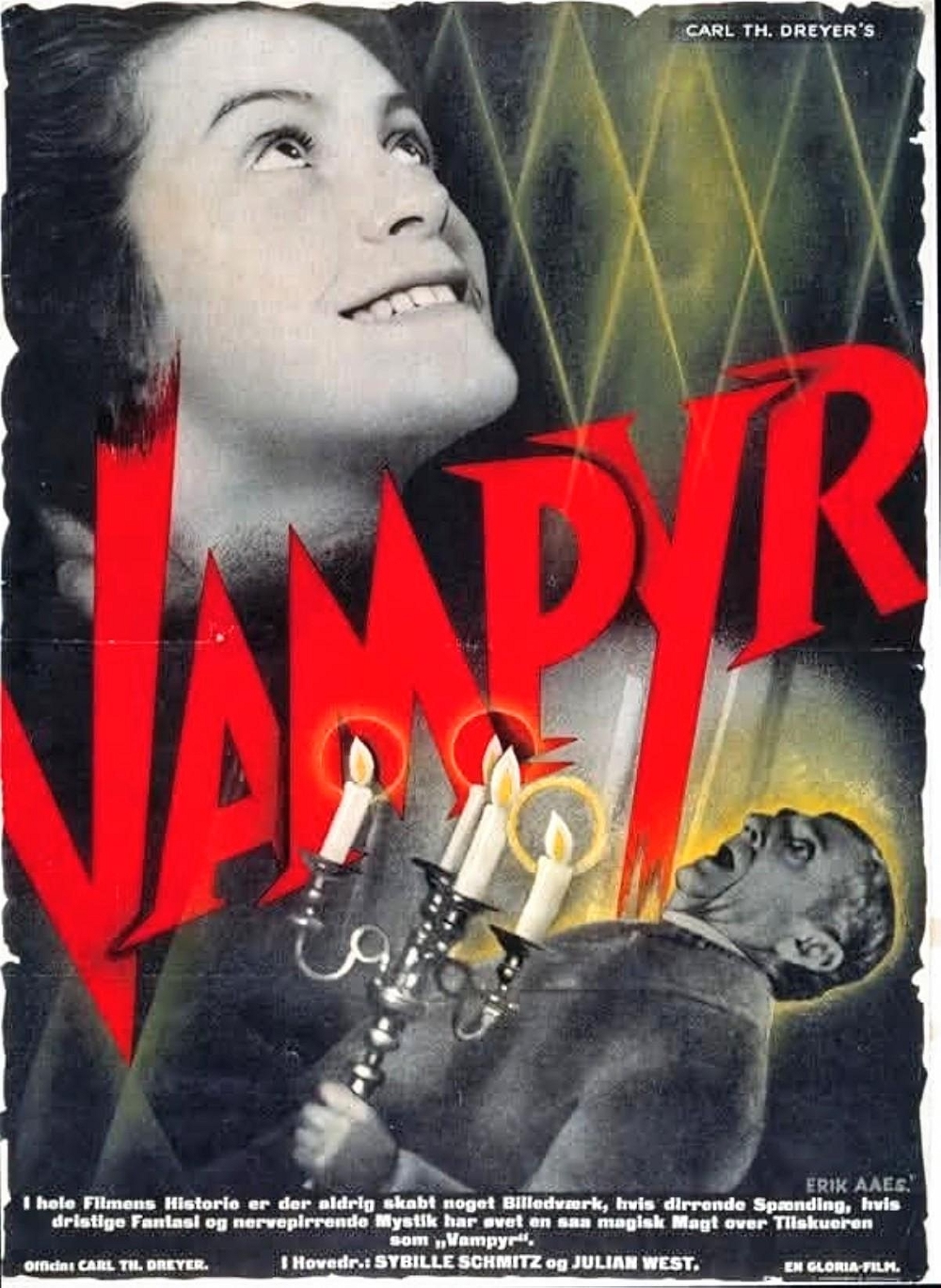
Carl Theodor Dreyer’s Vampyr was the first psychological vampire movie, or so some of the books say. Cut to FW Murnau in the wings asking forlornly, “So what was Nosferatu?” made ten whole years earlier in 1922.
How about Vampyr being the great Dreyer’s first sound movie? There is no doubt about that, even though Dreyer is working as if he’s still making a silent movie, right down to the use of intertitle cards. Really, this is a silent movie with added sound.
Murnau stole the Dracula story from Bram Stoker but Dreyer bases his film on In a Glass Darkly, an earlier collection of gothic shockers by another Irish author, Sheridan Le Fanu. Though to an extent they’re stories with the same shape.
The innocent abroad, the Jonathan Harker figure, is here called Allan Gray. Allan is less of a greenhorn than Harker, a bit of a dabbler in the occult. Even so, he has no idea what he’s letting himself in for when he rocks up at a remote inn one evening and asks for a room. In the night he is visited by an old man who gives him a package – “to be opened upon my death” – which sets in train the sort of story Stoker would recognise (because he’d obviously read Le Fanu’s book himself), of vampires visiting innocent victims while they sleep, learned doctors suggesting blood transfusions, stakes (iron bars in this case) through the heart and harmful effect of the rays of the sun on the Undead.
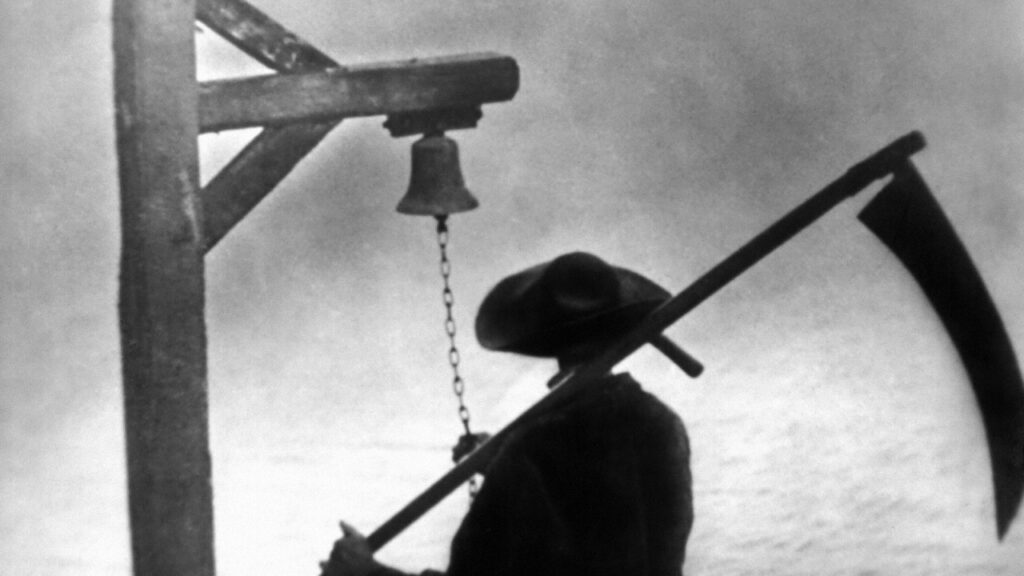
Dreyer gets going with the atmospherics from the first shot. His camera is both photographic and cinematographic – near-static images of a man with a scythe heading towards a river are followed by the camera darting sinuously about Allan as he settles in to his room, its movements suggesting Allan is being watched, or someone/thing is in the room with him.
Dreyer also does remarkable things with soft focus – outside is all wafty and gauzy, while inside is sharp. And with shadows, sometimes using them to suggesting flashbacks to happier times. At other times flickers imply that uncanny forces are present and the natural order of things is reversed.
Fascinating casting. Julian West plays Allan Gray. His real name was Nicolas de Gunzburg and he financed the whole film with family money in exchange for the lead. It was the only role he ever played, though he did go on to have a long career in fashion, launching the careers of designers including Calvin Klein. West/Gunzburg was as gay as a window and it’s obvious. It works in the film’s favour. Vampires and unorthodox sexuality have always made good bedfellows.
Sybille Schmitz plays Léone, the vampire’s key victim. A star at this point, she fell a bit foul of the Nazis (not quite Aryan-looking enough) but carried on working through their reign, then fell foul of the post-War German movie business on account of her association with Goebbels, Hitler et al. Dead at 45 of an overdose (possibly administered by her live-in lesbian doctor), her life and its tragic outcome was the basis for Fassbinder’s Veronika Voss (one of his best).
To be honest the film is not quite as gripping in its mid section as it is in its opening moments and its highly macabre closing moments. But it is atmospheric throughout and there’s particularly striking dream sequence where Allan – in a double exposure – finds himself laid out in a coffin. Later, another shot of Allan Gray looking through a small glass window in his coffin as the lid is screwed down is one that will stick with you.
I watched the Eureka Masters of Cinema DVD (they’re always a sound choice), which features two commentaries, one by critic Tony Rayns and the other by director Guillermo Del Toro. It’s been cobbled together from various bits of the French, English and German versions of the original film and is very good. Originally the film must have been visually astonishing. The Criterion version uses the same restoration, apparently, but I haven’t seen it so can’t comment.
Vampyr – Watch it/buy it at Amazon
I am an Amazon affiliate
© Steve Morrissey 2025