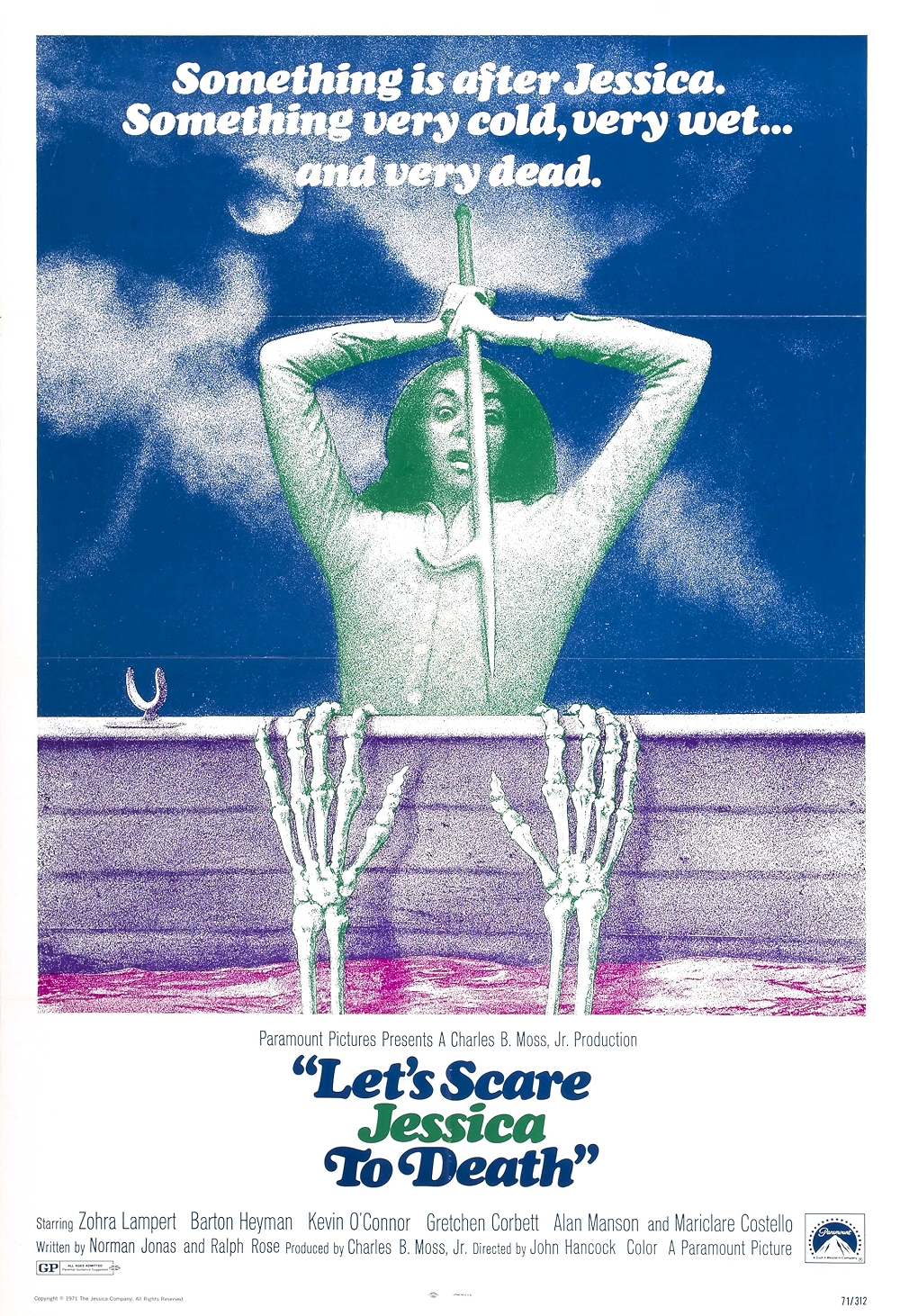
1971’s Let’s Scare Jessica to Death was originally titled It Drinks Hippie Blood and was a satire on 1960s counterculture. And then John Hancock got involved and, one rewrite later, out popped this much more straightforward but rather superior horror movie setting out to unsettle rather than amuse.
Hancock also directs, in his feature debut, and as in the best horror movies (this is one of Stephen King’s faves) he spends plenty of time establishing mood, so when the bad stuff arrives it’s got something to stand out against.
There are two interwoven stories here. In one, Jessica (Zohra Lampert) is a troubled woman recently released from a mental asylum who is trying to find inner peace out at an isolated house with her husband, Duncan (Barton Heyman), a double bass player, and Woody (Kevin O’Connor), a hippie pal.
In the other, a vampire is abroad in the very town where they pitch up, in the form of a sexy red-haired young woman who’s been alive for many decades and used to live in the house where Jessica, Barton and Woody are now setting up base.
In fact Emily is still there when Jessica, Barton and Woody arrive, a free spirit temporarily squatting in what she thought was an abandoned building en route to elsewhere, she tells them. And they, being countercultural dudes and all that, invite her to stay. They’re letting it all hang out while letting the right one in.
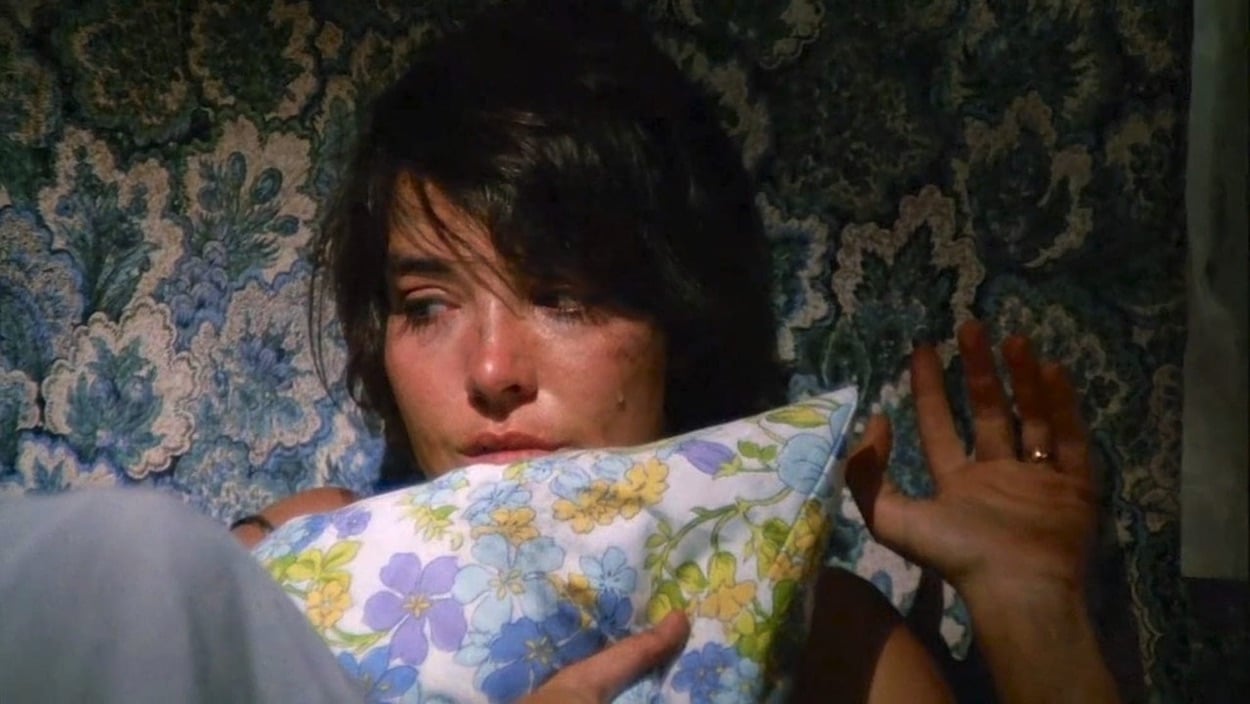
In voiceover done by Lampert, we get an insight into Jessica’s mental state. Scared to death that her husband or Woody will find out that she’s more mentally fragile than she appears and send her back to the funny farm, she tries to keep her mouth shut when weird stuff starts happening, all the while becoming more and more disturbed by what’s going on.
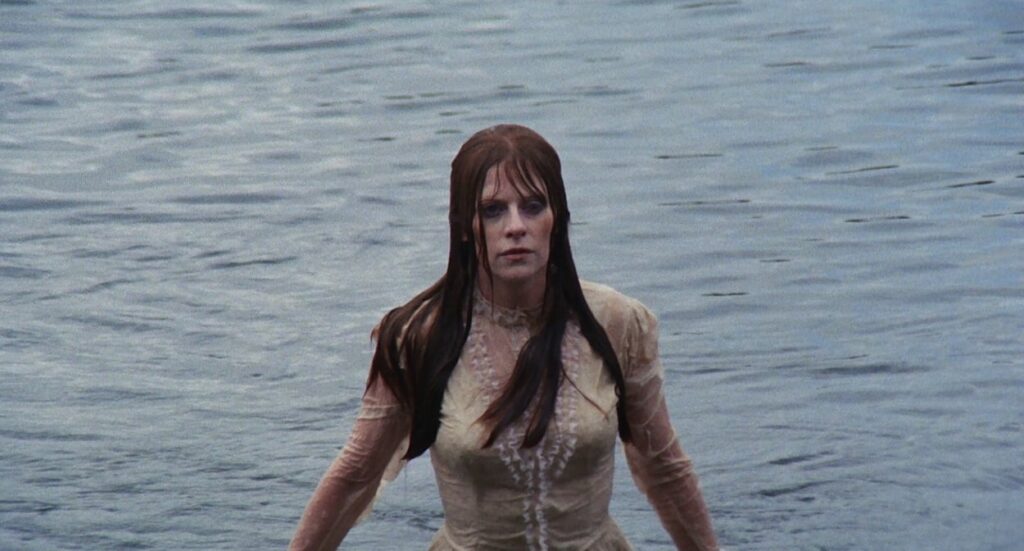
The story is loosely based on Sheridan Le Fanu’s Charmilla, the lesbian vampire story that predated Dracula by some decades. Hancock dials down the girl-on-girl stuff and dials up the countercultural. The old guys in town, for instance, who all seem to detest the “damn hippies” on sight, do they have a point about these libertines who drive a hearse with “LOVE” written on the side? Or has the vampire been at them?
It’s prime 1970s gothic, with wraith-like white-clad figures appearing in cemeteries and a house that looks like Norman Bates might live in it. It’s also moody as hell, directed with a sure touch by Hancock, a theatre guy by background, and with a score by Orville Stoeber that comes in two varieties: the acoustic for the nice, idyllic stuff, and synthesisers for when things get weird. Hancock is also a dab hand at using silence to build tension. It’s often when the music stops that the film really picks up power.
Lampert’s performance is particularly effective as the unsettled Jessica, a woman who does not know if what she’s seeing is real or not but cannot draw any comfort from being proved wrong, because that means she’s losing her mind.
Matching her is Mariclare Costello as Emily, the young woman both of Jessica’s companions would like to spend some time with, though Emily seems far more interested in husband Barton than the clearly put out – because single and available – Woody.
In terms of acting the women are better than the men, but this also seems appropriate. Women are presented initially as the problem – mad Jessica, vampire Emily – with the men as the stout and dependable parties (think of all the male characters in any version of Dracula, from Bram Stoker’s book onwards) but by the end the tables have turned.
Does free love leave you open to predation by vampires? Hell, yes. Is this a critique of the permissive society? That’s possible. In which case Let’s Scare Jessica to Death is years ahead of the sort of horror served up when Aids first arrived. Simple, untricksy, inventive and well crafted, in spite of the fashions of the time, it feels a lot more current than many movies from over 50 years ago.
Let’s Scare Jessica to Death – Watch it/buy it at Amazon
I am an Amazon affiliate
© Steve Morrissey 2024