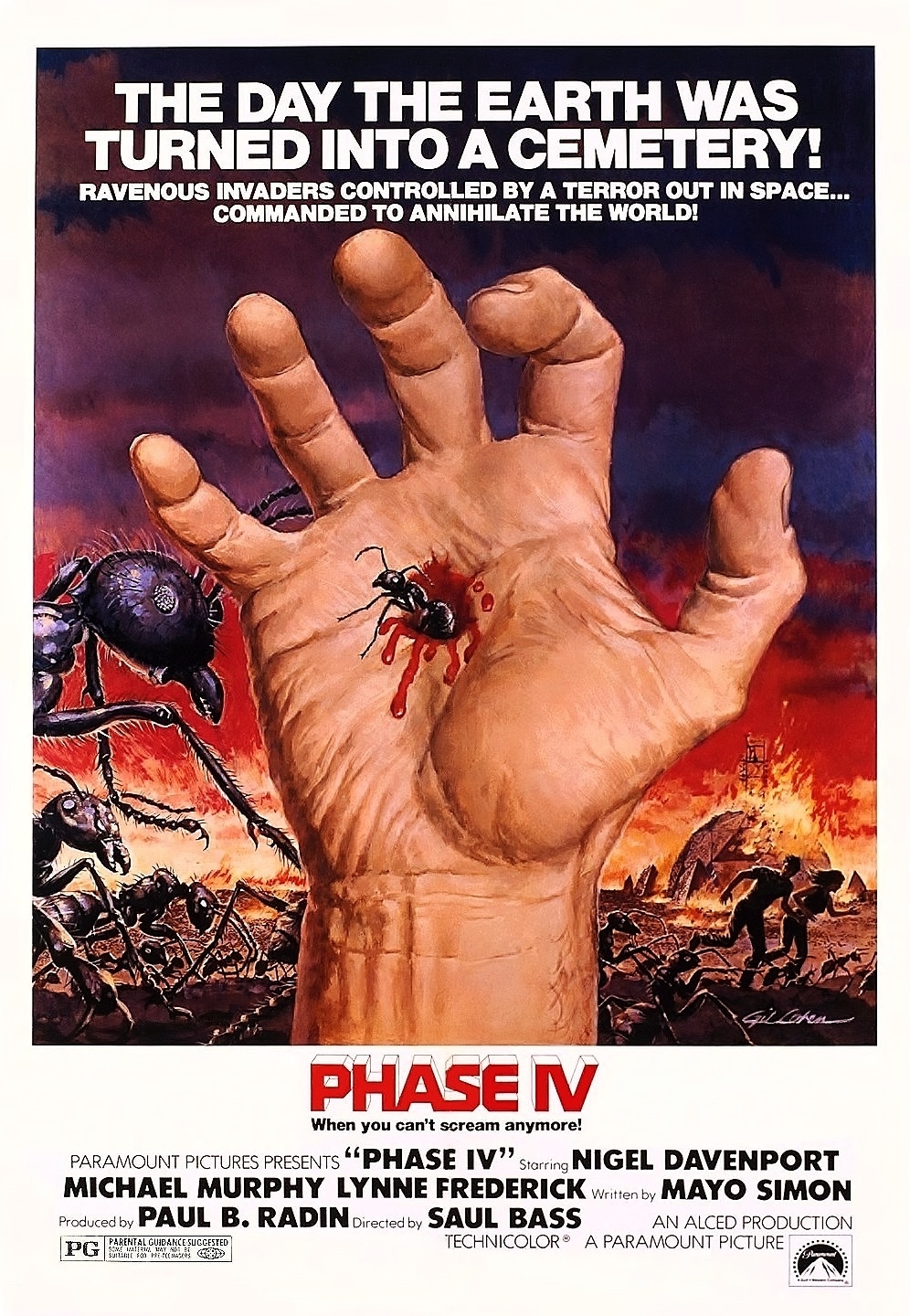
The legendary titles guy Saul Bass (he did the opening credits sequence for Psycho, The Man with the Golden Arm and Casino) made only one feature film and Phase IV is it. A fascinating sci-fi/horror tale set in the desert, it has ideas, some great acting, excellent close-up cinematography, gorgeous locations and an excruciatingly static sense of pace.
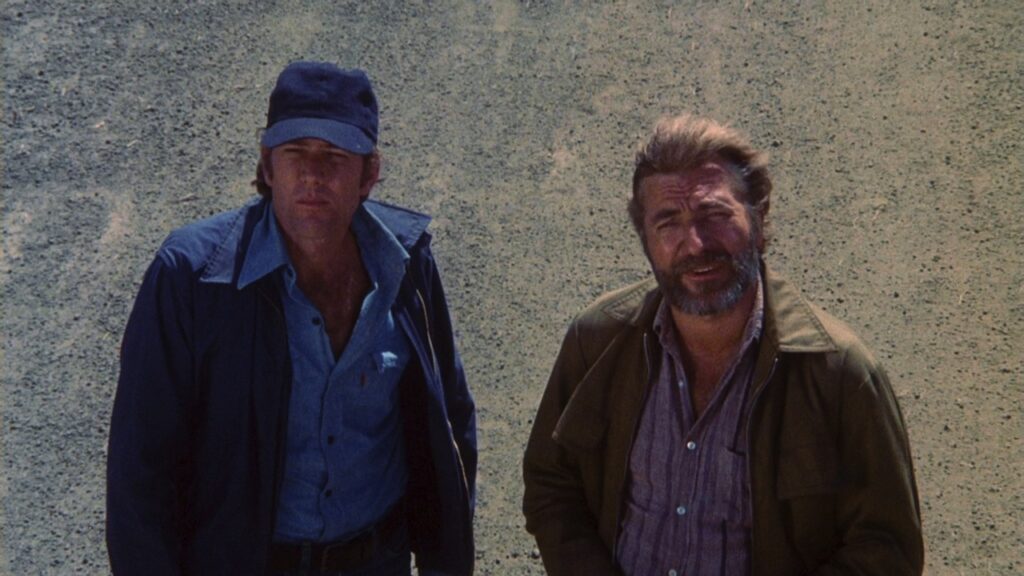
It also has Nigel Davenport, a real asset as Dr Ernest D Hubbs, a scientist alarmed at what’s happening out in Arizona (Kenya, in fact) and heads off there with fellow scientist James R Lesko (Michael Murphy) to investigate.
The ants, it turns out, have started building huge structures, with square quasi-industrial chimneys. What can those industrious insects be up to? As the film slides from Phase I (the discovery of what’s going on) into Phase II, Hubbs and Lesko attempt to eavesdrop on ant communication, using whirring, old-school computers, clacking teleprinters and various bits of tech featuring dials, knobs and winking lights. Phase III involves a dastardly and controversial development proposed by Dr Hubbs. In Phase IV we discover how that went – given that this is an early eco-horror, the prospects cannot said to be good.
Davenport’s rich RADA voice and bluff, man’s man persona is set in opposition to Murphy’s more jeans-wearing youthnik. Which of these two representations of manhood will local beauty Kendra Eldridge (Lynne Frederick, her British accent regularly peeping through) find most appealing, in the rare moments when the two men are not focused on the ants and their fabulous structures? Given that she’s meant to be 16 (Frederick was maybe 21), and Davenport is about 46 to Murphy’s 36… a bookmaker would give you odds on Murphy.
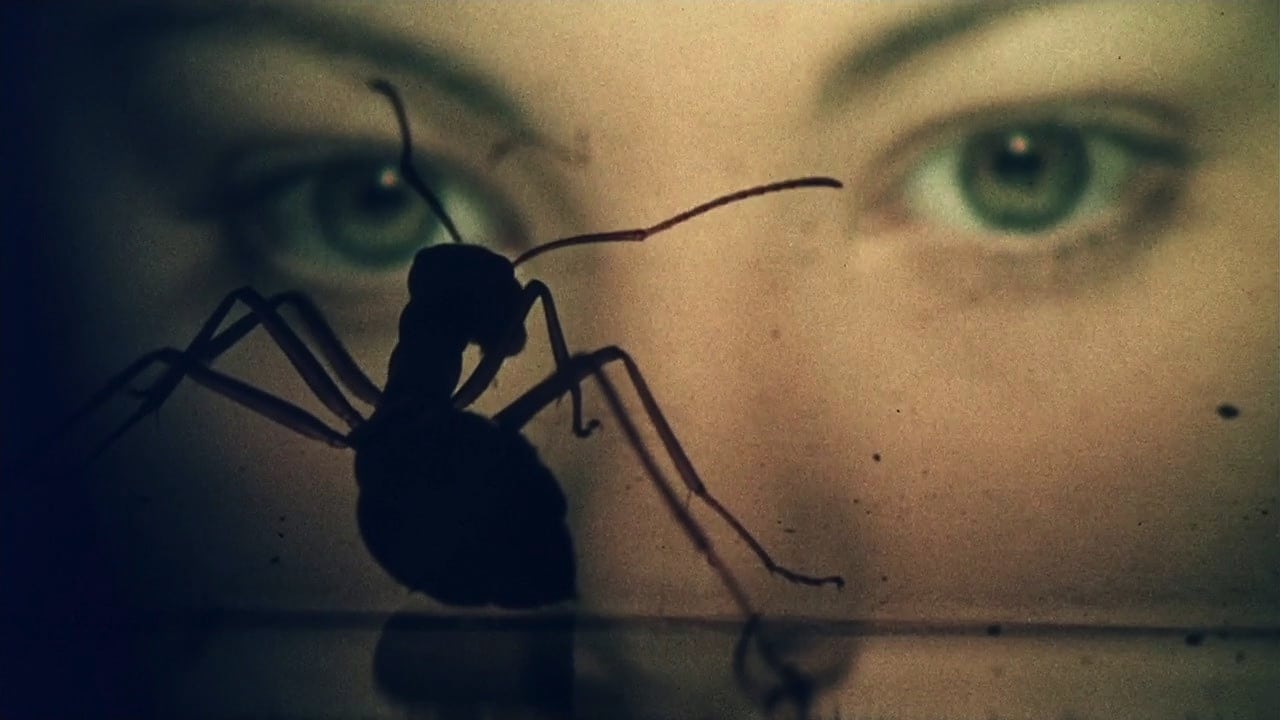
Instead of worrying too much about all that, Bass gets absorbed in the ants and their colonies, going in hard on extreme close-up photography of the ants in action. It is the sort of footage that must have looked amazing in 1974 because it still looks pretty amazing all these decades later. Bass puts a lot of faith in these shots, and he (and wildlife photographer Ken Middleham) have obviously laboured over them in much the same way Bass laboured over his titles sequences (he also did Vertigo and Spartacus). Excellent though the ant stuff is, there’s not much drama to be had from it, which in the end is the film’s main problem.
Set in the desert but shot mostly in a UK studio, the film’s other problem is that sense of being studio-bound. There is simply too much of the interior of Hubbs and Lesko’s geodesic dome, where all the computers and whatnot are racked up but none of the real action is taking place.
Bass tried to compensate for all this with a spectacular coda, a vision of a hellish future in a world ruled by ants. This part comes with a standalone soundtrack by Stomu Yamashata (Brian Gascoigne did the rest of the film, while David Vorhaus and Desmond Briscoe added the haunting synths). These four minutes comprise Phase IV and were designed to give the film a visual kick while also upending the assumptions of the smug human scientists, who only realise too late that the insects have been playing them.
Unfortunately, Bass’s ending was too much for the distributors and got cut, thus castrating his film. In recent years the footage has been rediscovered and restored and can be found on Blu-ray releases by 101 Films and the Vinegar Syndrome (if there is more than one disc, you most likely will get the reconstructed version as well as the theatrical one).
It helps inject some pizzazz into a film that needs it. Yet, despite the dramatic shortcomings, this is a fascinating film full of ideas and smart if static visuals – titles guy does titles movie – and it was prescient in many ways. Eco-horror before eco-horror really existed.
Phase IV – Watch it/buy it at Amazon
I am an Amazon affiliate
© Steve Morrissey 2026