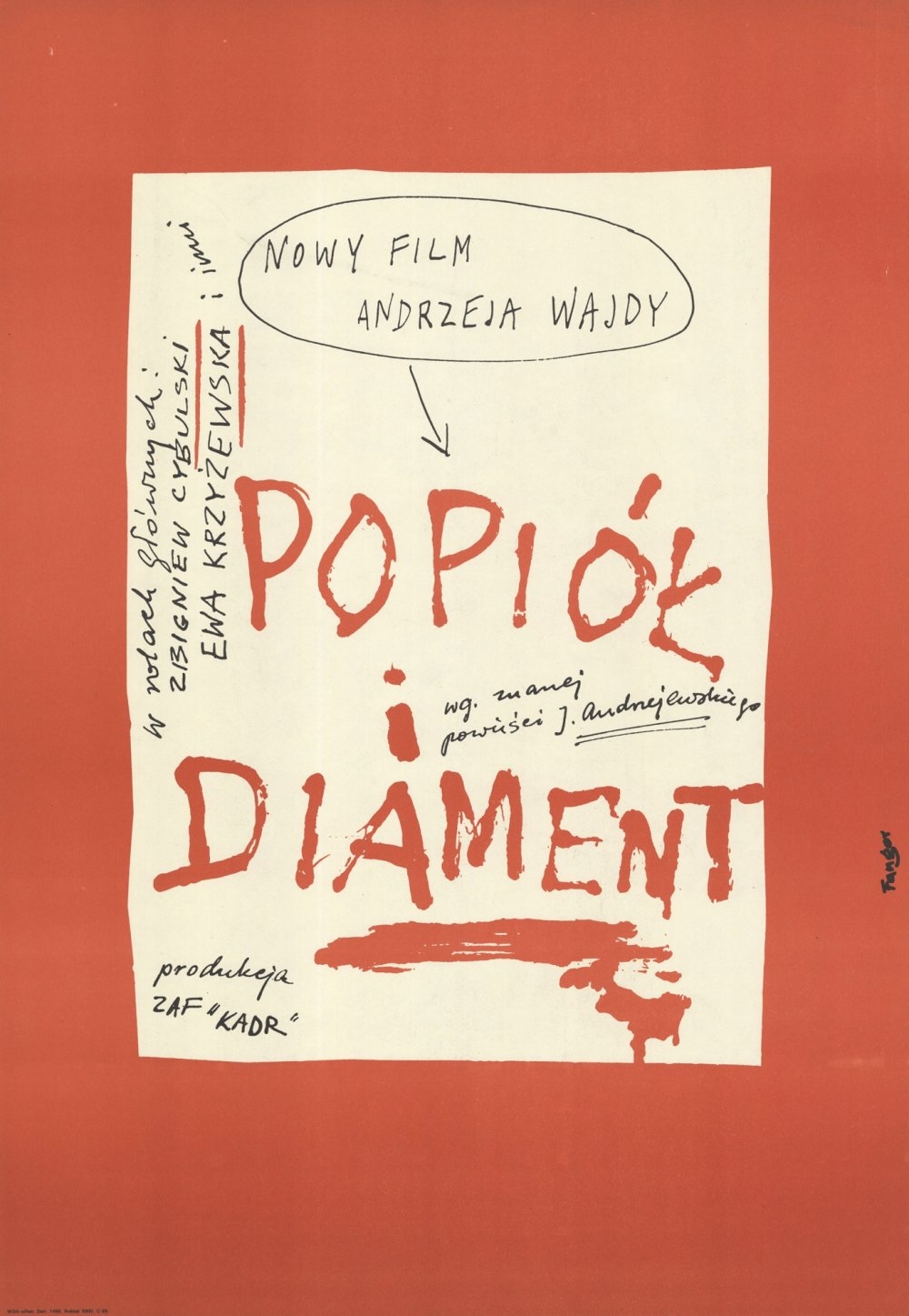
Set at the moment when Poland escaped the Nazis only to fall into the hands of the Soviets, 1958’s Ashes and Diamonds (Popiół i diament) is a philosophical, even existential, take on the recent history of director and co-writer Andrzej Wajda’s country.
Really, it’s a day in the life of some Polish partisans, and of Poland itself, at the point where one enemy is being swapped out for another. But not without some psychological adjustment en route. In the opening sequence an assassination attempt against some communist party officials goes wrong – the partisans shoot the wrong men – and here is where the wrangling with conscience begins, particularly for Maciek (Zbigniew Cybulski) and Andrzej (Adam Pawlikowski), who were just following orders when they carried out the attempted hit on party big noise Szczuka (Waclaw Zastrzezynski). Now they are wondering if being a partisan is really worth it, and just how long they’re going to be asked to keep up the armed guerrilla struggle.
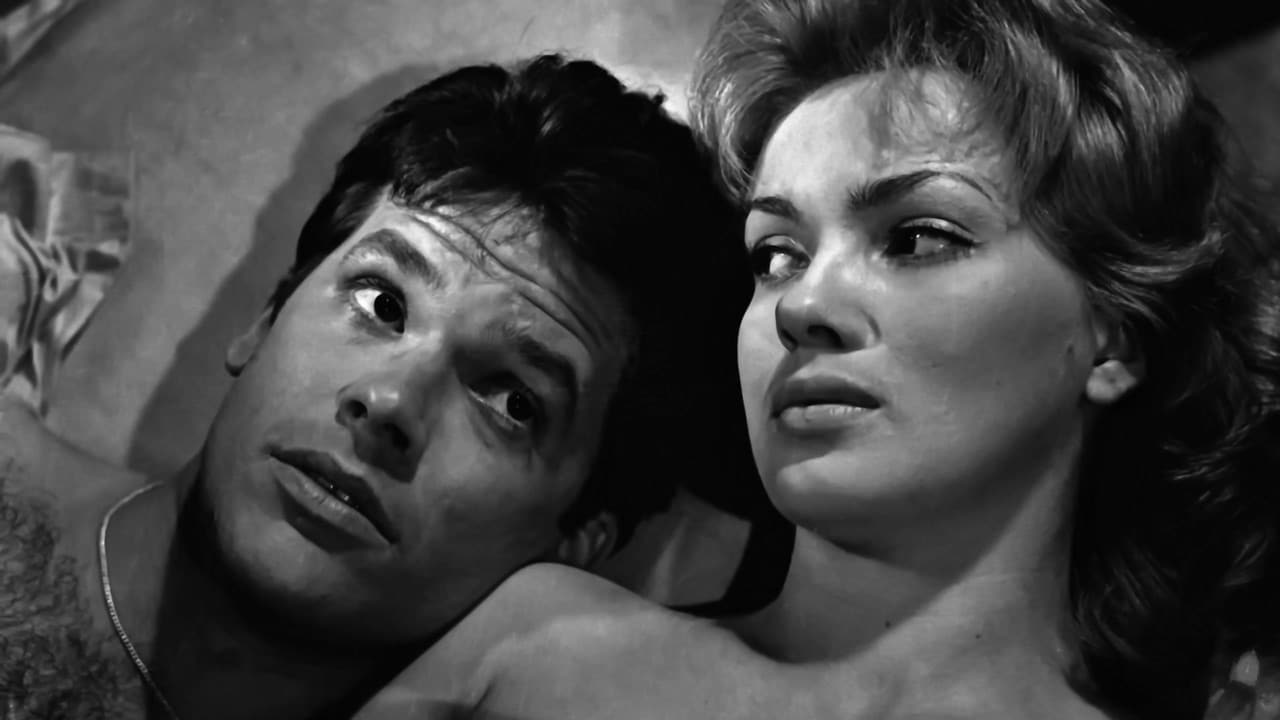
Though it’s set in 1945 just as the war ends, Cybulski is dressed in hip 1950s gear. In his dark shades and James Dean hairstyle, he’s the handsome existential beatnik ahead of his time. The look suits the role and colours the entire film. Doubt, angst, existential funk also seem to be part of the make-up of Maciek’s comrade-in-arms Andrzej and of Krystyna, too, when she arrives on the scene, the pretty blonde waitress who becomes Maciek’s refuge in the storm, a one-night stand who might be something more.
Wajda tells a good multistranded story sweeping in not just the artisans and their command structure, but also Polish politicians pragmatically and/or cynically re-orienting themselves away from one regime to another. To the functionaries at the hotel where a big meeting and celebration is to take place. Drunkards, revellers, visiting Soviet top brass, an old toilet attendant who sees everything but says not a word. At one point the action shifts to a derelict church, where Wajda piles on the symbolism as he wraps his arms around Catholicism too.
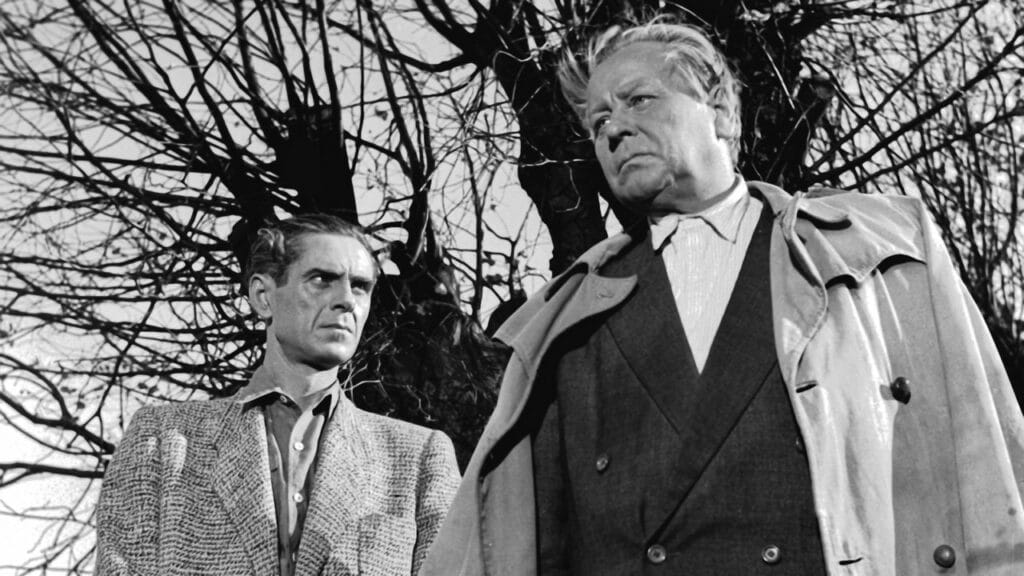
Life goes on is the slightly deflating point, though there are diamonds to be pulled from the ashes, philosophical ones at least. In this film most everyone is trying to pretend that nothing has really happened, that Poland hasn’t been overrun yet again. Only a select few have the clarity of vision and purpose to see things as they are, and to take the longer view – Poland endures, after all. Not that this realisation does them much good.
Wajda is a technical whizz and the film is made with huge skill and masses of attention to detail. Really, it’s Hollywood film-making of the Citizen Kane era. The camera moves sleekly. There is some lovely deep-focus cinematography. Wide lenses are deployed flamboyantly. Meanwhile, the lighting by director of photography Jerzy Wójcik is crisp and cool, generating the sort of look that Pawel Pawlikowski would borrow decades later for his Poland-set dramas Ida and Cold War.
This is the last of Wajda’s war triology, after 1955’s A Generation and 1956’s Kanal and its downbeat message – wait, it will pass – is not exactly heroic. Nor, apart from the guns-ablazing opening sequence, is there very much action. It’s a talky film with heroism in short supply, though there is a Dietrich-style song (from Hanka Lewicka) at one point, as if Wajda was worried about losing his audience.
He clearly wants to stay in touch with reality as his countrymen understood it, while also appeasing the authorities with some sleight of hand over the Nazi/Soviet equivalence. He managed it, thanks in large part to the high standing of Jerzy Andrzejewski, who wrote the original novel – a set text in Communist-era Polish schools – adapted it for the screen with Wajda and colluded in making it a much more ambivalent film than it ever was on the page.
Ashes and Diamonds – Watch it/buy it at Amazon
I am an Amazon affiliate
© Steve Morrissey 2025