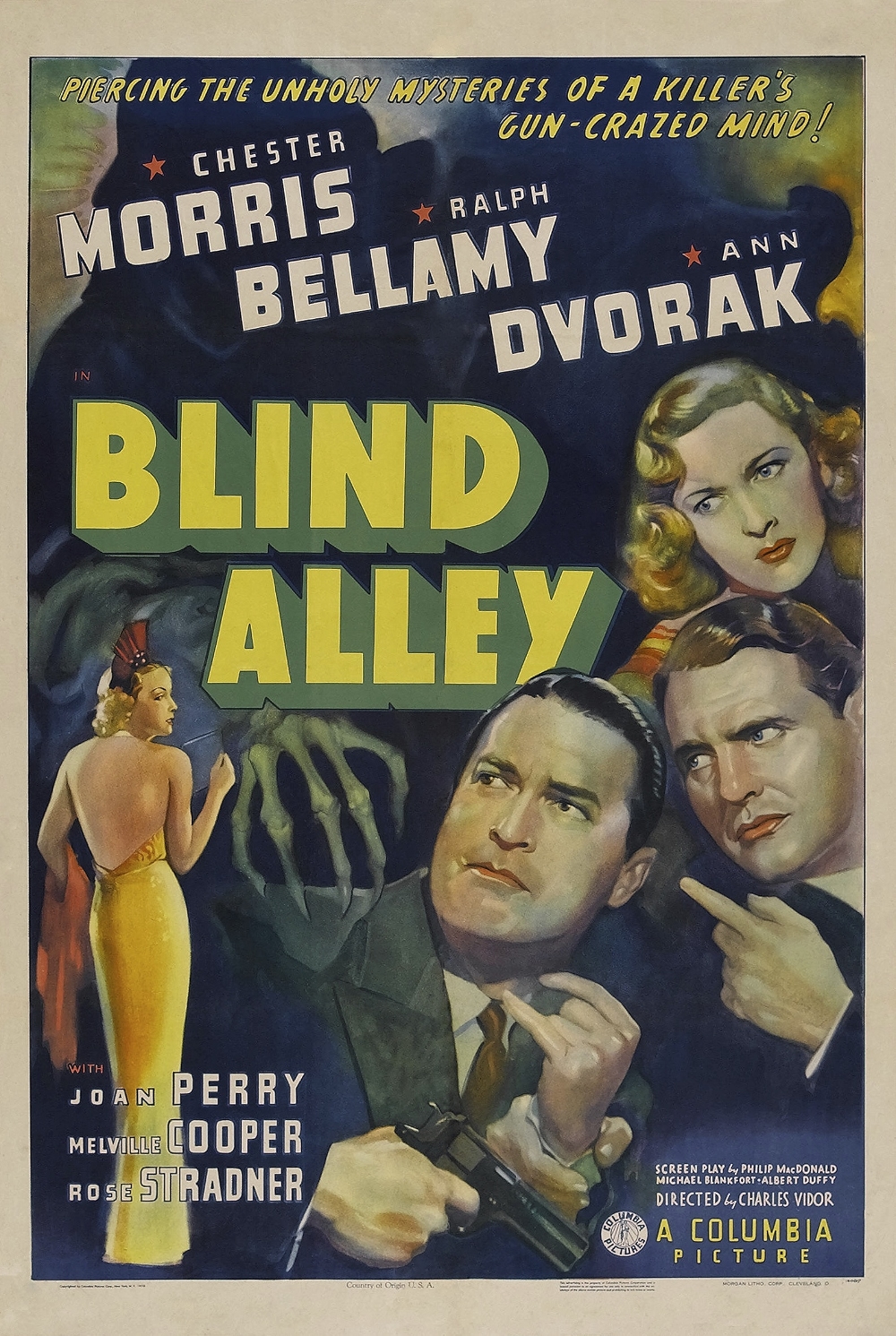
A film about the all-conquering power of Freudian psychoanalysis, Blind Alley lasts just a bit longer than a session with a shrink and in its 69 minutes attempts to convince us that the root of all evil lies in our relationship with our parents.
It’s a bit mad but highly entertainingly done, and in the background there’s something lurking for any would-be psychoanalyst, in the relationship between an incidental couple, Mr and Mrs Curtis, and the “constant companion” Mrs C calls Dick. Parse that one.
But neither Dick nor the Curtises is who the film is about. It’s about a professor of psychoanalysis whose weekend cottage is invaded mid-soiree by a dangerous criminal on the run. Having proved his bona fides by killing one of Dr Shelby’s guests in cold blood, the psychotic Hal Wilson, henchmen and moll then settle down to wait for a boat to arrive to spirit them all to safety, taking Shelby, his family and guests hostage.
Using the skills he learnt from the books of Dr Freud, Shelby decides to mount an attack on Wilson and, as he whispers to his wife, “take his brain apart and show him the pieces”.
And that, give or take, is what happens. As Shelby pokes and prods, engaging Wilson in conversation over a game of chess in front of a roaring fire, a classic Oedipal childhood is revealed, the criminal-in-utero desiring the death of his father and the love of his mother.
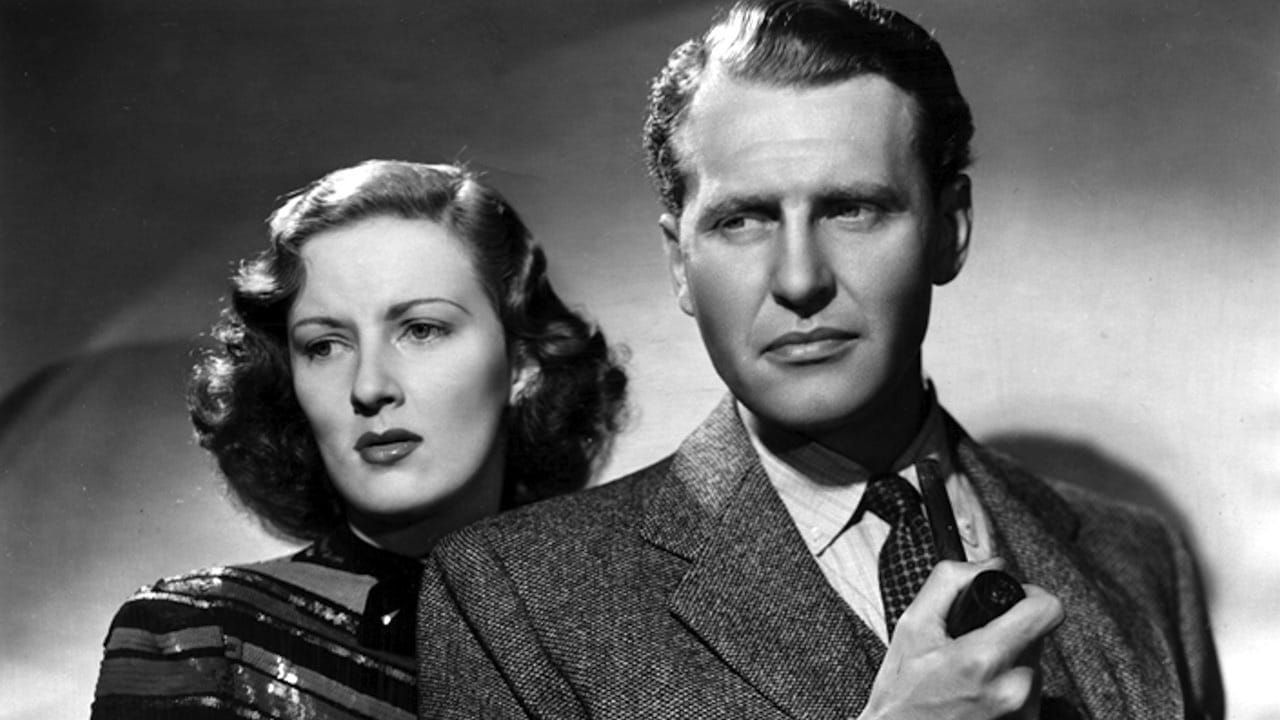
If it sounds a bit pat that’s because it is, but there is Chester Morris’s performance as the hard-bitten Wilson to enjoy, especially as he stoutly attempts to fend off the probing advance of Dr Shelby, a pipe-smoking softie in tweed.
That suit really is a thing to behold, and Ralph Bellamy really makes it part of his character. This is a genial, learned and humane man at the peak of his powers, and Bellamy plays him as the round-voiced uncle figure it’s hard to resist, even if he is rather smug.
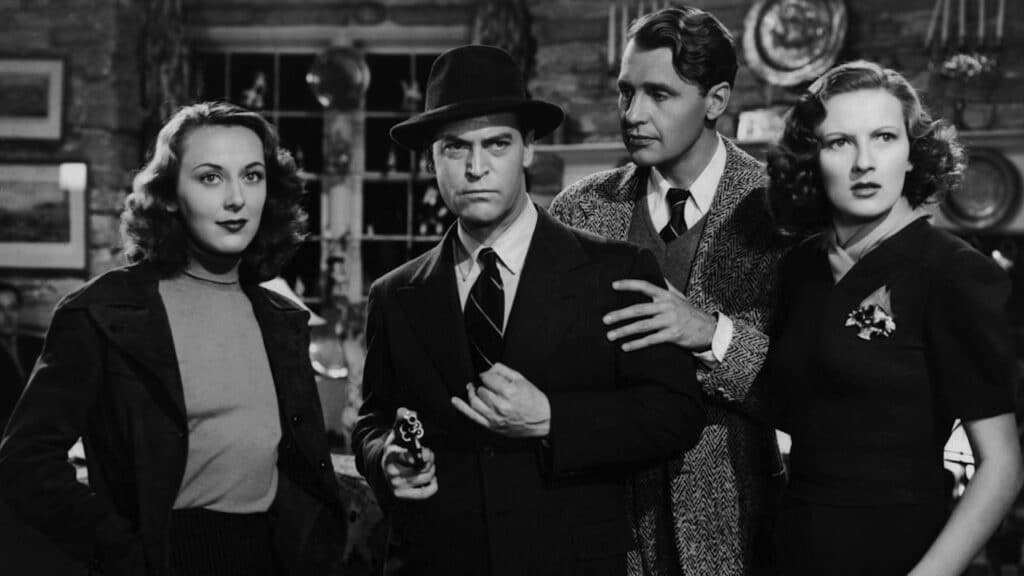
What is going on with the Curtises, though? Played by George Cooper and Joan Perry they are strange couple, her breasts swinging loosely in her dress. As for Dick (John Eldredge), a handsome fellow who’s probably boffing Mrs C, his triangular relationship with the Curtises is picked up on by Wilson’s moll Mary (Ann Dvorak), adding a bolt of something spicy in an unexpected subplot worthy of some analysis.
Without getting too psychoanalytical about it all, the women in this one are fascinating. Both Mary and Mrs Shelby (Rose Stradner) oscillate between being meek tradwives and tough nuts.
Charles Vidor, an A list director on B movie duty, knows how to wring drama out of the enclosed space but also when to leave the two key actors, Bellamy and Morris, alone to do their thing. This is a prime example of a good director knowing where to put the camera and making it look easy, though he does throw in a dream sequence at one point as if to show he, too, has a hinterland.
Made in 1939, when gangsters were still ending every sentence with the word “see”, and almost everyone in Hollywood was in therapy, the film got a good enough reception to warrant a remake only nine years later, as The Dark Past, with William Holden as the gangster and Lee J Cobb the man of science. It also got a middling-to-good reception, with the verdict being the same as for Blind Alley – a bit slight, a bit preposterous and yet it works. This Blind Alley does go somewhere.
Blind Alley – Watch it/buy it at Amazon
I am an Amazon affiliate
© Steve Morrissey 2025