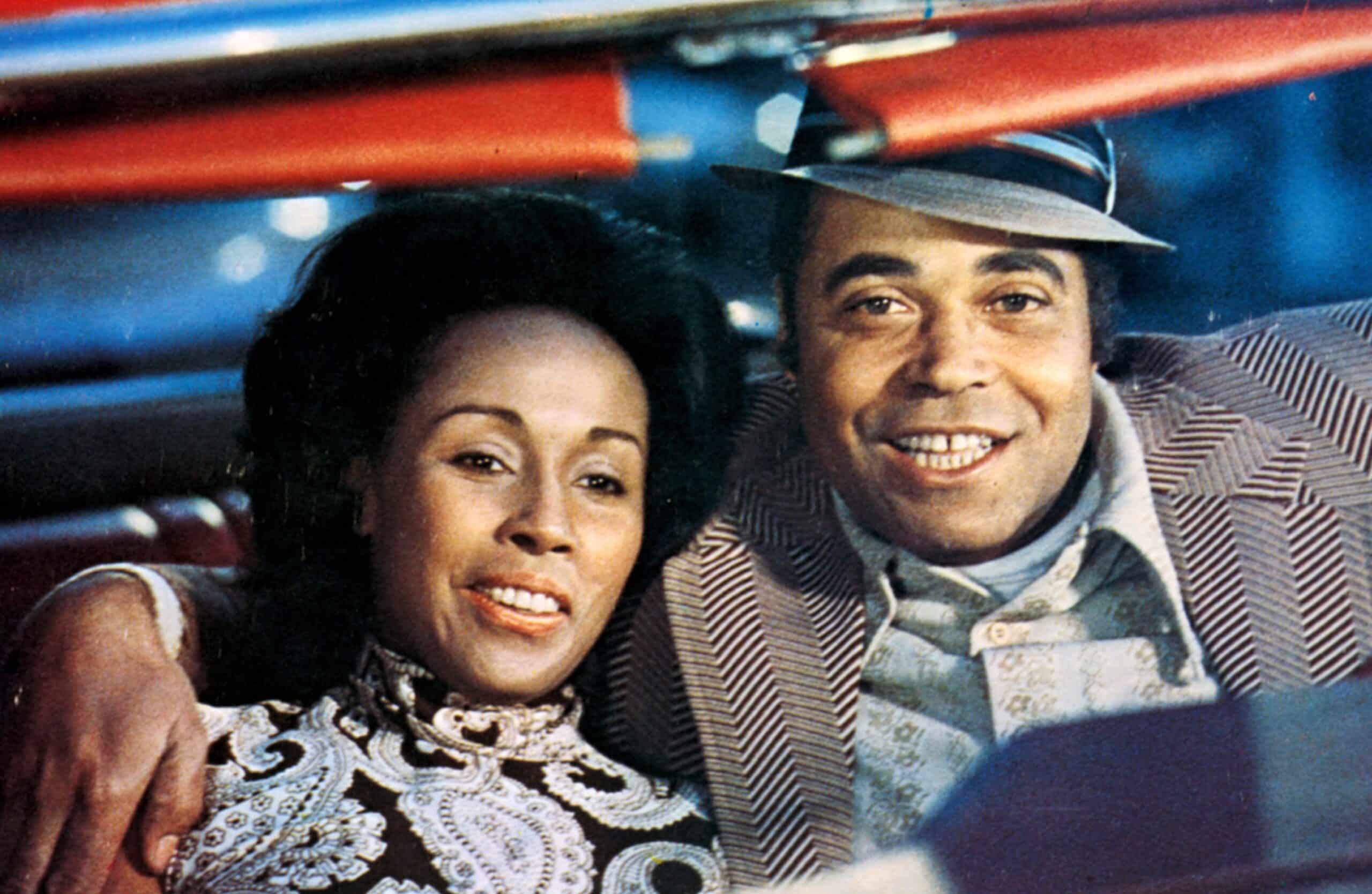
So what else did Darth Vader do? It’s often forgotten that James Earl Jones, the voice (though not the body – that was Dave Prowse) behind the galaxy’s most badass dad had an acting life away from Star Wars. Exhibit A – 1974’s Claudine, in which he goes toe to toe with Diahann Carroll in an earlier role as a feckless dad. Or is he? That, in a way, is what the film is all about.
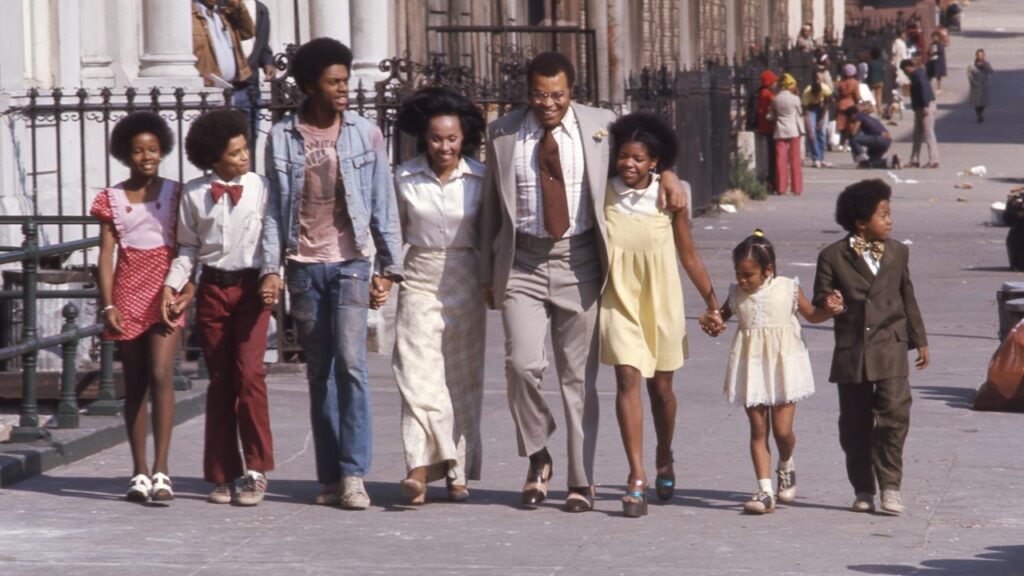
He plays the catalyst in the life of Carroll’s Claudine, an inner-city ghetto gal raising six kids by various fathers and working a job for a purse-lipped white family while also claiming welfare. Roop (Jones) is the garbageman who sweeps Claudine off her feet and then has second doubts about the whole relationship once things get serious.
Since he’s also an absent dad to children fathered with several women, from the urban locale and the dramatic set-up it looks like there’s a blaxploitation thing going on. But in many respects Claudine is one of the essential anti-blaxploitation movies. Neither Claudine nor Roop glory in their situation; they realise they are shackled by it. There are regrets. They have characters with some depth.
Carroll got Oscar nominated – against Gena Rowlands for A Woman Under the Influence and Ellen Burstyn for Alice Doesn’t Live Here Anymore she probably didn’t stand a chance – and wasn’t director John Berry’s first choice. He thought she was a bit grand, but it’s precisely this aspect, which she downplays a touch, that helps lift the film away from the common run. Roop, too, is not your average ghetto cutout – he’s thoughtful, maybe has read a book or two and while he’s more street than academe, he’s smart, even courtly.
In spite of its Curtis Mayfield soundtrack (performed by Gladys Knight and the Pips, no less), in many ways Claudine would not stand out that much if there were more films like it – normal everyday black people going about their everyday lives – but there aren’t and so it is a beacon of sorts, dealing with its themes of systemic disadvantage and personal development (or lack of it) as secondary to the main event, which is the will they/won’t they relationship of Claudine and Roop.
The acting is, in many ways, the big attraction. Carroll deserves the Oscar nod; James Earl Jones is remarkably lithe for a big guy, and alternates dark and light as if flicking a switch – is Roop’s Claudine’s white knight or will he ruin her?
The many scenes set in Claudine’s cramped apartment showcase the six kids, where fluid and relaxed interaction allows the young actors to really get into their roles as fractious siblings who really know how to press each other’s buttons. Lawrence Hilton-Jacobs, as the 18-year-old flirting with black power and mocking his mother’s passivity, is particularly good. But so is Tamu Blackwell as Claudine’s older daughter, Charlene, a young girl Claudine worries is going to make the same mistakes as her.
The director is John Berry, one of the 25 people handed over to the McCarthy witch hunt by Edward Dmytryk when he “named names” to recover his own career. After exile in France, where, among other things he directed Laurel and Hardy in their last movie, Berry eventually returned to the USA.
Claudine was the first American film he’d made since directing John Garfield in 1951’s He Ran All the Way. A native New Yorker, Berry has a feel for the Harlem neighbourhood next door to where he grew up. And his film quietly makes the point about inner-city suburbs that they may be disadvantaged in many ways but they are on the whole well ordered. Claudine and her children can make a go of things. All they need is a bit of luck. Which Roop might or might not represent. Dot… dot… dot…
Claudine – Watch it/buy it at Amazon
I am an Amazon affiliate
© Steve Morrissey 2024

