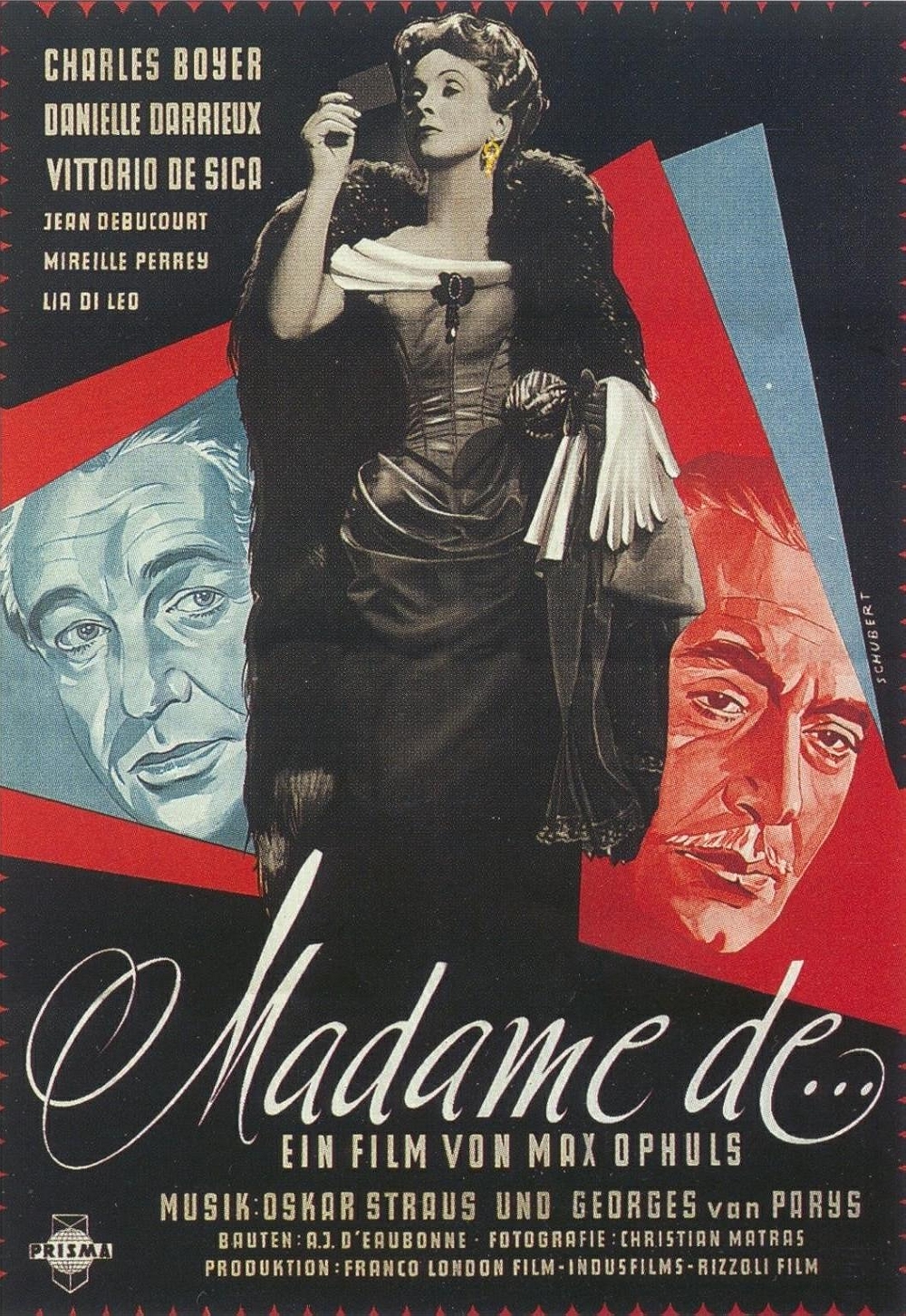
Light-hearted, ironic, passionate, frivolous, lush, beautifully made and full of little jokes, The Earrings of Madame de… is the sort of self-consciously filmic film that film-makers love but audiences are less enthusiastic about. It was a favourite of Kubrick. Douglas Sirk described it as perfect. When it got its Criterion Collection release Paul Thomas Anderson did the spoken introduction. New York Observer critic Andrew Yarris referred to it as the Greatest Film of All Time.
Even if you don’t rate it quite so highly, it’s undeniably exquisitely made. This was director Max Ophüls back in Europe after a sojourn in Hollywood, and he’s definitely off the leash. His final four European films – La Ronde, Le Plaisir, Madame De… (as it’s sometimes known) and Lola Montès – are all of a piece, masterpieces of film-making which are as much about film-making itself as plot.
There’s barely any here. A pair of earrings, given by a rich husband to his wife, are followed as they are sold by her and bought back by him, several times. When he first gave them to her, at their wedding, they were a token of his love for her. By the time he’s buying them back – for the second time, I think – they have travelled from Paris to Constantinople and back and are now a token of the affection between the man’s wife and her lover, an Italian baron.
The plot is a daisy chain, as La Ronde was, a series of eventful meetings between the wife and her husband, the wife and her lover and, now and again but decisively, the husband and the lover.
Some directors are good at the big stuff, others excel at the small. Ophüls did both macro and micro. This is a majestic film full of whirling camera, beautiful lighting and gorgeously dressed sets and people. But Ophüls also lavishes attention on side characters, and on tiny reaction shots as well as big emotional statements. The result is a film that’s broad and deep, powerful (and a touch torrid).
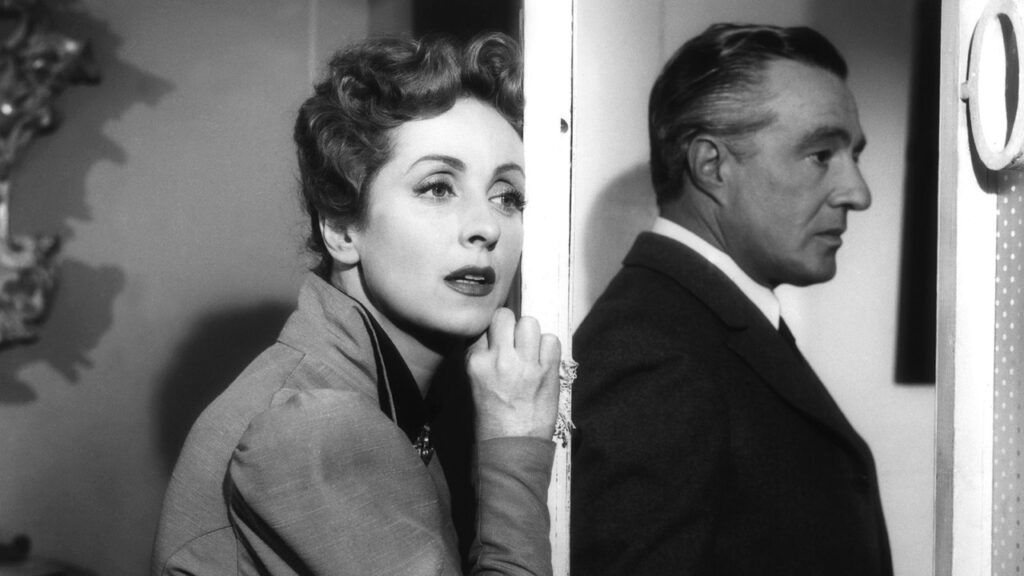
There’s a joke in the casting. Not Charles Boyer, as the stern but fairly decent and tolerant general, almost amused at his wife’s off-piste love life. Nor in the magnificent Danielle Darrieux as the wife who knows how to play the upper-class game of husbands and lovers but may have overstepped the mark. The joke is Vittorio De Sica as Baron Fabrizio Donati – the key director of Italian neorealism in a film as far away from its documentary-style nuts and bolts as it’s possible to get. In a film that’s all swags and flounces, De Sica plays the Baron to the aristocratic hilt. He is magnificent.
Ophüls throws in bravura technical moments – twice there are scenes where candles are put out one by one and Ophüls demonstrates with careful lighting How It Is Done.
Not everyone liked it. Lindsay Anderson found the busy camera irritating. But then he was in the process of trying to do for British film what the New Wave had done for French – punk it up. So maybe it just wasn’t for him. Though looked at another way the camera is the story, its (potentially tiresome) gadfly restlessness echoing the empty lives of these people whose social whirl never stops, never gets snagged on anything resembling real attachment or affection – until it does.
The transactional nature of upper-class relationships is laid bare in the symbol of the earrings passing from one person to another. By repeatedly re-buying the earrings, the general is forced to restake his proprietorial claim to his wife. With each financial transaction the marriage that was once a fortress becomes more like a prison. Frivolity becomes deadly. It turns out that frippery and silly love games can have deadly consequences.
The Earrings of Madame de… – Watch it/buy it at Amazon
I am an Amazon affiliate
© Steve Morrissey 2025