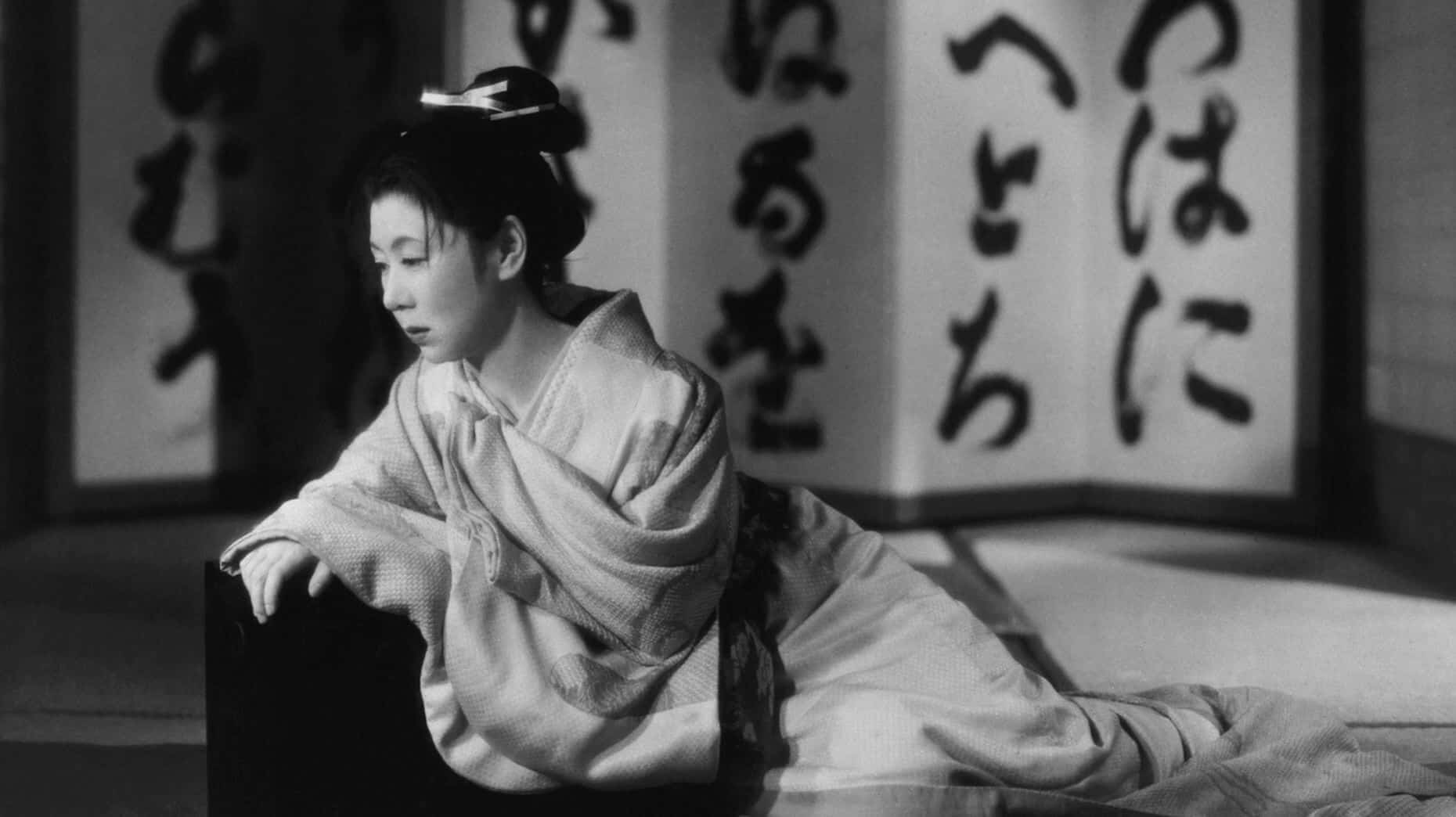
The Life of Oharu is one of the Criterion Collection, which means it’s reckoned to be up there with the very best – by one outfit at least. The great director Lucile Hadžihalilović also rates it highly – it’s her favourite film by Kenji Mizoguchi and, she says, “the most poignant film I have ever seen about the life of a woman.”
If you know Hadžihalilović’s films (like Innocence or The Ice Tower) watching The Life of Oharu is a real ah-haa experience. So this is where Hadžihalilović got so much of what she’s about. Talent borrows, genius steals, as someone famous once said (Oscar Wilde, Pablo Picasso or TS Eliot are all possibles so take your pick).
In distinct ever-descending steps, Mizoguchi’s film tells the story of a woman’s life, from bright young thing with a sense of love and ethics to a wretched creature living in penury. As we meet Oharu (Kinuyo Tanaka) she is the daughter of a samurai with a high-status position at Edo’s 18th-century feudal court. Falling in love with the wrong guy, a mere retainer (played by a very urgent Toshirô Mifune – blink and he’s gone), her relationship has soon resulted in him losing his head and her being sold off by her parents as a concubine.
It is not the first time Oharu will be sold by her parents, who are at bottom the villains of this piece – or at least the money-mad father (Ichirô Sugai) is; the mother (Tsukie Matsuura) just looks on and nods powerlessly.
From here a series of commercial trades involving Oharu, who is used as a babymother by the noble she has been sold to and is then dumped once she’s given birth to the heir his wife cannot produce. After that it’s a case of ever diminishing returns, Oharu losing status every time – from concubine to courtesan, from courtesan to prostitute, and from prostitute eventually, when her looks give out, to beggar.
Oharu’s life is one of transactions and, even when it’s not overt, prostitution. In many ways it’s a similar in theme to Teuvo Tulio’s Finnish melodrama The Way You Wanted Me, or the 1940 German film The Postmaster, with Mizoguchi making clear that Oharu is a plaything of a patriarchal system and a victim of choices made by other people. Powerless she may be but in spite of the way she’s been treated, Oharu remains true to her own ethics. There is a nobility in her which remains unshaken to the end.
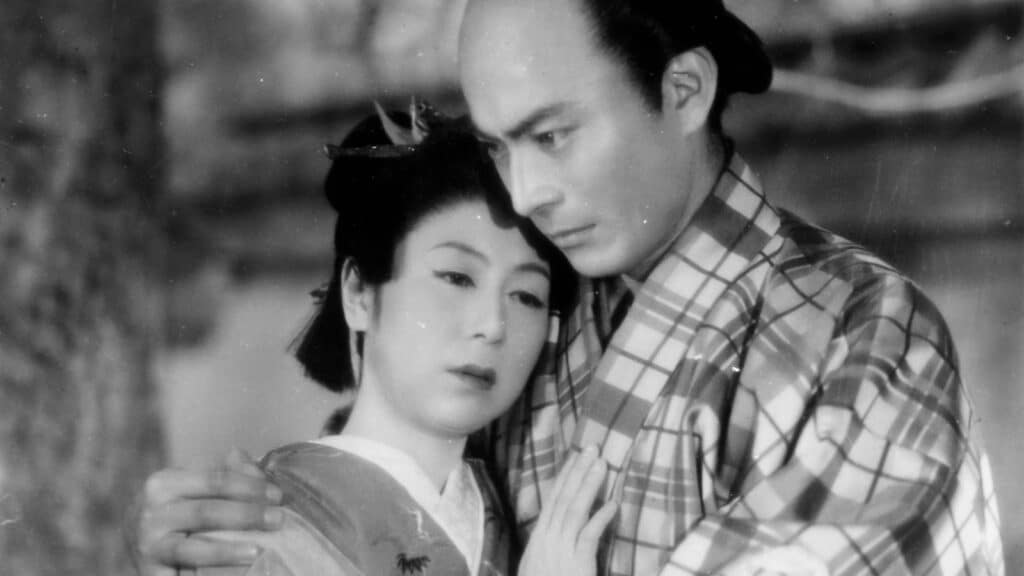
Shot with soft washy lighting almost as if Japanese pen and ink drawings had come to life, the film is an exemplar of Mizoguchi’s style – mostly medium shots, the compositions careful, the camera elegantly moving when it must but staying still unless there is a crying need for it. Mizoguchi also has a knack for leaving a scene immediately once it’s done its work. It gives the film a real sense of forward movement.
Throughout there is the tantalising suggestion that this time it’ll be different and that Oharu will find love, happiness and respect. At one point it seems certain that it’s going to happen for Oharu, only for it to be cruelly yanked away.
At each of these moments Kinuyo Tanaka really comes into her own. She is particularly good at the emotional pivots, when Oharu has her heart broken – again and again and again. Hadžihalilović called Tanaka’s performance “devastating” – it’s the right word. It’s a devastating story. Though other films by Mizoguchi often make the “best of” lists – Ugetsu Monogatari and Sansho the Bailiff usually – this was the film that Mizoguchi himself reckoned was his best.
The Life of Oharu – Watch it/buy it at Amazon
I am an Amazon affiliate
© Steve Morrissey 2026

