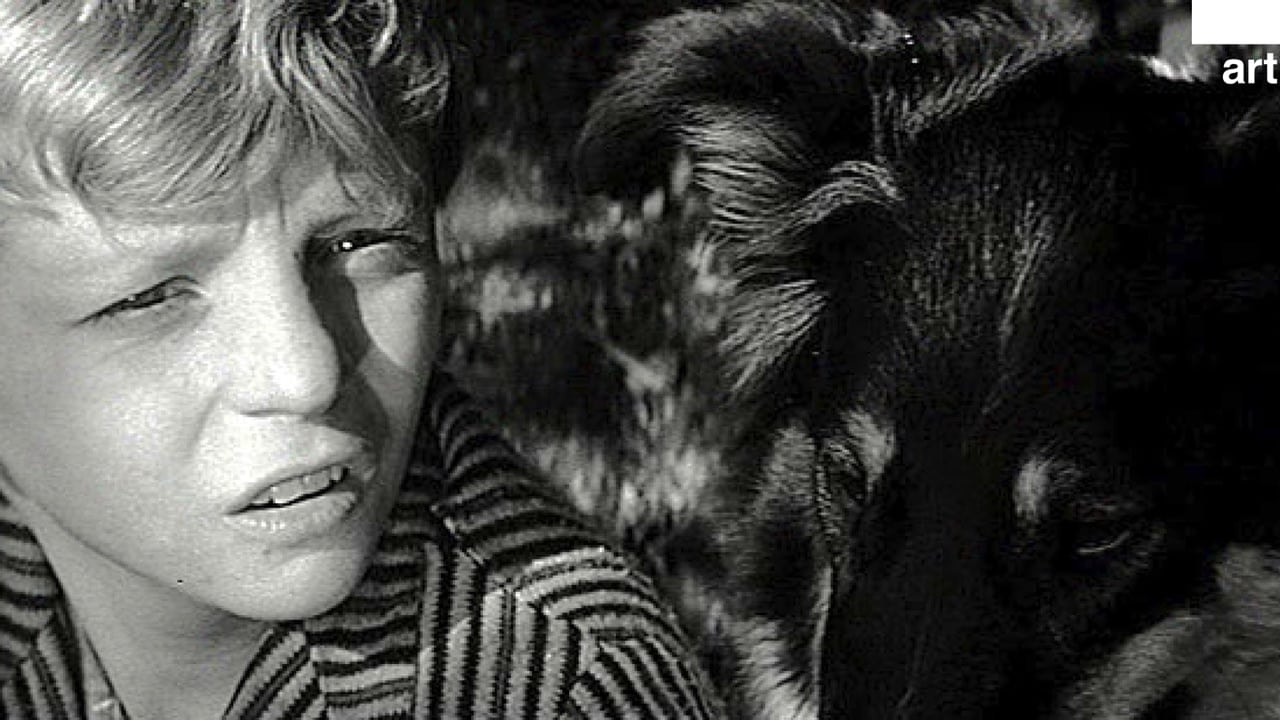
Memory, fantasy and the Second World War make surprisingly comfy bedfellows in Long Live the Republic! (Ať žije republika), Karel Kachyňa’s lyrical and lovely coming-of-ager from 1965. A Czech movie set in Moravia as the German army pulls out and the Soviet army readies itself to take over, it’s far less critical of the communist regime than you might expect from a mid-1960s film. Especially from a film-maker who’d later make The Ear, a film so scathingly anti that it was instantly banned and not seen until communism collapsed. But poke around a bit and there’s a critique of sorts going on, delivered with the maximum of plausible deniability.
The non-plot follows a boy called Oldrich, known as Midget – he’s a bit undersized – bobbling about in his village, riding a bike that’s too big for him, getting into scrapes with the older boys (who bully him) and casting semi-longing looks at the lives of adults: messy, dirty, bloody, brutal and real.
That’s the critique, if that’s how you want to see it – the simple life of the kid versus the life of the adult, whose complexity no amount of prescription or doctrinal persuasion is going to pull into line.
Kachyňa mixes in the boyish adventures with intimations of adulthood to come – Oldrich (Zdenek Lstiburek) finds a nudie book and some cigarettes left behind by the retreating armies, watches planes buzzing through the sky – alongside snatches of ritualised village life (killing pigs, religious processions), with memories from before the war, alongside out-and-out fantasy, everything filtered through the eyes of a sensitive boy who doesn’t quite fit in and maybe never will.
Sliding from one to the other with barely a tonal shift, the effect is slightly surreal, a touch expressionistic and both fascinating and captivating. Kachyňa shoots it all from the boy’s level – low – and director of photography Jaromír Sofr (who did Closely Observed Trains and I Served the King of England) bathes everything in lots of light, the high-key looks shimmering when things get particularly fantastical.
In terms of known properties, we’re somewhere between the picaresque life of Oskar, the kid observing the rise of the Nazis in The Tin Drum and the poetic sentimentalising of Tarkovsky’s Mirror. Mirror came ten years after this, but Tarkovsky had already made Ivan’s Childhood at this point, another film about a boy’s experiences during wartime. Given that it instantly propelled Tarkovsky to the first rank of film-makers working behind the Iron Curtain, its dream-like slipperiness, standing in stark contrast to the demands of Socialist Realism, must have been an inspiration.
At one level a gentle coming of ager, at another a sweet portrait of village life, at yet another a war movie in which soldiers come and go but not much happens, it would all be a bit twee if it weren’t for the dark thread running through it – the beatings Oldrich receives from his father, a man so ungenerous he won’t leave a candle burning on the grave of his dead father (a man who was by all accounts even tighter). Or Oldrich’s adult friend Cyril (Gustáv Valach) being driven into bankruptcy when the villagers (including Oldrich’s dad) refuse to tide him over with a loan. Rubbing salt in the wound, they then smirk mockingly at the auction where all of Cyril’s family’s belongings are sold for a song.
Solidarity, socialist or otherwise, is in short supply in this movie, whose relatively few plot turns all seem to involve theft – the film’s subtitle, Me and Julina and the End of the Great War, refers to the theft of Oldrich’s horse, Julina. And yet it’s invariably described in the sweetest terms – “lovely”, “lyrical”, “poetic” etc. That’s Kachyňa’s triumph, this blending of dark and light.
I watched the new Second Run Blu-ray, from the hi-def transfer by the Czech National Film Archive. From a quick scan of Amazon, it’s the only way to see it at the moment. It’s well worth it.
Long Live the Republic! – Watch it/buy it at Amazon
I am an Amazon affiliate
© Steve Morrissey 2026

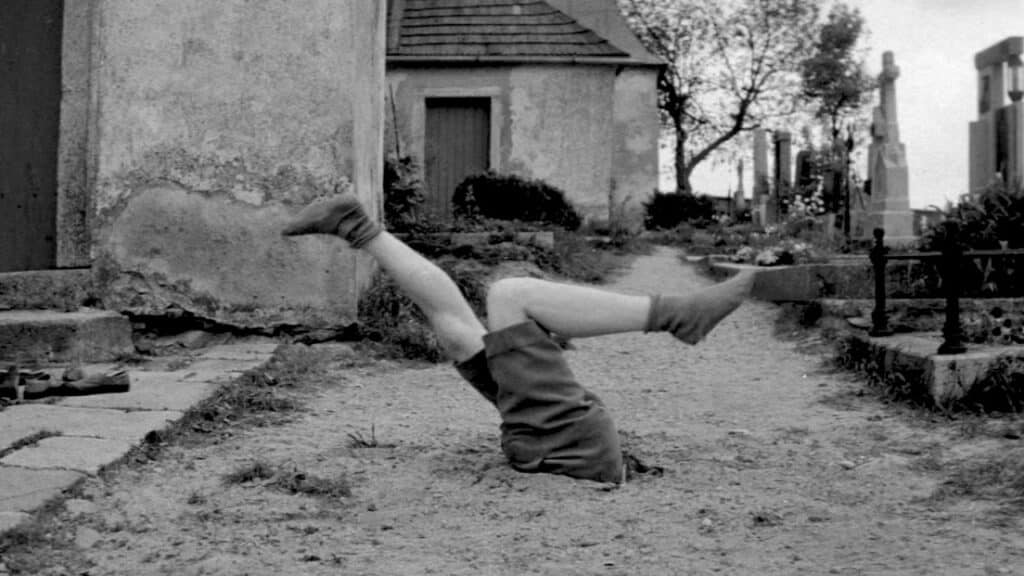
Just a little thing about your illustration here (the kid’s legs), it’s not Oldrich’s body but on the opposite one from the boys that bullied him (when Oldrich fantasized about his power to make them fall off the roof)
And, yes, the movie is a f….. masterpiece 🙂
Thanks, Maloon70. I’ve tweaked my caption a bit. Great film! Steve