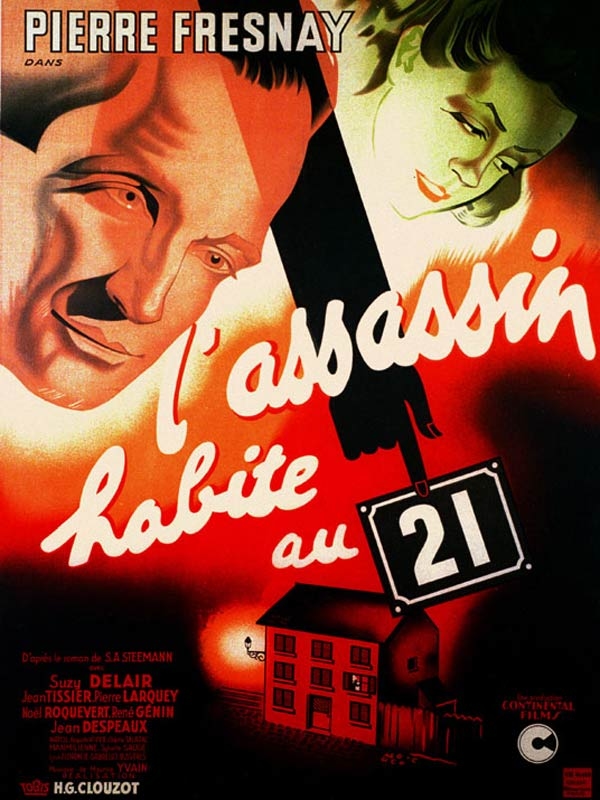
Agatha Christie, Alfred Hitchcock and (using a time machine) the Knives Out franchise jostle along chummily in The Murderer Lives at Number 21 (L’assassin habite… au 21), the 1942 feature debut by Henri-Georges Clouzot and a confident beginning by a film-maker who knows exactly what he’s about.
Winking all the while at the audience, Clouzot gives us a murder right up front – a drunk in a bar who’s just won the lottery – done with a camera that slides between third-person omniscience to killer to victim, Clouzot as good as announcing himself as hugely talented before the film’s even got going, in the same way as the killer announces himself, with a calling card left by the drunk’s dead body, from a “M. Durand”.
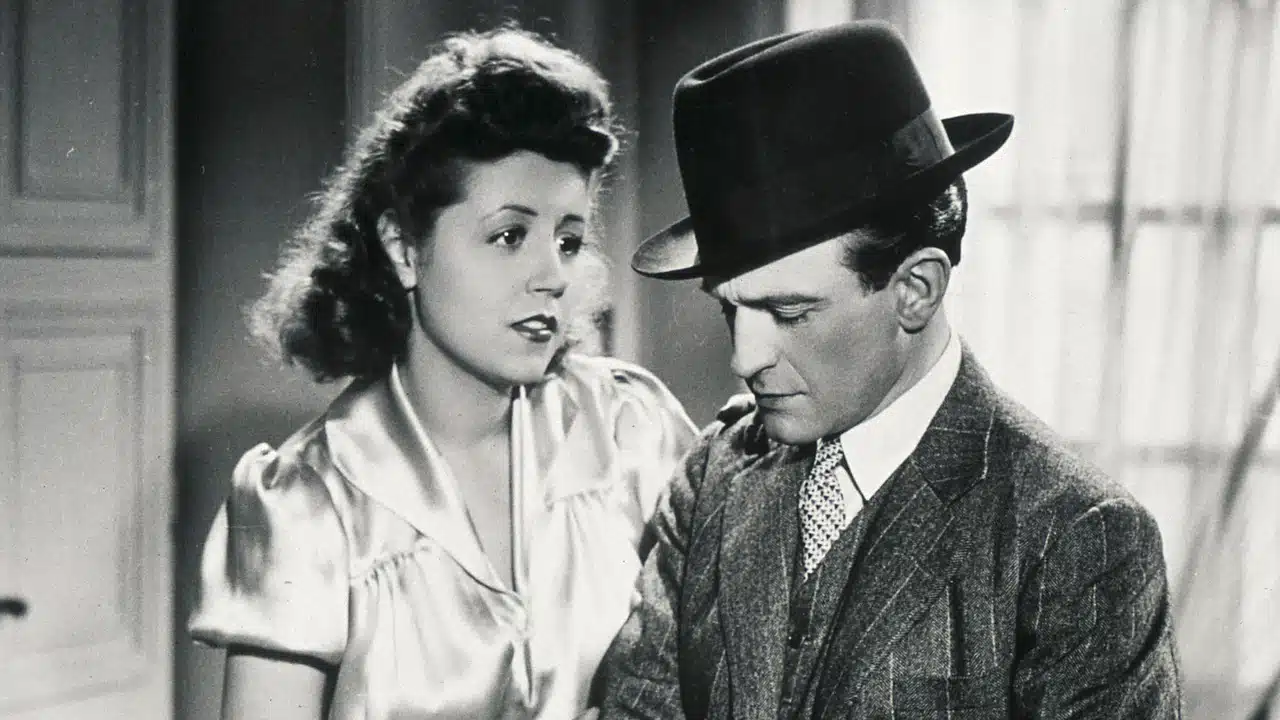
Then Clouzot gives us the detective on the case, Wenceslas Wens (Pierre Fresnay), who is incentivised by his boss to catch the killer with the threat of being fired if he doesn’t. Plus, not so much a sidekick as a rival, Wens’s girlfriend Mila Malou (Suzy Delair), also investigating in an amateur capacity, reckoning that if she can catch the killer it will make her famous. And if she’s famous it will make her dream of becoming a stage star all the easier. Bit mad, but there you are.
And after this set-up, we’re off to number 21, a rooming house full of shifty oddballs. One of them is the killer is the idea. Knives Out style they are a rum bunch – the pipesmoking landlady Madame Point (Odette Talazac). Madamoiselle Cuq (Maximilienne), a spinster who writes fiction. Doctor Linz (Noël Roquevert), an ex-colonial braggart and lush. Professor Lalah-Poor (Jean Tissier), a very theatrical stage magician. Monsieur Colin (Pierre Larquey), a travelling salesman who makes dolls. The valet Armand (Marc Natol), who quacks like a duck to announce himself. And blind ex boxer Kid Robert (Jean Despeaux, an actual ex boxer with a face to match) and Nania (Huguette Vivier), his nurse, though she doesn’t act or dress like one.
Enter Inspector Wens disguised as a priest. Followed shortly afterwards by Mila, not blowing her man’s cover but out to expose the killer before he does. Larks.
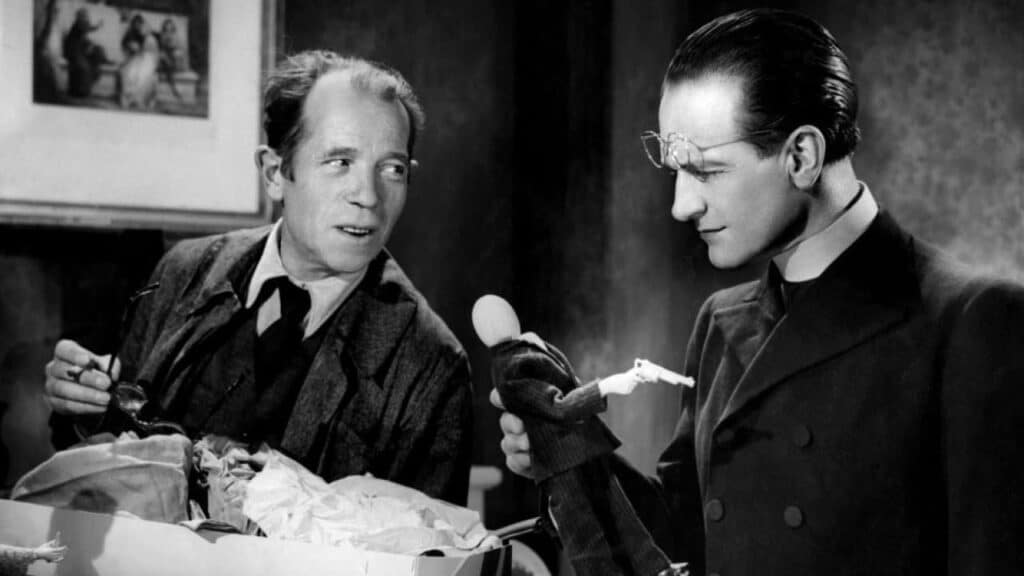
It’s a farce, of course, with all the various characters sneaking into each other’s rooms to find clues the whole time. It’s also obvious that Clouzot is already fascinated with Hitchcock – the two directors would keep an eye on each other into the 1960s – the love of vaudeville, the winking jokes and little sexual asides, the bumbling cops, a touch of the macabre and some twisted psychology.
It is funny in that jolly romp way – not exactly laugh out loud but amused grin – and Clouzot and writer Stanislas André-Steeman twist it one more time when Mlle Cuq announces that she’s decided that her next novel will be set in a boarding house where one of the guests is a killer and the detective is in disguise.
Fresnay and Delair are a great double act. He makes Wens superior and cocky, she makes Malou a firecracker who’ll burst into song at the slightest excuse. They’re at their best in their scenes together, done at screwball speed, and their funny relationship – at one point she’s trying to squeeze his blackheads – is genuinely fresh and unusual enough to ride over objections that what’s going on with their rival investigations is completely ridiculous.
Clouzot shot this for the Nazi-run Continental Films, and after the war he was found guilty of collaborating and banned for life from making films in France, until a campaign mounted by Jean Cocteau, Marcel Carné, René Clair and Jean-Paul Sartre got the sentence reduced to two years.
Watch The Murderer Lives at Number 21 for any shred of pro-Nazi sympathy if you like. Was he supporting the Nazis by making this film, or helping shore up the morale of occupied France? Write on both sides of the paper.
The Murderer Lives at Number 21 – Watch it/buy it at Amazon
I am an Amazon affiliate
© Steve Morrissey 2025