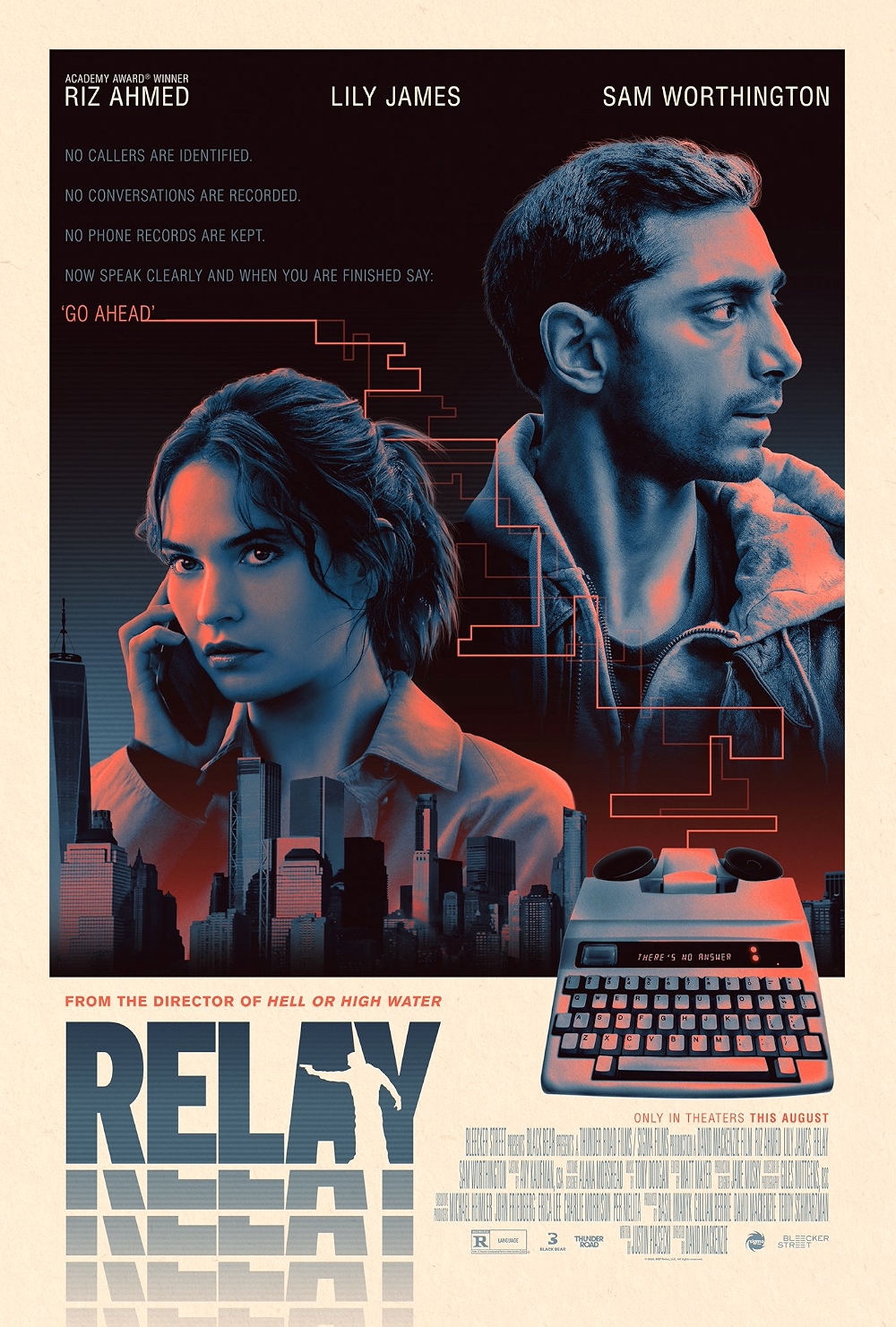
Relay is the sort of slick, well crafted thriller George Clooney used to turn up in. A grungier, slightly less glossy Steven Soderbergh-style thing, ish ish ish, with Riz Ahmed taking the Clooney gig as a rather old-school detective of sorts – the conflicted, damaged dude doing what he does because it helps keep him on the rails. His character, Ash, is a recovering alcoholic. We get scenes set at Alcoholics Anonymous, usually a hoary old bit of character shorthand, though in this case writer Justin Piasecki has found a way of integrating Ash’s AA sessions and his demons into the plot. Ish ish ish.
The audience’s familiarity with material like this means Piasecki can dispense with dialogue. There is barely any. Ash doesn’t say a word for the first 30 minutes or so, and that’s fine because a) we know what’s going on, and b) he’s communicating with his client by typing on old school tech, no speech necessary.
Ash’s special field of operations is acting as an intermediary, arranging big payouts for whistleblowers who have got cold feet and decided they’d rather be bought off. It’s dangerous work and to preserve the anonymity of himself and the whistleblower Ash uses a TDD device to communicate with his client. Designed so deaf people can make and receive phone calls, TDDs (Telecommunications Device for the Deaf) rely on a go-between operator to type out any incoming message to the deaf person, who reads it from a TDD interface – think tickertape but with a dot matrix readout.
The operator keeps no record of what was said or who was saying it, or the number the call came from. Ash’s client will never hear his voice or be able to work out where he is. It’s a bit like when the German secret service realised that the CIA was eavesdropping on their comms and so switched back to using typewriters and paper. Low-tech has its uses.

The TDD is a relay and so is Ash. (The whistleblower too – albeit a non-functioning one). Relays, functioning or otherwise, ingeniously shape both plot and character. But there is more to enjoy. Ahmed’s intense performance as Ash for one. Also, Lily James as his latest client, Sarah, a frightened would-be whistleblower who’s gone cold on the idea of exposing a malign biotech company. And Sam Worthington as chief of the dirty tricks crew hired by the biotech firm to shut everything down, Worthington surprisingly good now he’s gone to the dark side after playing too many bland heroes (in Avatar, most famously).
Though Ash and Sarah communicate over the TDD, they are yoked together, two against the world. There is the faintest whiff of The 39 Steps in their relationship – a good thing – though for the most part this is the familiar spy thriller of code words, bogus identities, disguises and surveillance, done with a dog-eared noirishness, with a score by Mogwai producer Tony Doogan that’s wispily half there, and adding immensely to the unusually tentative atmosphere.
Director David Mackenzie is best known for Starred Up, Spread, Hallam Foe and Hell or High Water, but this is more akin to his movie Perfect Sense, a good, weirded-out love story given a similar communications-related twist. Mackenzie is always interesting, even when his films don’t quite land.
This is a film all about craft. The craft of making a spy thriller and of Ash sticking to tried and tested methods. At one point we learn – in the film’s only big speech – what drives him, but we don’t really need to know, except to explain why Sarah is potentially going to be his undoing. Is this also a “last job” movie?
Relay puts a fresh and unusual spin on old material, without shortchanging us on plot twists. You can mark it down a touch because it gabbles its conclusion a bit, but by then you’ve either had your fun or it’s not for you. I really enjoyed it.
Relay – Watch it/buy it at Amazon
I am an Amazon affiliate
© Steve Morrissey 2025