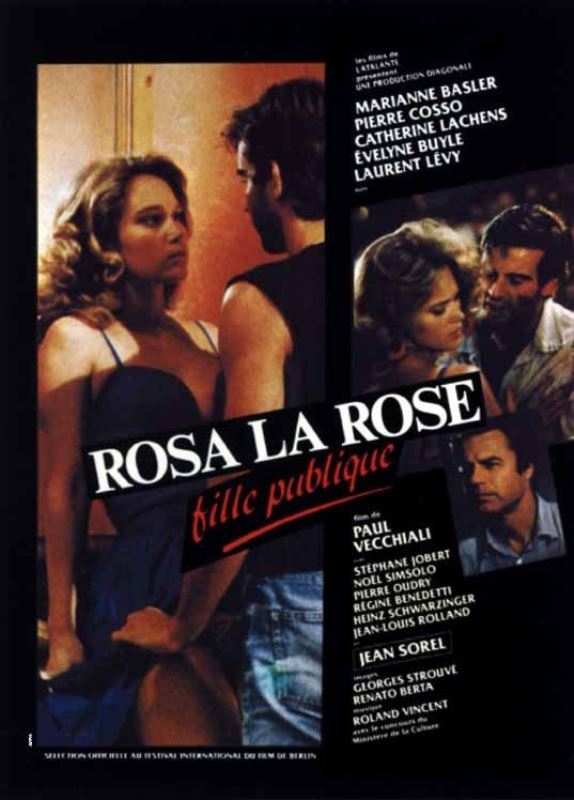
A film about a sex worker who falls dangerously in love with a client, Rose la rose: fille publique has also fallen in love with its subject – life on the streets, where working girls have sex with men and like it, the girls all get along together and pimps are on the whole benign and serve a necessary purpose.
Buy it? Me neither, but there is a lot to like in Paul Vecchiali’s 1986 film, which he says is influenced by the sort of films France was making in the 1930s and is dedicated to Danielle Darrieux, Max Ophüls, Dora Doll and Jean Renoir.
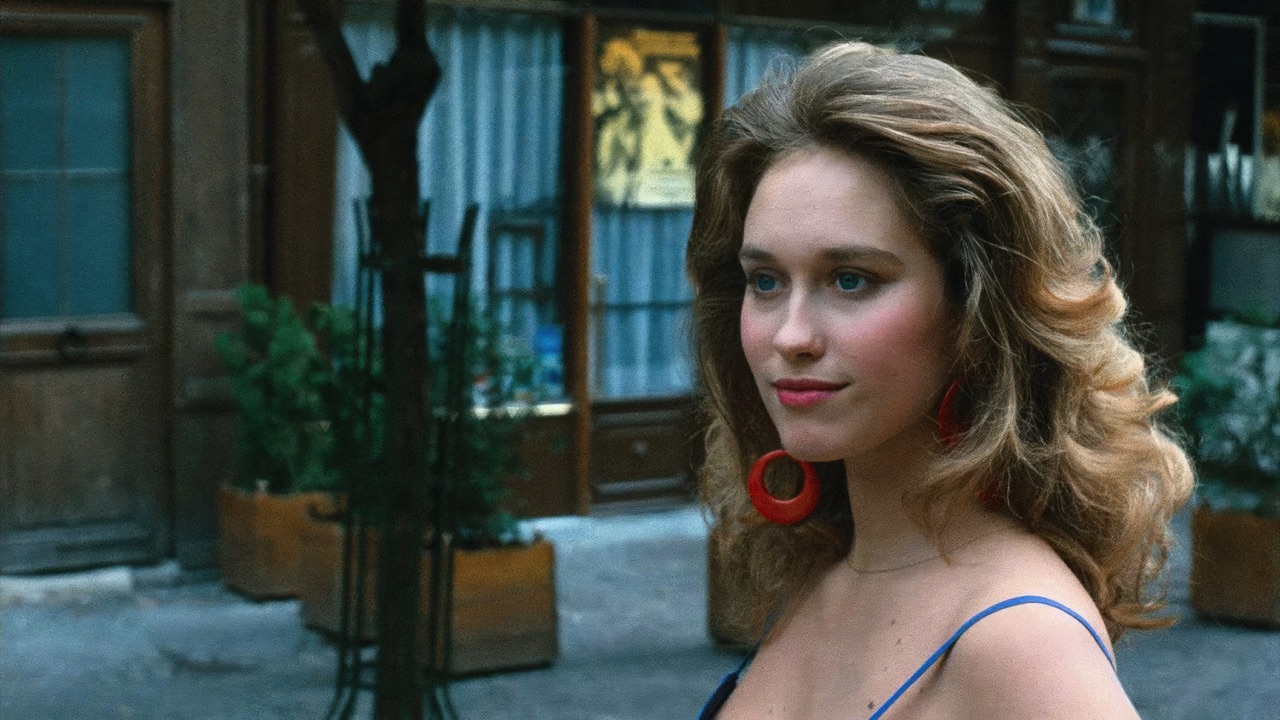
Opening shot: Rosa (Marianne Basler), a young woman of 20 years old, breasts pretty much falling out of her top and so spectacularly hot that she calls the shots. A client turns up and wants to head off to a room with her for the night. “I don’t do that,” she tells him, establishing instantly a theme of control. Later, Rose will lose this control when she falls for a man, Julien (Pierre Cosso), and her savoir faire, her sangfroid, her je ne sais quoi all suddenly disappear, her mystery evaporating on the altar of love. But for the moment she is top dog on these streets, charging 500 francs for her services. Her friends/co-workers, known as 40 (Catherine Lachens) and 35 (Evelyne Buyle), presumably because that’s what they charge, keep a sisterly eye on Rose and talk wistfully about the days when they were in demand like she is now.
This is a film where everything is blocked, locked down very tightly, allowing Vecchiali’s camera to lurk and creep about behind people before suddenly rising into the air. His camera is also in the rooms where the action happens, and we meet the customers: the romantics, the brutal, the kinky, the ones terrified of catching a disease, the premature ejaculators, with Basler spending whole tranches of time naked. This was France in the 1980s. Contrast with now in America, where no one in the movies seems to have sex undressed any more.
Vecchiali uses this frankness to conjure up humour here and there. There is a party scene, where Rosa, the other working girls and all the pimps gather to celebrate her 20th birthday. There is dancing, Rosa sings a song and then, sitting at the table to enjoy the birthday feast, it suddenly becomes clear that Rosa is posed as Christ was in Da Vinci’s The Last Supper.
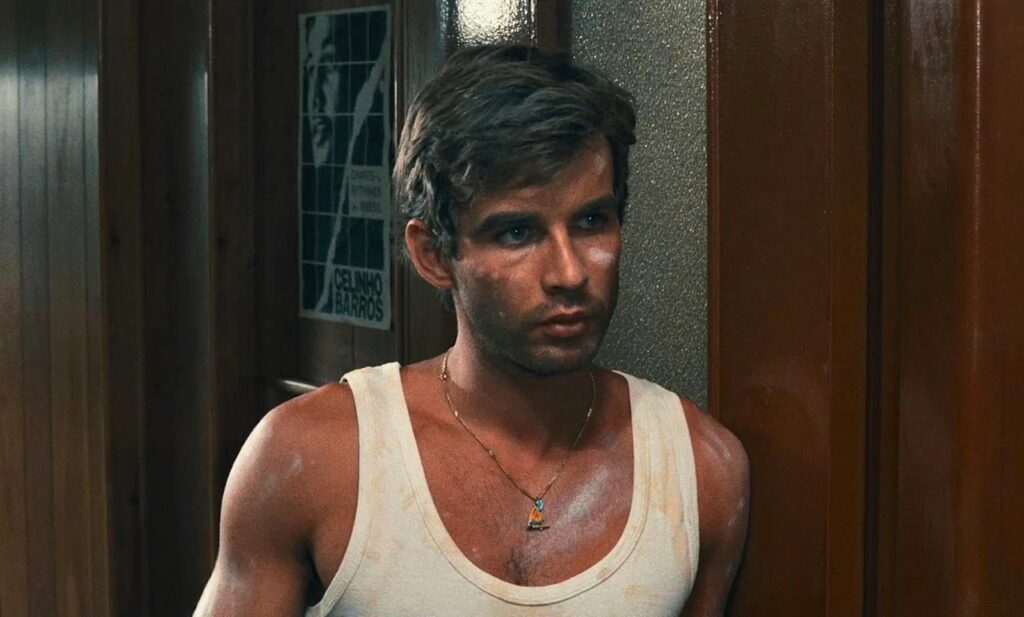
It’s here where Rosa first catches sight of Julien, shiny with sweat in his paint-spattered jeans, eyes fixed on Rosa. In some respects this is the last supper of an old life. From here Rosa will start to have doubts, and before long she will be telling her pimp, Gilbert (Jean Sorel) that she wants out.
He takes it well. It is this element of the film that never quite feels right, to modern eyes, because it’s based on a 1930s rosy-glow attitude to life on the streets – more real, more honest, more communitarian is the idea.
Poetic realism, they called it in the 1930s, and there is obviously an element of that in the way Vecchiali shoots his film and the way he depicts his characters. If you can swallow that rejection of a grittier approach, there’s lots to like here. Vecchiali’s debt to Fellini is obvious in sudden bursts of the carnivalesque. There is a refreshingly modern attitude to gay men, who are just guys with special sets of skills. And at the bottom there is that old French perspective on prostitution, a “better out than in” attitude less hypocritical than the anglo-saxon version.
And if all that fails, you can just look at Marianne Basler.
Rosa la rose: fille publique – Watch it/buy it at Amazon
I am an Amazon affiliate
© Steve Morrissey 2026