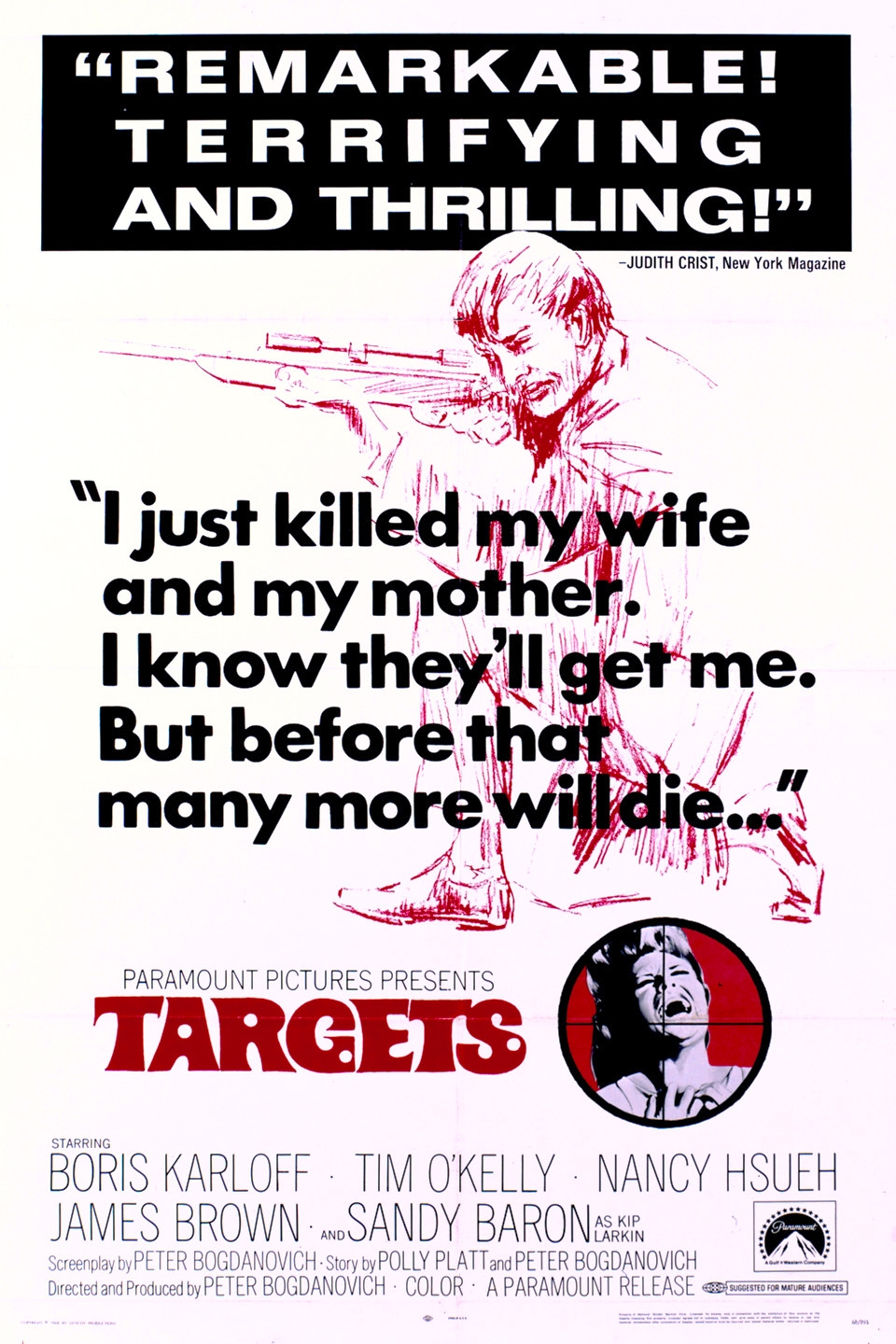
The story goes that Targets got made because Roger Corman met Peter Bogdanovich at a screening in 1968. Bogdanovich had never directed before but Corman liked the cut of his jib and so offered him a gig. Boris Karloff owed him two days of acting work, Corman told his director presumptive, and if they could get the veteran actor in front of a camera, they could mix in the new stuff with footage from 1963’s The Terror. Sweating the assets being something Corman was good at, Karloff in due course turned up to work off his two days and so did Bogdanovich – a famous actor at no expense, minimal outlay on filming and a director happy to work for peanuts. Hey ho, a new picture for almost nothing.
What Bogdanovich delivered was way beyond the brief. Karloff (according to Bogdanovich in the excellent commentary track on the Targets physical copy I watched) rated the rookie director so highly he gave him five days of his time, in spite of being sick (dying, really). The film they made both kick-started Bogdanovich’s career and acted as a swansong of sorts to Karloff’s.
When you have existing footage from a horror film and a famous actor best known for his horror work, what’s more natural than to work to what you have. Bogdanovich goes meta with his raw materials – Targets is a story about an old horror actor being encouraged into one last hurrah by a young whippersnapper director, played by Bogdanovich himself.
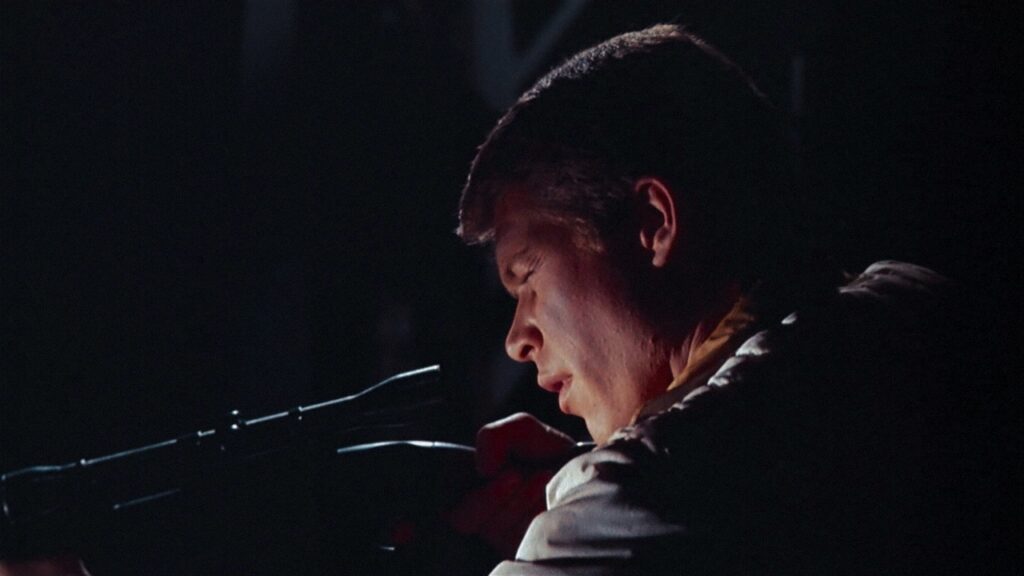
In another strand requiring no Karloff input whatsoever, a parallel plot about an unhinged gunman preparing for a killing spree and deciding to target Byron Orlok (Karloff). Orlok is due to make a public appearance at the debut of what he has suddenly decided is his farewell film and Bobby Thompson (excellent Tim O’Kelly) has decided this will be his blaze of glory. In scenes fleshing Bobby out, we see that he’s a clean-cut model citizen, though an oddly infantilised one – Bobby addresses his father as “sir” and is referred to by his mother as a “good boy”. The incel lone gunman – Bogdanovich is way ahead of the cultural curve here.
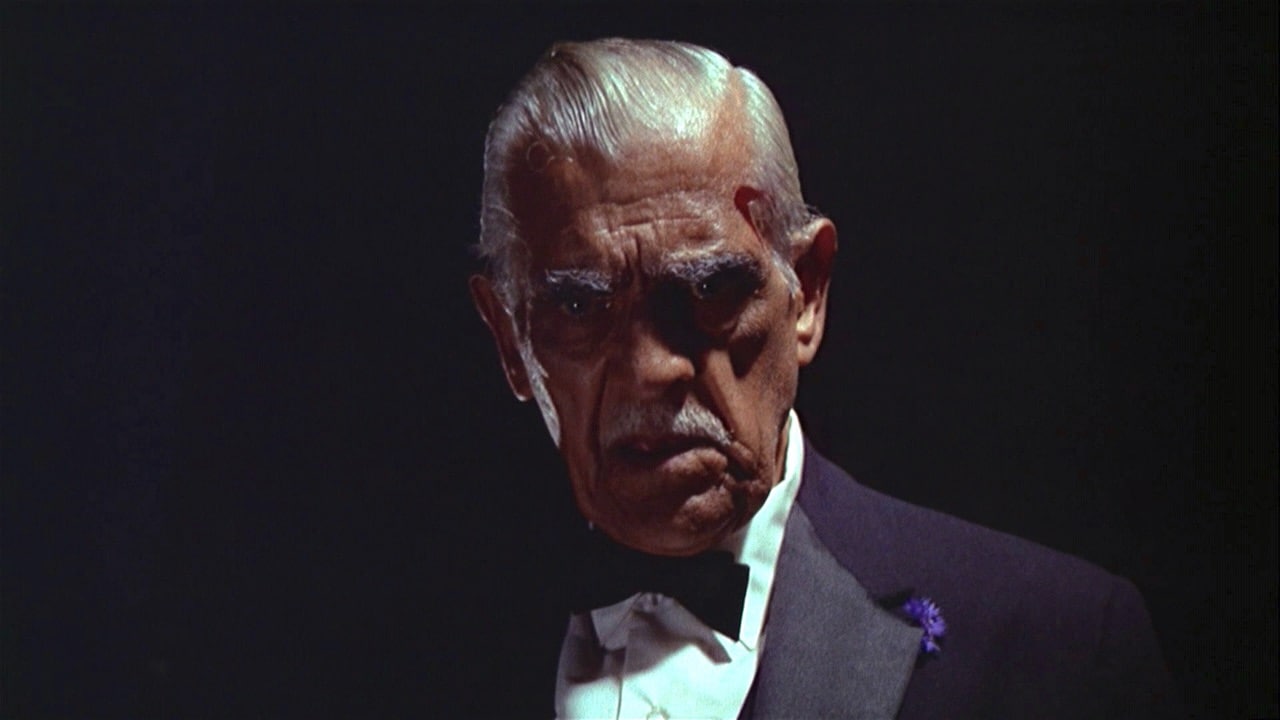
Karloff was on oxygen and using a wheelchair between takes. There are black circles around his eyes and death is lurking beneath the Hollywood tan. Bogdanovich’s script cannily plays to the actor’s vanity. Orlok (Karloff in every other particular, except Karloff wasn’t a bitter man) is lionised. He’s more than just a horror actor, we’re reminded: in a scene in Orlok’s hotel room 1931’s The Criminal Code, the film he made with Howard Hawks, is playing on TV. Karloff responds to having his chin scratched by delivering a vigorous performance in scenes that are touching, elegiac and even funny – Karloff’s frightened double-take at his own reflection is the film’s best laugh.
Bogdanovich is no actor, and every line he utters falls flat. But he wisely doesn’t give his character, Sammy, too much to say or do. He’s playing himself.
Shoot it like Hitchcock, Corman told his rookie director, and he complies, even laying on a couple of Hitchcock set pieces to show he can do it. Within budgetary limits this is the classic-era cinema of elegant camera movements and clean good looks. He’s enormously aided by cinematographer László Kovács, whose colour work (warm for Karloff, cool for O’Kelly) and gliding camera here really lift everything a notch. The following year Dennis Hopper got him in to be DP on Easy Rider, one of the big hits of 1969.
It’s a superb film, especially considering the raw materials, and a great introduction to a new director who’d spend most of the rest of his career looking backwards. “All the best movies have been made,” Sammy says to Orlok at one point as the two chat – for all the homage to Karloff, Bogdanovich wants us to know the real hero of this movie is old Hollywood.
Targets – Watch it/buy it at Amazon
I am an Amazon affiliate
© Steve Morrissey 2026