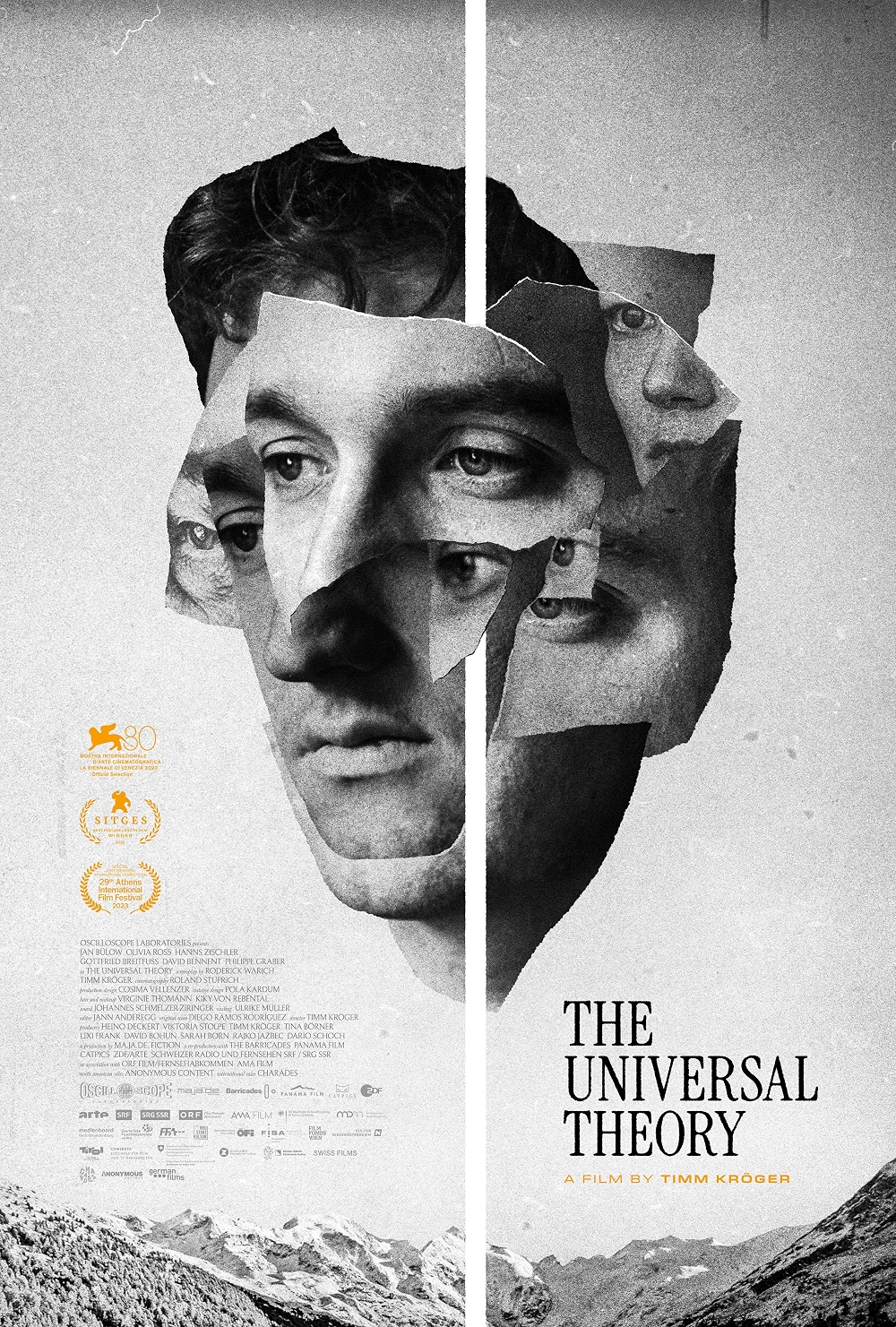
If Alfred Hitchcock, Thomas Mann and Franz Kafka made a multiverse movie it might look like The Universal Theory, a fabulous and madly forensic undertaking by Timm Kröger, who gets just about all of it right and tells a really good story. You don’t need to be well versed in the works of any of the above to be well entertained but it really adds to the enjoyment.
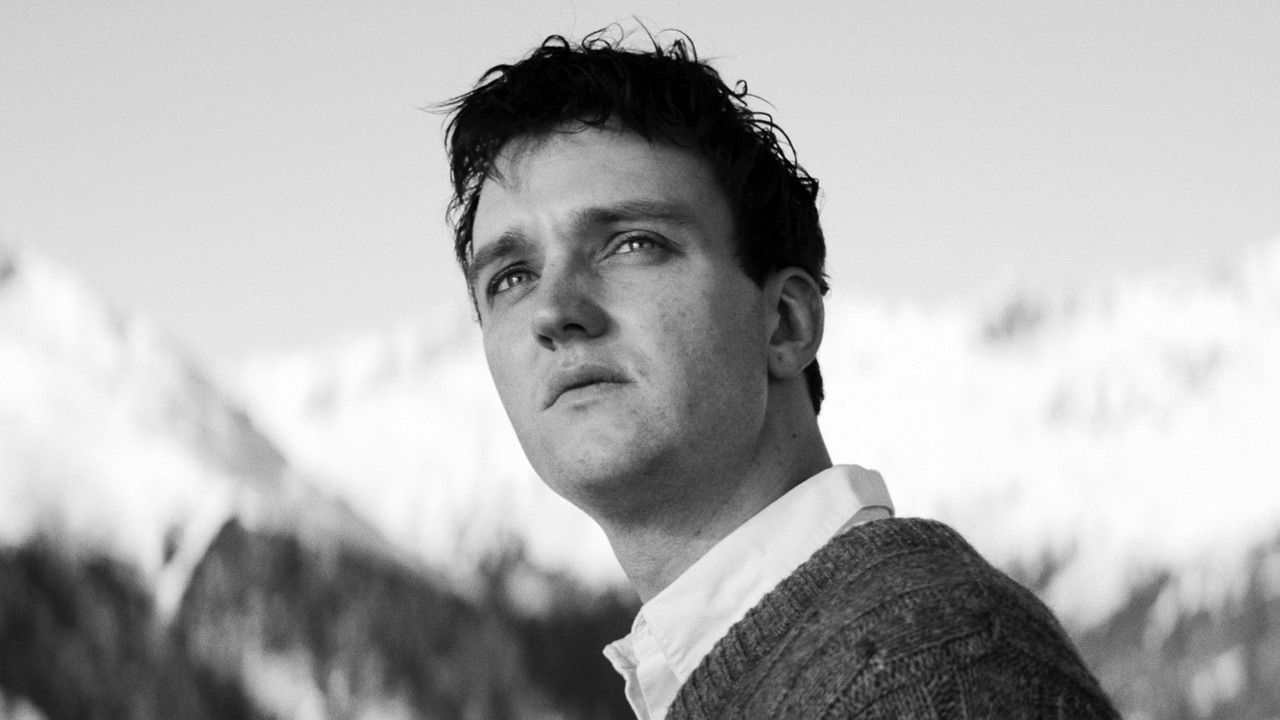
Kröger opens his story in a TV studio in the 1970s, where an author is bristling at his interviewer’s description of his book as fiction. It’s true, all true, the author says, causing the interviewer and fellow guests to smirk and titter. As Johannes Leinert (Jan Bülow) storms out, the fuzzy colourful imagery of TV in the 1970s yields to a crisp black and white. Kröger has taken us back into the 1960s, when irate Johannes was a young PhD student honoured to be attending a symposium on quantum physics with scientific big noises up in the Alps.
Here, all is explained – or isn’t. In a setting that might have been lifted from Thomas Mann’s The Magic Mountain, Johannes, acting as Kröger’s equivalent of Mann’s blank-page “hero” Hans Castorp, meets characters who seem to have been bussed in from a Hitchcock film or a Kafka story. A Nobel-touted physicist (Gottfried Breitfuss) with a murky past who appears to die and then re-appear. A mysterious pianist (Olivia Ross) who knows more about Johannes than is possible, though some of the precise details are a bit off. A pair of commissars (Philippe Graber, David Bennent) very keen to interrogate Johannes about what he knows – in particular about the formula which he says came to him in his sleep. A formula that will, we surmise, explain (or possibly produce) the multiversal shift in the physical world that the film flirts with but never entirely embraces.
There’s a touch of the femme fatale in pianist Karin Hönig (German for Honey – ha ha), which adds to the “ostentatiously dramatic” sense of film noir Kröger says he was aiming for. In the same interview with Cineuropa Kröger also mentions Hitchcock. And there, if you’re looking for a one-liner, is where this movie’s heart lies, in its slightly comic-ironic tone, the set pieces, the gorgeous imagery and the lavish camera movements, in particular the music, which is high in the mix and has a lush, urgent Bernard Herrmann grandiosity – take a bow Diego Ramos Rodriguez, David Schweighart and Viola Hammer.
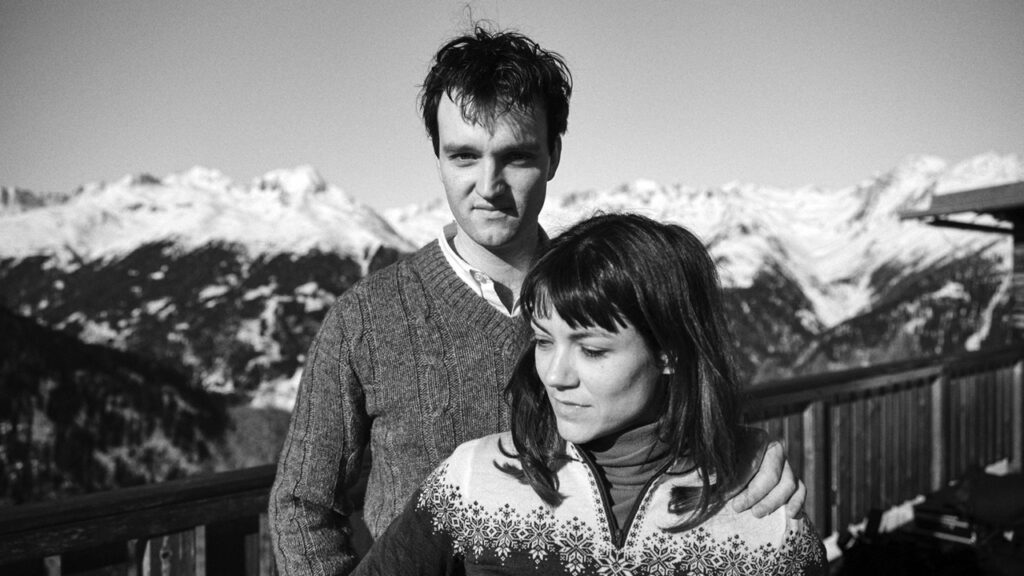
Without getting too far up myself, aren’t movies multiverses in themselves? We experience worlds that are recognisably our own and yet different. That seems to be what Kröger is up to in his use of dislocated images, odd angles, unusual lenses, sudden focuses on, say, a random cloud formation, or a lonely church in a valley, or a sudden jump-edit to strangers staring at something out of frame. It’s the familiar made unfamiliar. At a formal dinner one evening Johannes sits down with various professors of physics, assembled from all over Europe, and together with a Russian countess they all indulge in some psychedelics. It has no bearing whatsoever on the story. It just happens and is never mentioned again.
Multiverse movies usually cost a packet but Kröger does it all with aesthetics rather than special-effects. It’s possible he’s seen 2022’s Backwards Faces, which conjured a multiverse story out of two people and a shower curtain – and did it well.
Kröger claims he went into this film not intending for it to end up as a dreamy excavation of half-remembered auteurs of yore – as well as Hitchcock, there’s Resnais (particularly his I Love You, I Love You), Orson Welles at his most Kafkaesque, maybe some WG Sebald. But that’s what he’s made. Who uses a wipe dissolve these days? Kröger does. And the fact that one of those two commissars is played by David Bennent, who was creepy young Oskar in 1979’s The Tin Drum, that’s surely deliberate too.
The Universal Theory – Watch it/buy it at Amazon
I am an Amazon affiliate
© Steve Morrissey 2025