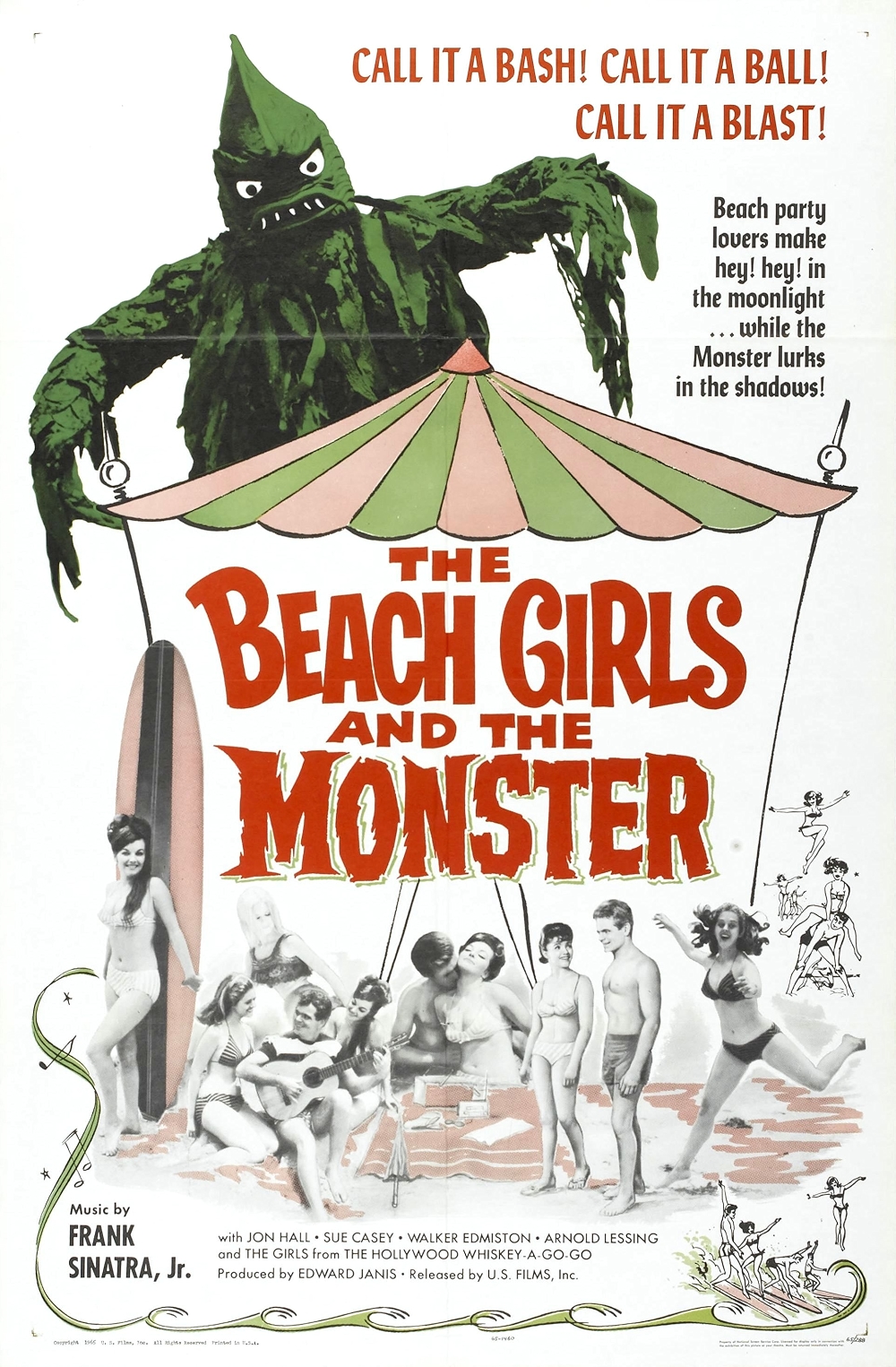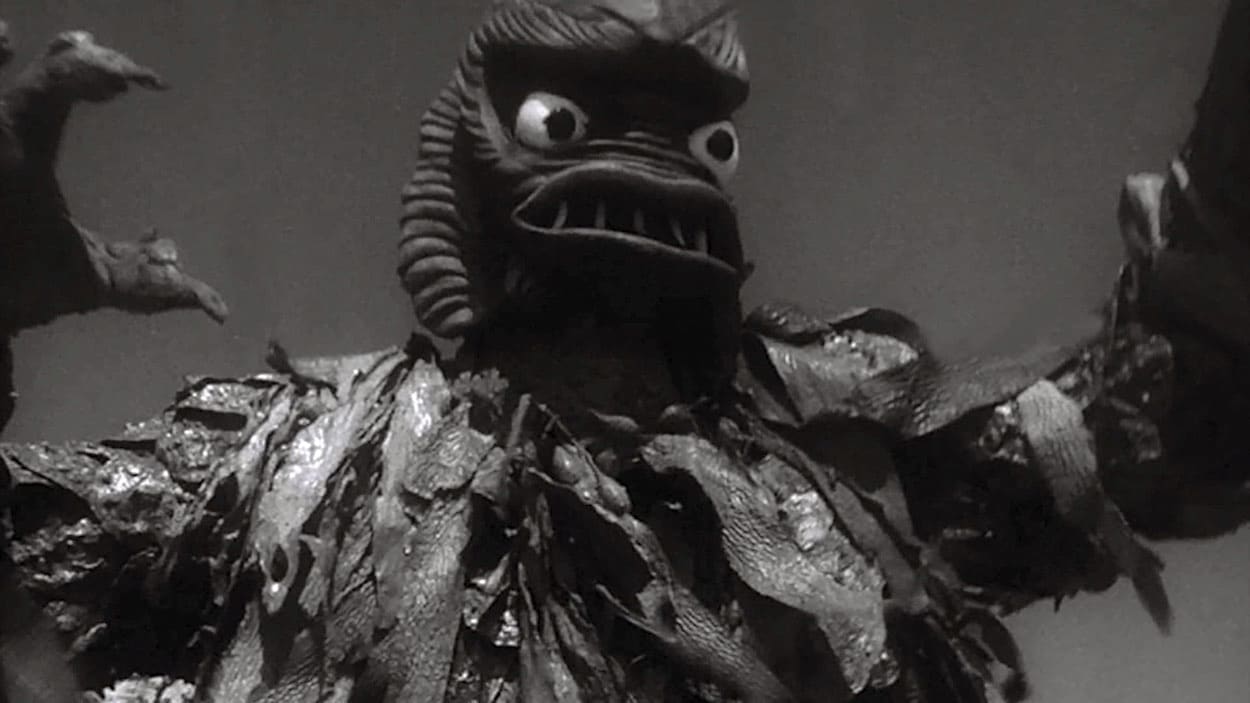
The beach party movie, surfer and monster movies all hang out together in The Beach Girls and the Monster, an oddity from 1965 that often makes it into the “so bad it’s good” category, largely, I suspect, because people just don’t really know what to make of it.
It’s Scooby-Doo in plot – fun-loving kids, a string of strange murders carried out by an unconvincing monster, who looks like a human in a bad costume because… well why spoil it.
It’s the only film directed by Jon Hall, who also has top billing. Hall had swung from one terrible movie to another in a long Hollywood career and is now most often remembered, if at all, as the romantic interest in a string of camp movies made by Maria Montez.
She presumably wanted him as her co-star because a good actor would have shown her up even more for the flaky proposition she was. “I never liked acting,” Hall once told an interviewer, but the truth is that acting never liked him. He just cannot do it. Every line reading is painful. But in this movie he’s not alone. In fact the competition for most lifeless delivery is fierce.
What’s particularly odd is that The Beach Girls and the Monster sells itself on beaches (yay), surf (yayer) and monsters (the yaymost) and then actually delivers a half-hearted family drama in which Hall plays a doctor married to a vile second wife (Sue Casey, best thing in the whole film), a woman carrying on behind his back and shooting deathray stares at her stepson Richard (Arnold Lessing), one of those 30-year-old teenagers that bad movies of this era seem to specialise in.
Richard no longer wants to help his old dad in his vital research into fish mutation and whatnot and would rather party on the beach with bikini-clad women and surfer dudes. A decision that starts to look like a bad one once the monster arrives on the scene and sets about clawing the young and pretty to death.
Frank Sinatra Jr wrote the surf-guitar theme tune, Dance Baby Dance, but the soundtrack’s other twangy, surfy moments fight for space alongside frequent digressions into loungecore.
There is surfer footage, which could have been introduced organically – this is a movie with “beach” in the title after all – but instead it’s awkwardly inserted in a scene where Richard forces his old friend Mark to watch some cine footage of surfers doing their thing. It’s shot by Dale Davis (who also has a minor role), one of the guys who specialised in surfer movies who wasn’t called Bruce Brown. It’s pretty much the only thing in this movie that makes sense.
The action is also brought to a standstill later, in a beach scene where Richard picks up a guitar and gives everyone a song, then is brought to another standstill when a puppet called Kingsley the Lion gets in on the action.
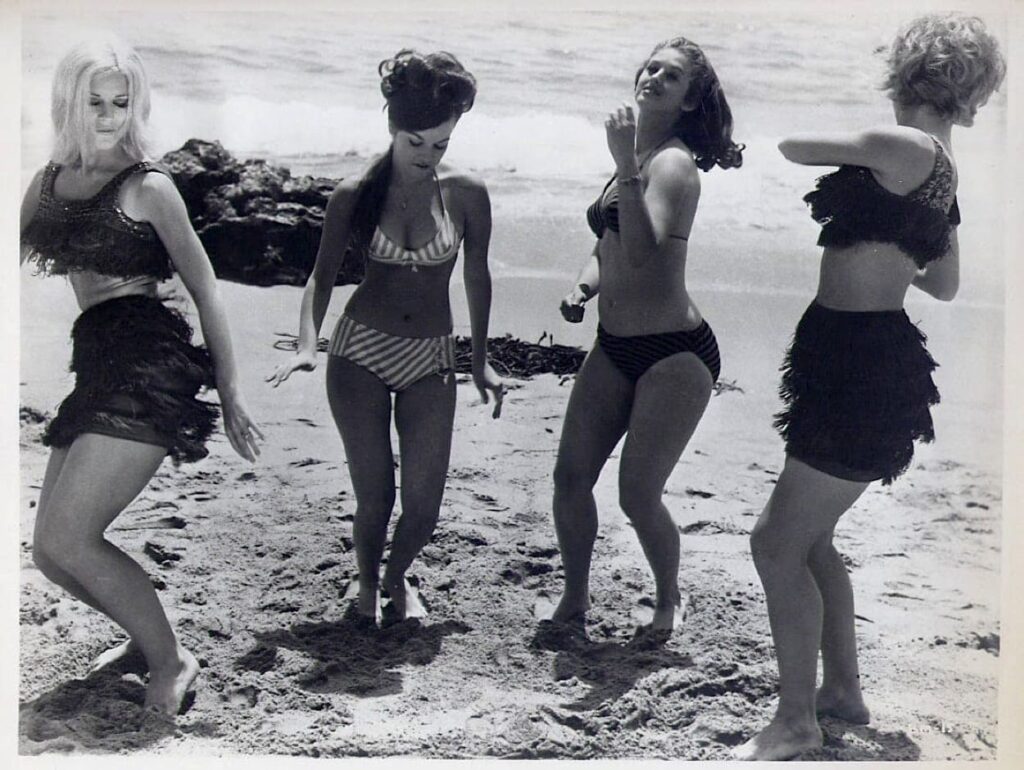
Good stuff includes shapely women in bikinis doing the watusi, the shake, the twist and other 1960s dances. Wikipedia says they were recruited from the Whisky a Go Go club on the Sunset Strip. The Whisky had opened the year before, its name licensed from the French original in Juan-les-Pins, the birthplace of the go-go dancer. So we’re in early on a new scene.
This is a movie that only makes sense as something to be half watched by young couples at drive-ins wrestling amorously on the front bench seat. Watched “properly” – ie paying attention – isn’t recommended. Yes, it’s just a bit of “fun”, so why is it so flat? Why is the story so piecemeal? Why is it so bad?
The Beach Girls and the Monster – Watch it/buy it at Amazon
I am an Amazon affiliate
© Steve Morrissey 2024