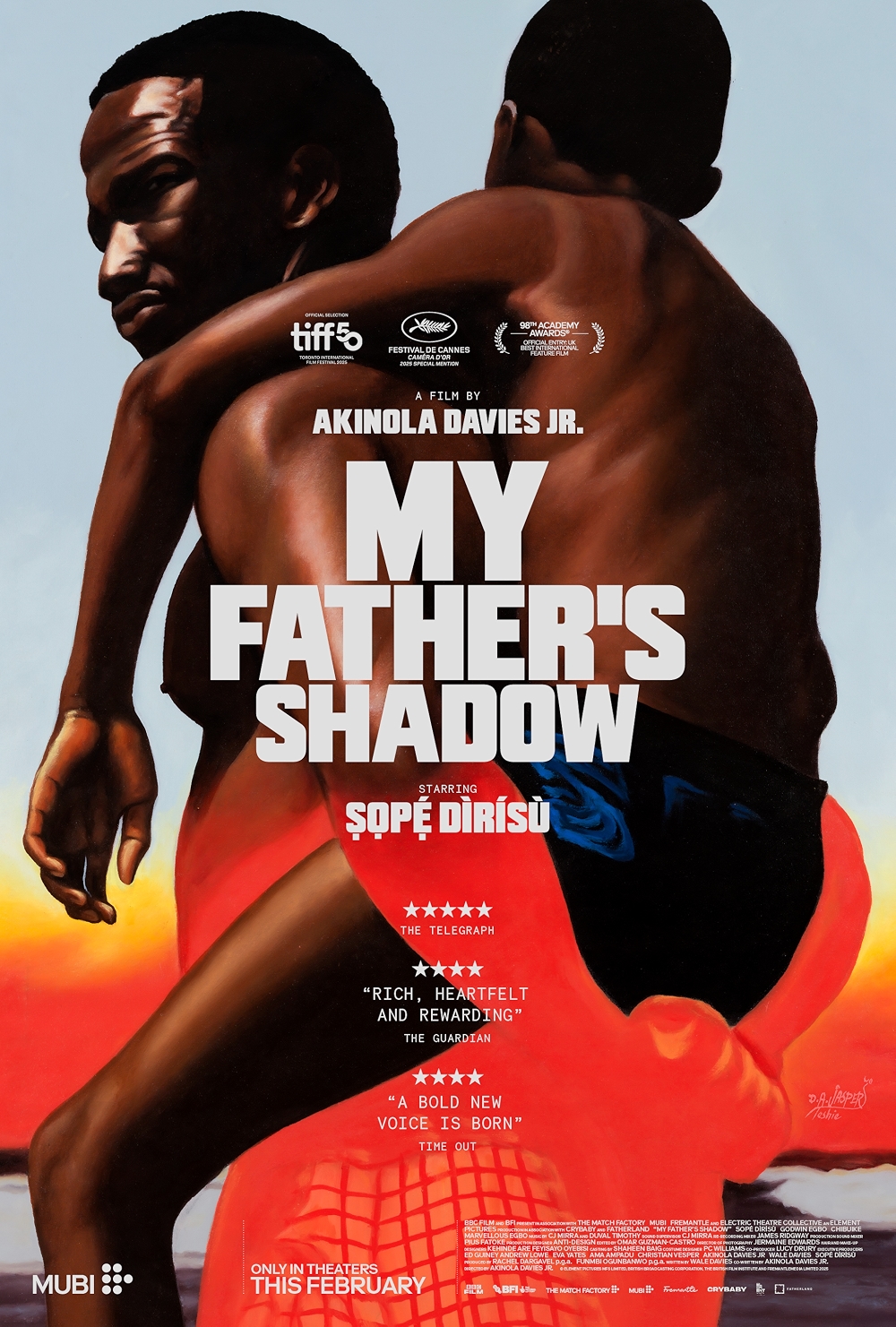
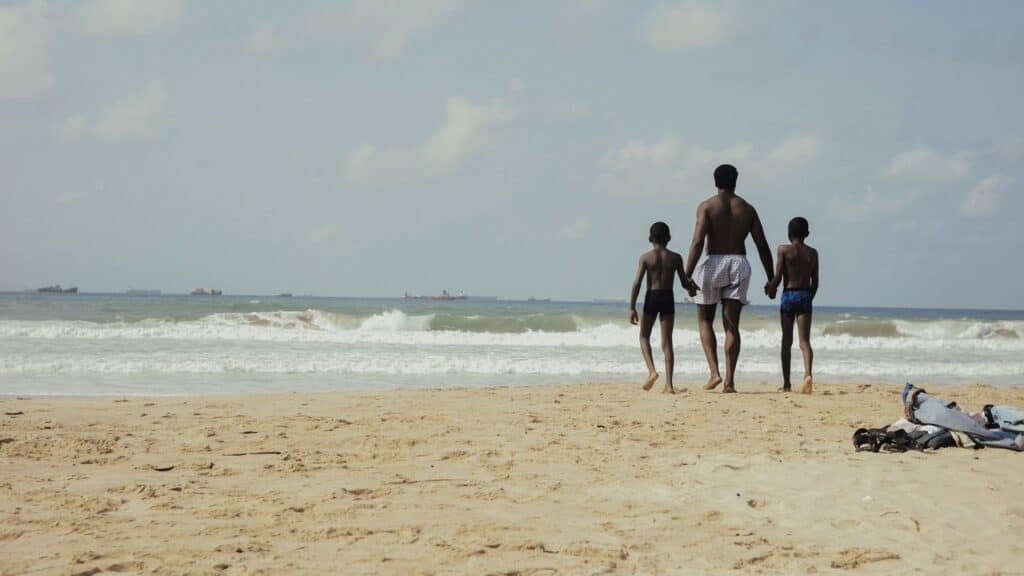
Two boys hang out with their dad for the day in My Father’s Shadow, an enormously artful film using pace and rhythm, light, shade and colour as its warp and weft. Or, if you prefer a more thematic description, a warm and intimate film about memory and the family bond.
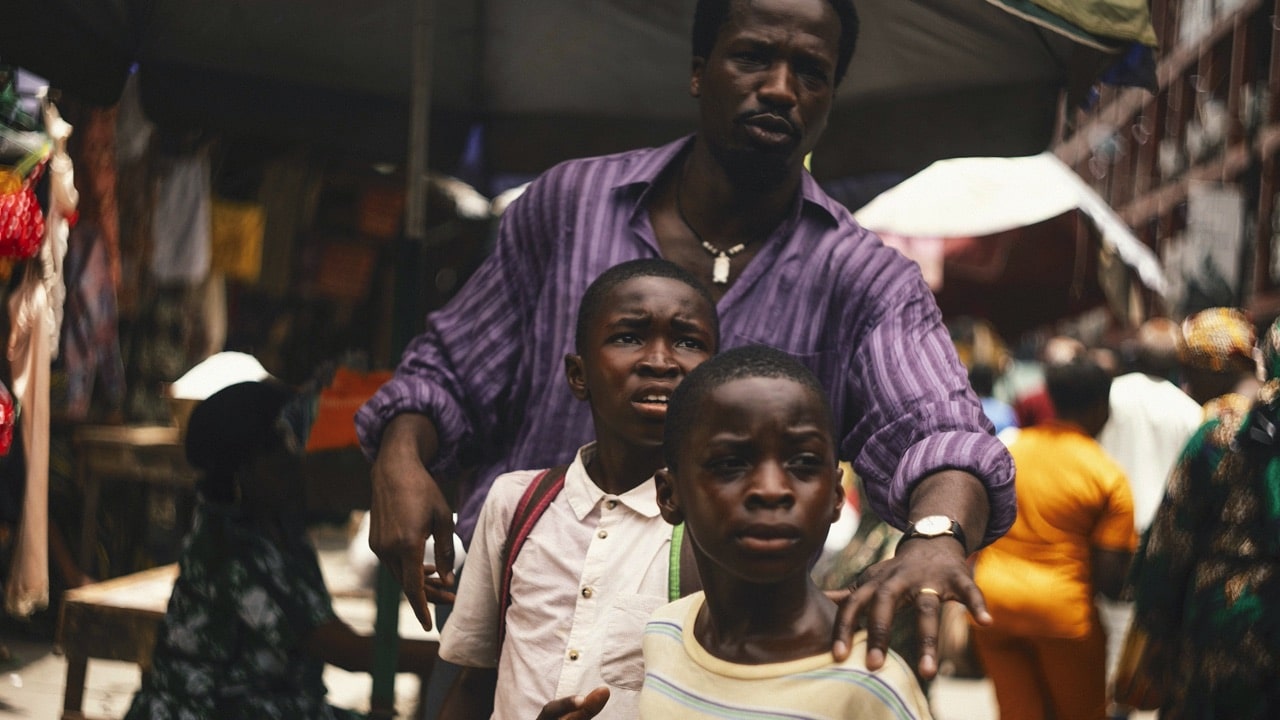
Akinola Davies made it and he says it’s about a day he and his brother Wale – who wrote it – spent with their dad when they were growing up in Nigeria. Or a half-remembered day, half-imagined even. Big, adult dad and two little village boys in awe as he takes them with him on a trip into big-city Lagos – they weren’t expecting that at all – then takes them around with him to the sort of places where adults gather.
There’s De Sica’s The Bicycle Thieves in the dad/child dynamic and the way everything loosely hangs together almost as if nothing’s really happening. And Hirokazu Kore-eda’s sharp eye for a family dynamic, and keenly observed detail. As the boys trail along behind dad, they’re at first out in the boonies of ants, cobwebs, feathery grass and storks in trees. Later, in the city, it’s taxi bikes, street food and traders, with occasional shots of trucks full of stern army guys driving by.
It’s 1993, a crucial year for Nigeria politically, when the corrupt president General Babangida annulled the first democratic elections in years, as the results didn’t seem to be going his way. This election is glimpsed hazily from the boys’ point of view. Something decisive is going on, they know that from the commotion everywhere people gather to discuss events, or watch them on TV, but they’re not quite sure what.
Most of the film is seen from the point of view of Akin and Remi (brothers Godwin and Chibuike Egbo), the camera down at their level as dad Folarin guides them through markets, to his place of work where the boss owes him money (and cannot be found!), onto cramped mini-buses and into bars, everyone discussing the upcoming elections at every opportunity. Apart from that, the glamour of beer! And who’s that pretty woman daddy’s talking to now? It’s all brilliantly, almost impressionistically done.
Davies was born in London and grew up partly in Nigeria, so there’s a double outsiderness to it all – childhood and a distant dad remembered through an adult’s eyes and Nigeria seen through a Londoner’s. As Folarin, I thought you could sometimes tell that Sopé Dìrísù was also London-born – a glottal here and there – and then I realised that this was the guy from Slow Horses and the remarkably spooky His House. He’s night and day here, a towering presence, almost monumental, a figurehead. Dads are like that to their boys.
How on earth did Davies and cinematographer Jermaine Edwards recreate the look of 1990s Lagos on the budget this film was made with? A sprinkle of archive footage obviously helps, but that’s clearly not how the bulk of it was done. The nimbleness of shooting on 16mm film probably has a hand in it. Post-production trickery? Probably.
Davies acknowledges a debt to Djibril Diop Membéty’s 1973 landmark Touki Bouki and you can see that in the way he captures vivid colour against dark skin in the bright, bright Nigerian sun.
That’s the thing about this film. You can watch it as an exercise in film-making craft, as a quiet commentary on a politically momentous moment in a country’s history, as a memoir of a film-maker’s past, or as a sweet story about two boys and their dad out for the day.
My Father’s Shadow – Watch it/buy it at Amazon
I am an Amazon affiliate
© Steve Morrissey 2026