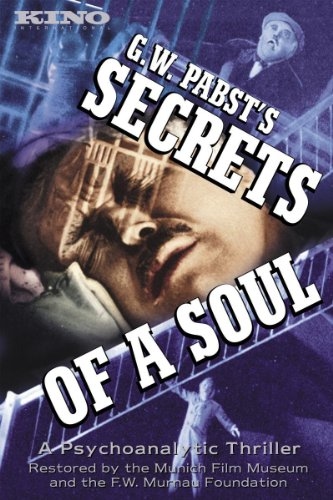
Is it Secrets of a Soul or Secrets of the Soul? Both variations of the title seem to be in play. It was Geheimnisse einer Seele in the original German, which suggests it’s the indefinite article – do with that what you will. Either way this is a strange film from the silent era. Expressly designed to take key concepts of psychoanalysis and give them cinematic life, it was directed by GW Pabst, who really wanted Sigmund Freud to contribute. Freud was less keen – his work was more than mere entertainment – so declined, but Pabst did persuade a couple of Freud’s collaborators to take part at the writing stage, including Karl Abraham, Freud’s “best pupil”.
Divided into three parts it’s the story of a psychosis. A man staring at his cut-throat razor opens the proceedings. It soon becomes apparent that the otherwise happily married Herr Fellman (Werner Krauss) is having trouble dealing with sharp objects. His adored wife (Ruth Weyher) first notices this when she gives him a ceremonial dagger as a gift and her husband reacts with fear. Later, a letter opener gives him a serious attack of the willies. Could a murder in a nearby apartment have stirred up something in Fellman’s unconscious?
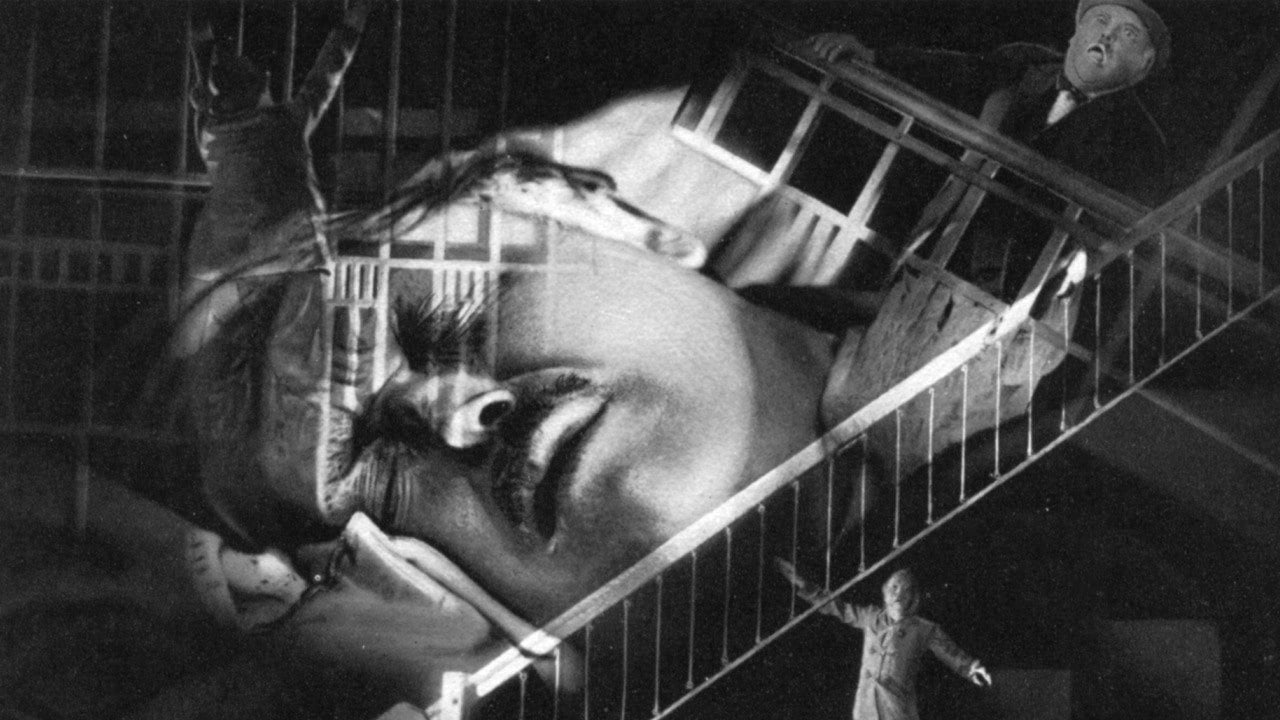
Cut to part two, the most experimental and abstract section of the film. Titled The Dream, it is just that, an assemblage of images that are absurd, impossible, troubling – Fellman walks in his sleep, a man grins down at him from a tree, Fellman is locked out of his house, then is suddenly flying in the air, is now in prison and looking on helplessly as the grinning man floats by in a boat with Fellman’s wife and a baby in her arms.
Pabst, a brilliant technician, goes to town. Shadows pile up, double and triple exposures suggest layers of consciousness. There is dreamy blur and nightmarish reversed film, dislocating montages and the out-and-out surreal – 1926 is the year the Galerie Surréaliste opened in Paris. Pabst wants to suggest that within the chaos of the mind there is yet meaning.
Eventually Fellman becomes so terrified of anything sharp that he can no longer shave. He goes to a barber’s, but even that’s too much for him. It’s at this point that we slide into part three, as Fellman is persuaded by kindly psychoanalyst Dr Orth (Polycarpe Pavloff) to lay on his couch and spill his guts.
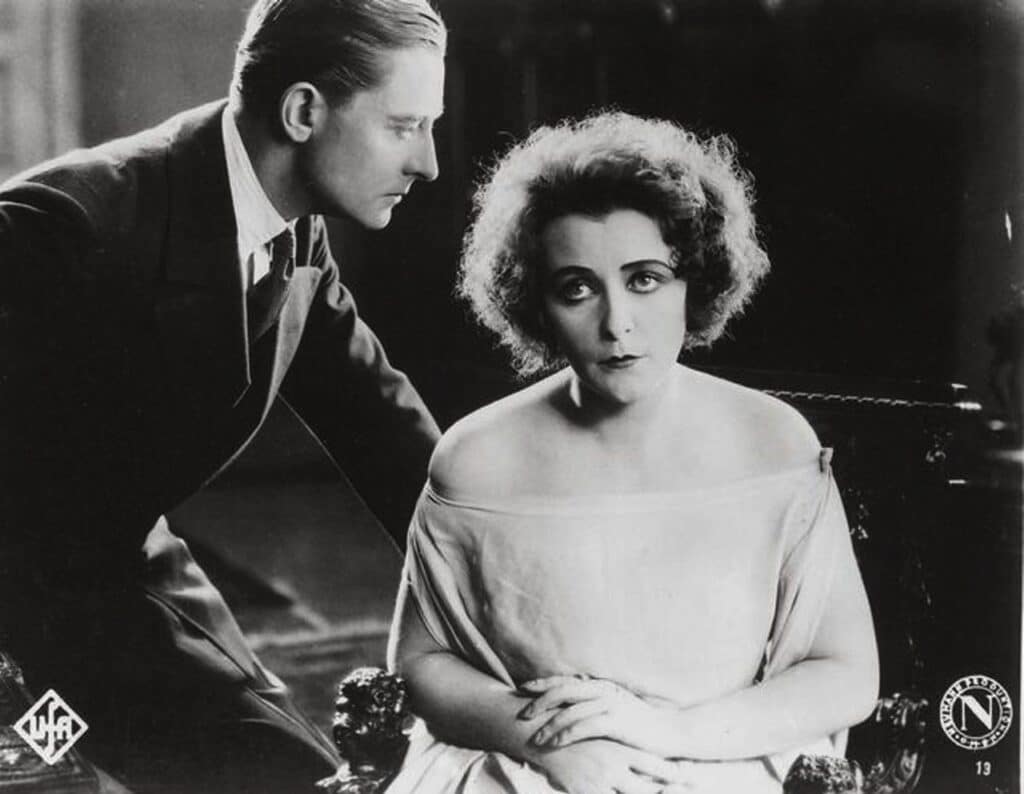
It doesn’t take long for Dr Orth to get to the bottom of things. Fellman’s wife (Ruth Weyher) has a cousin (Jack Trevor), who has recently returned from having adventures out in the tropics. She is very close to this cousin, who is also Fellman’s oldest and best friend. Maybe it’s not the murder that’s troubling Fellman at all, but the arrival of a potential rival. To 21st-century eyes, steeped in Freudianism – no matter how third, fourth or fifth hand – the fear of sharp objects looks like a castration anxiety. That’ll be $100, thanks.
More probing by Dr Orth and a minor incident in Fellman’s childhood is exposed as being pivotal. It’s a touch anti-climactic. But the whole fact of the talking cure being given the silent treatment is fascinating. There’s a poetic symmetry in there.
Secrets of a Soul is not obvious box-office bait. But in that respect Pabst had little to prove, having shot to fame the previous year with The Joyless Street (Die freudlose Gasse), which gave Greta Garbo her first lead role and made her a star. A couple of years later he’d do the same for Louise Brooks in Hollywood with Pandora’s Box.
No one is being made a star by this film. Krauss was already one of Germany’s biggest names and made the film because Pabst was directing it. This was the fourth of six collaborations they’d make together, and doubtless Krauss would have been in more Pabst films if the director hadn’t moved first to France and then Hollywood before disastrously coming back to Germany just in time for the arrival of the Nazis.
Gripping through it isn’t, it is a fascinating experiment, a rare insight into the state of psychoanalysis in the 1920s and above all a showcase for Pabst’s technical mastery.
Secrets of a Soul – Watch it/buy it at Amazon
I am an Amazon affiliate
© Steve Morrissey 2026