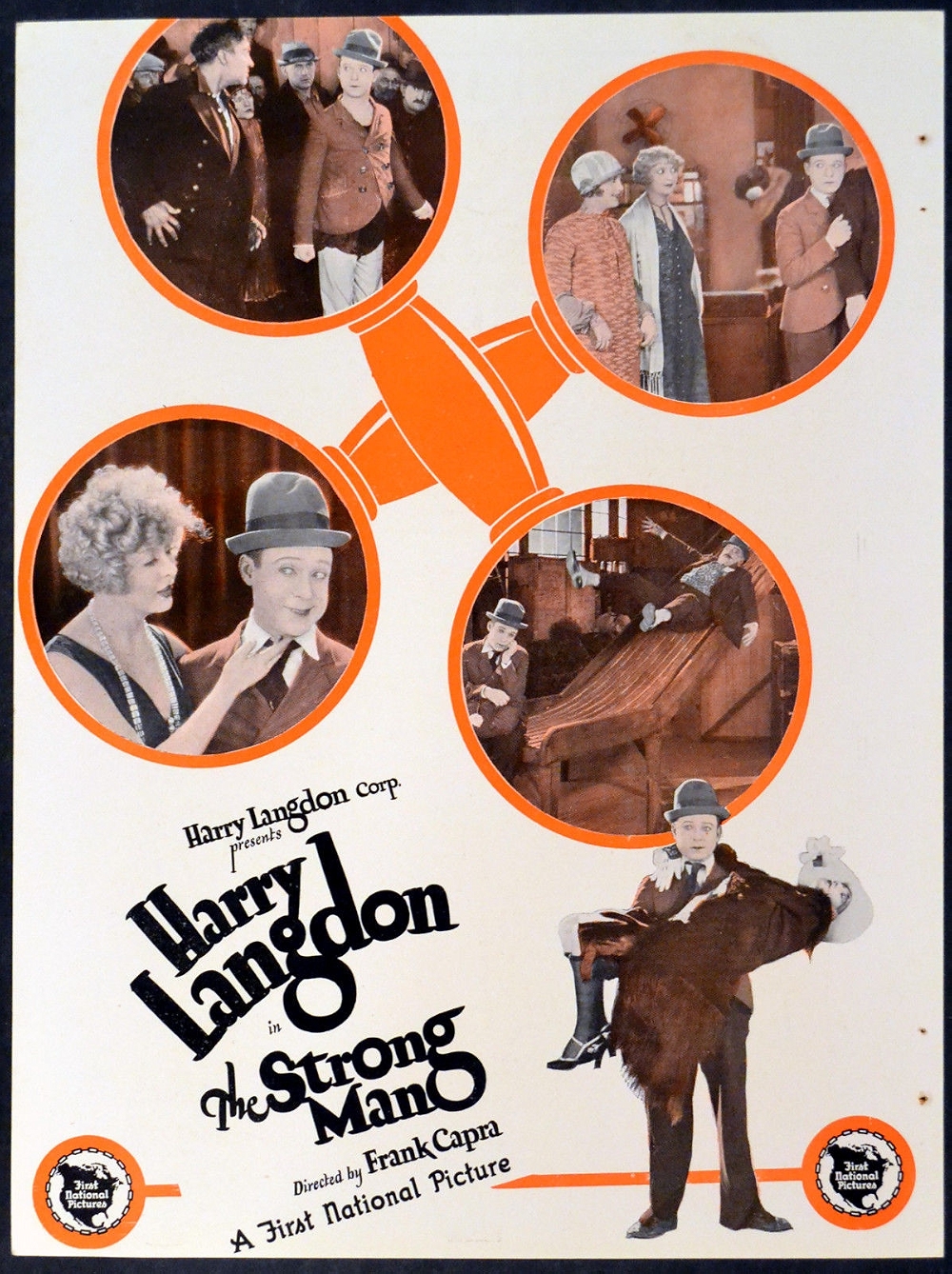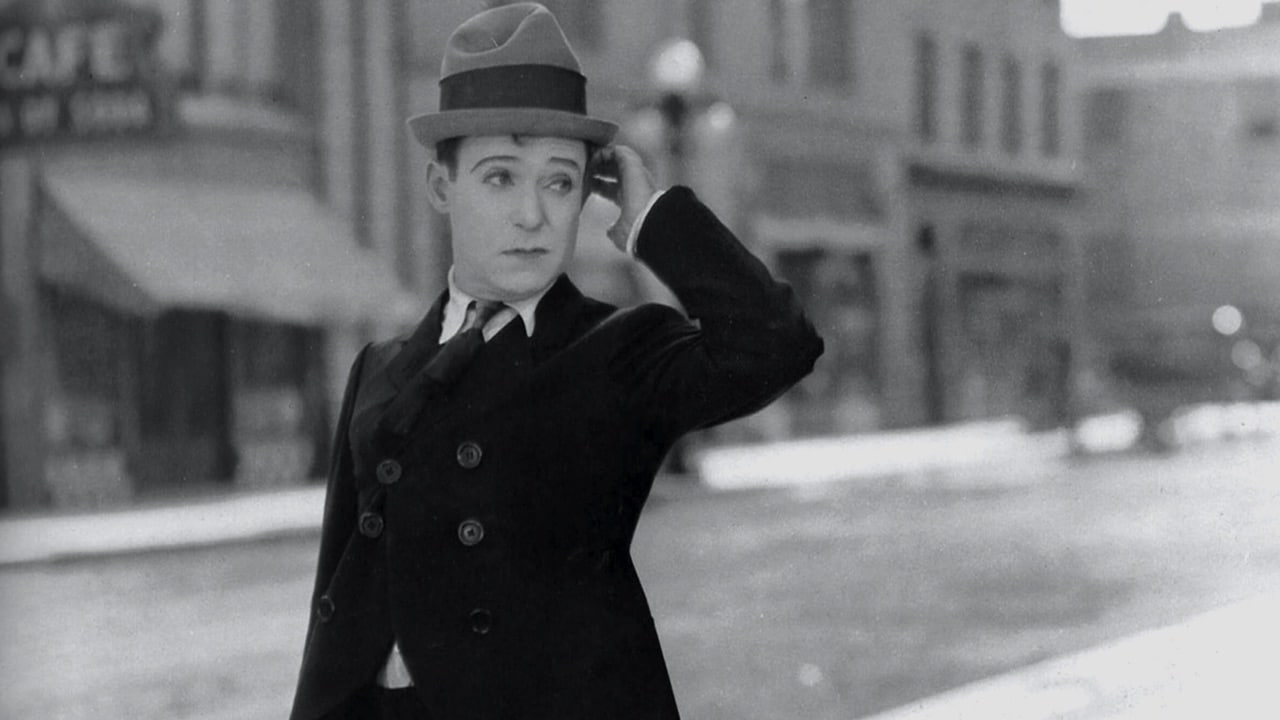
Two people do special things in 1926’s The Strong Man. The first is director Frank Capra, inventing film language on the hoof in his feature debut and showing us why he was such a force on the 20th-century film scene. The other is Harry Langdon, demonstrating an ability to animate dead space with his fluid features and expressive body.
The story is really a case of the tail wagging the dog and it takes a long time to get to the film’s point – elaborately conceived and expertly executed stunts. First there’s a preamble in the Great War, where Harry’s hapless soldier Paul Bergot is taking potshots at Germans with his catapult in between reading letters from his penpal, sweet Mary Brown (Priscilla Bonner). They are in love, Paul and Mary, though they haven’t yet met. All Paul has is Mary’s letters. He does not know that Mary is beautiful, nor does he know she’s blind.
The action shifts to life after the war. Paul returns to America as the prisoner/slave of the German he was taking potshots at (pause a moment here for the absurdity of that to sink in), a carnival strongman now using Paul as his general factotum. In between being bossed about by Zandow the Great (Arthur Thalasso), Paul attempts to find Mary, only to wind up in the clutches of a street thief called Lily (Gertrude Astor), who pretends to be his sweetheart (he has only a blurry photograph to go on). Paul’s task and the film’s gigantic preamble is to break free from the influence of Zandow, realise what Lily is really all about and then find Mary. At which point, we’re led to believe, they’ll fall into each other’s arms, even though they don’t know each other.
It’s a lot to take in and surely the film doesn’t need all of it, but Capra’s vivid direction gives it bounce and Langdon’s likeable-oaf-makes-good persona gives it swing. Langdon’s owlish blinking, head-scratching and cheek-puffing were all adopted wholesale by Harpo Marx later on, in some respects a silent movie holdover in the era of the talkies. Today, Adam Sandler often works some of the same shtick Langdon works here.
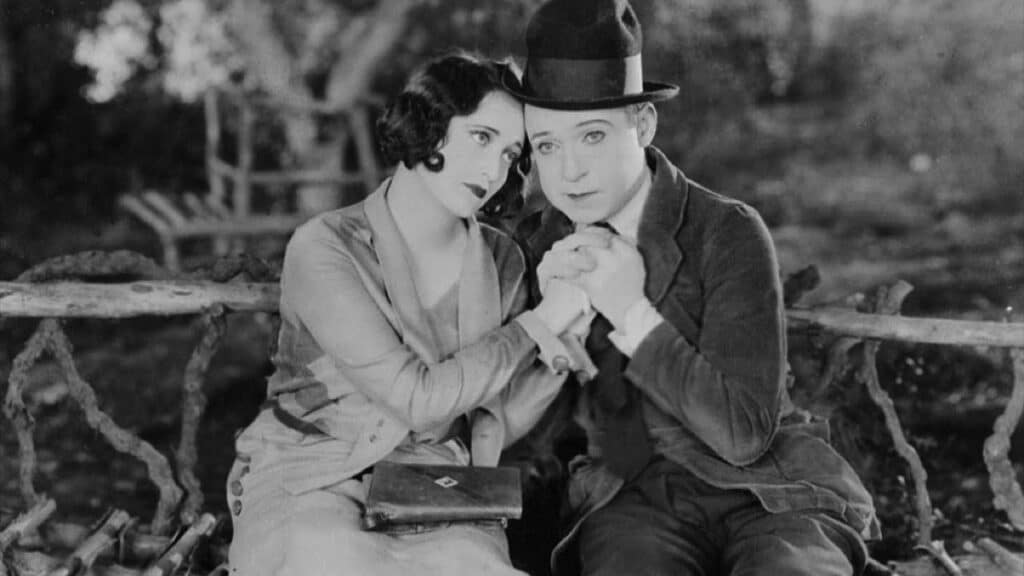
If Keaton and Chaplin vie for the number one slot these days when it comes to ranking the silent-era comedy greats, Harry Langdon would challenge Harold Lloyd for the number three position. His is a character adapted from a circus clown – white of face, eyebrows pencilled on, comedy almost all slapstick and pratfalls.
Capra’s fascination with smalltown America – think It’s a Wonderful Life – is already evident here. Mary doesn’t live in New York, where Sandow and Paul first hit land, but in a little burg called Cloverdale, once a charming hamlet but now overrun with bootleggers and miscreants. Indeed the only decent man of any standing in town is Parson Brown (William V Mong), Mary’s father.
It’s all heading, improbably, towards a big finale, in which Paul finds the girl, escapes his bondage, and sorts out Cloverdale’s problems in one go, in a massive set piece involving lots of stunts by Langdon and lots of inventive camerawork by Capra. Capra’s inventiveness and Langdon’s acrobatics complement each other beautifully.
Langdon produced his own films – the Harry Langdon Corporation is prominent in the credits – and would hire Capra again for the follow-up, Long Pants, after which Langdon decided to start directing himself. Which was a bridge too far – his career went into decline. However, we still have the Capra collaborations which, together with Tramp, Tramp, Tramp, are Langdon’s best films. Handily, Kino have released them as a box set, so the curious can get the whole kaboodle in one handy hit.
The Strong Man (as part of Harry Langdon… The Forgotten Clown box set) – Watch it/buy it at Amazon
I am an Amazon affiliate
© Steve Morrissey 2026